01شرط متخيل أو غير محتمل في الحاضر أو المستقبل لا حدث ماض
استخدم if + past simple للتعبير عن شرط متخيل أو غير محتمل في الحاضر أو المستقبل لا حدث ماض.
If I owned a car, I would visit more often.
الشرط من النوع الثاني · B1. استخدم if + past simple للتعبير عن شرط متخيل أو غير محتمل في الحاضر أو المستقبل لا حدث ماض.
أكمل 12 مهمة أصلية. استنتج المعنى المقصود من السياق، وتدرّب على الصيغة ثم طبّقها في موقف جديد.
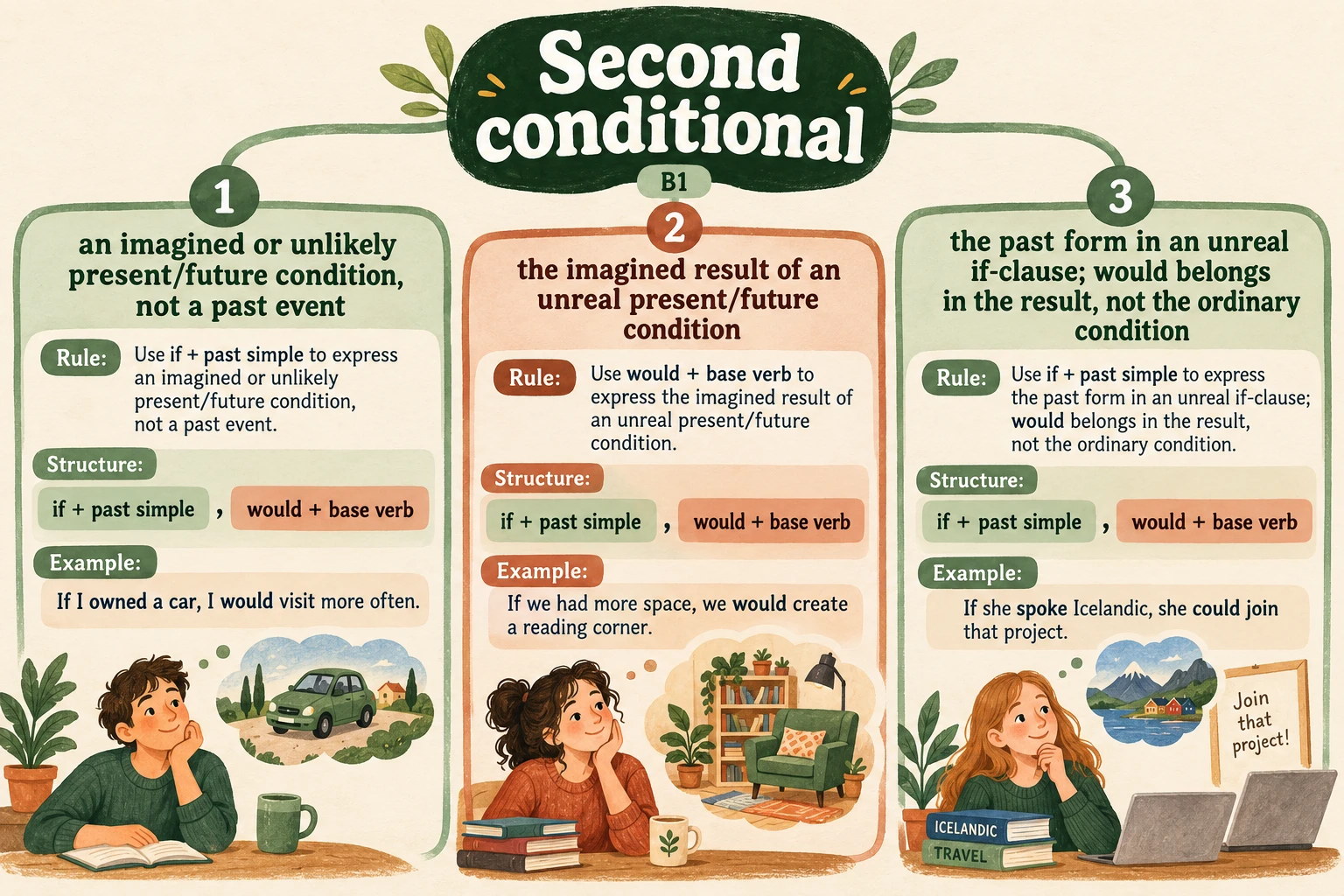
استخدم if + past simple للتعبير عن شرط متخيل أو غير محتمل في الحاضر أو المستقبل لا حدث ماض.
If I owned a car, I would visit more often.استخدم would + base verb للتعبير عن النتيجة المتخيلة لشرط غير حقيقي في الحاضر أو المستقبل.
If we had more space, we would create a reading corner.استخدم if + past simple للتعبير عن صيغة الماضي في شرط if غير الحقيقي؛ would للنتيجة لا للشرط العادي.
If she spoke Icelandic, she could join that project.
I do not own a car; imagine the opposite now. Use the ordinary hypothetical-present/future second-conditional pattern.
استخدم if + past simple للتعبير عن شرط متخيل أو غير محتمل في الحاضر أو المستقبل لا حدث ماض.
If I owned a car, I would visit more often.استخدم would + base verb للتعبير عن النتيجة المتخيلة لشرط غير حقيقي في الحاضر أو المستقبل.
If we had more space, we would create a reading corner.استخدم if + past simple للتعبير عن صيغة الماضي في شرط if غير الحقيقي؛ would للنتيجة لا للشرط العادي.
If she spoke Icelandic, she could join that project.احتفظ بالمحاولة الأولى، وافهم التغيير، ثم اختبر فهمك في موقف جديد.
لا توجد ملاحظات بعد. جرّب تهيئة قصيرة.
استخدم if + past simple للتعبير عن شرط متخيل أو غير محتمل في الحاضر أو المستقبل لا حدث ماض.
If I owned a car, I would visit more often.استخدم would + base verb للتعبير عن النتيجة المتخيلة لشرط غير حقيقي في الحاضر أو المستقبل.
If we had more space, we would create a reading corner.استخدم if + past simple للتعبير عن صيغة الماضي في شرط if غير الحقيقي؛ would للنتيجة لا للشرط العادي.
If she spoke Icelandic, she could join that project.فتح إجابة يسجّل استخدام المساعدة لذلك السؤال.
I do not own a car; imagine the opposite now. Use the ordinary hypothetical-present/future second-conditional pattern.
انظر إلى «I do not own a car; imagine the opposite now. Use the ordinary hypothetical-present/future second-conditional pattern.». استخدم if + past simple للتعبير عن شرط متخيل أو غير محتمل في الحاضر أو المستقبل لا حدث ماض. الجملة المكتملة: «If I owned a car, I would visit more often.».
The shop is too small in reality. Imagine a larger one. Use the ordinary hypothetical-present/future second-conditional pattern.
انظر إلى «The shop is too small in reality. Imagine a larger one. Use the ordinary hypothetical-present/future second-conditional pattern.». استخدم would + base verb للتعبير عن النتيجة المتخيلة لشرط غير حقيقي في الحاضر أو المستقبل. الجملة المكتملة: «If we had more space, we would create a reading corner.».
She cannot speak Icelandic; this is an imagined ability. Use the ordinary hypothetical-present/future second-conditional pattern.
انظر إلى «She cannot speak Icelandic; this is an imagined ability. Use the ordinary hypothetical-present/future second-conditional pattern.». استخدم if + past simple للتعبير عن صيغة الماضي في شرط if غير الحقيقي؛ would للنتيجة لا للشرط العادي. الجملة المكتملة: «If she spoke Icelandic, she could join that project.».
We do not live near the sea; imagine a different present. Use the ordinary hypothetical-present/future second-conditional pattern.
انظر إلى «We do not live near the sea; imagine a different present. Use the ordinary hypothetical-present/future second-conditional pattern.». استخدم if + past simple للتعبير عن شرط متخيل أو غير محتمل في الحاضر أو المستقبل لا حدث ماض. الجملة المكتملة: «If we lived near the sea, we would sail every weekend.».
Use a would-result with the verb reduce for the imagined situation.
الجملة المكتملة: «If the route were shorter, it would reduce our costs.» استخدم would + base verb للتعبير عن النتيجة المتخيلة لشرط غير حقيقي في الحاضر أو المستقبل. يحدد الفاعل والزمن والمعنى في المهمة هذه الصيغة. تُطابق الإجابات المراجعة فقط تلقائياً؛ ولا تُعد الصياغات الأخرى خطأ تلقائياً.
He is not the manager; the condition is hypothetical. Use the ordinary hypothetical-present/future second-conditional pattern.
انظر إلى «He is not the manager; the condition is hypothetical. Use the ordinary hypothetical-present/future second-conditional pattern.». استخدم if + past simple للتعبير عن صيغة الماضي في شرط if غير الحقيقي؛ would للنتيجة لا للشرط العادي. الجملة المكتملة: «If he were the manager, he would change the rota.».
Use the past simple of know to express an unreal present condition.
الجملة المكتملة: «If I knew the answer, I would tell you.» استخدم if + past simple للتعبير عن شرط متخيل أو غير محتمل في الحاضر أو المستقبل لا حدث ماض. يحدد الفاعل والزمن والمعنى في المهمة هذه الصيغة. تُطابق الإجابات المراجعة فقط تلقائياً؛ ولا تُعد الصياغات الأخرى خطأ تلقائياً.
The museum does not have a larger budget now. Use the ordinary hypothetical-present/future second-conditional pattern.
انظر إلى «The museum does not have a larger budget now. Use the ordinary hypothetical-present/future second-conditional pattern.». استخدم if + past simple للتعبير عن شرط متخيل أو غير محتمل في الحاضر أو المستقبل لا حدث ماض. الجملة المكتملة: «If the museum received more funding, it would restore the roof.».
Use a would-result with the verb hire for the imagined consequence.
الجملة المكتملة: «If I ran the theatre, I would hire more technicians.» استخدم would + base verb للتعبير عن النتيجة المتخيلة لشرط غير حقيقي في الحاضر أو المستقبل. يحدد الفاعل والزمن والمعنى في المهمة هذه الصيغة. تُطابق الإجابات المراجعة فقط تلقائياً؛ ولا تُعد الصياغات الأخرى خطأ تلقائياً.
It is not possible for us to move now; imagine that it were. Use the ordinary hypothetical-present/future second-conditional pattern.
انظر إلى «It is not possible for us to move now; imagine that it were. Use the ordinary hypothetical-present/future second-conditional pattern.». استخدم if + past simple للتعبير عن صيغة الماضي في شرط if غير الحقيقي؛ would للنتيجة لا للشرط العادي. الجملة المكتملة: «If we moved to the coast, we would miss our neighbours.».
No such opportunity exists at present. Use the ordinary hypothetical-present/future second-conditional pattern.
انظر إلى «No such opportunity exists at present. Use the ordinary hypothetical-present/future second-conditional pattern.». استخدم would + base verb للتعبير عن النتيجة المتخيلة لشرط غير حقيقي في الحاضر أو المستقبل. الجملة المكتملة: «If someone offered me that role, I would accept it.».
Use the past simple of have for the unreal present condition.
الجملة المكتملة: «If our flat had a balcony, we would grow herbs.» استخدم if + past simple للتعبير عن صيغة الماضي في شرط if غير الحقيقي؛ would للنتيجة لا للشرط العادي. يحدد الفاعل والزمن والمعنى في المهمة هذه الصيغة. تُطابق الإجابات المراجعة فقط تلقائياً؛ ولا تُعد الصياغات الأخرى خطأ تلقائياً.