01과거 사건이 아닌 현재·미래의 가상적이거나 가능성 낮은 조건
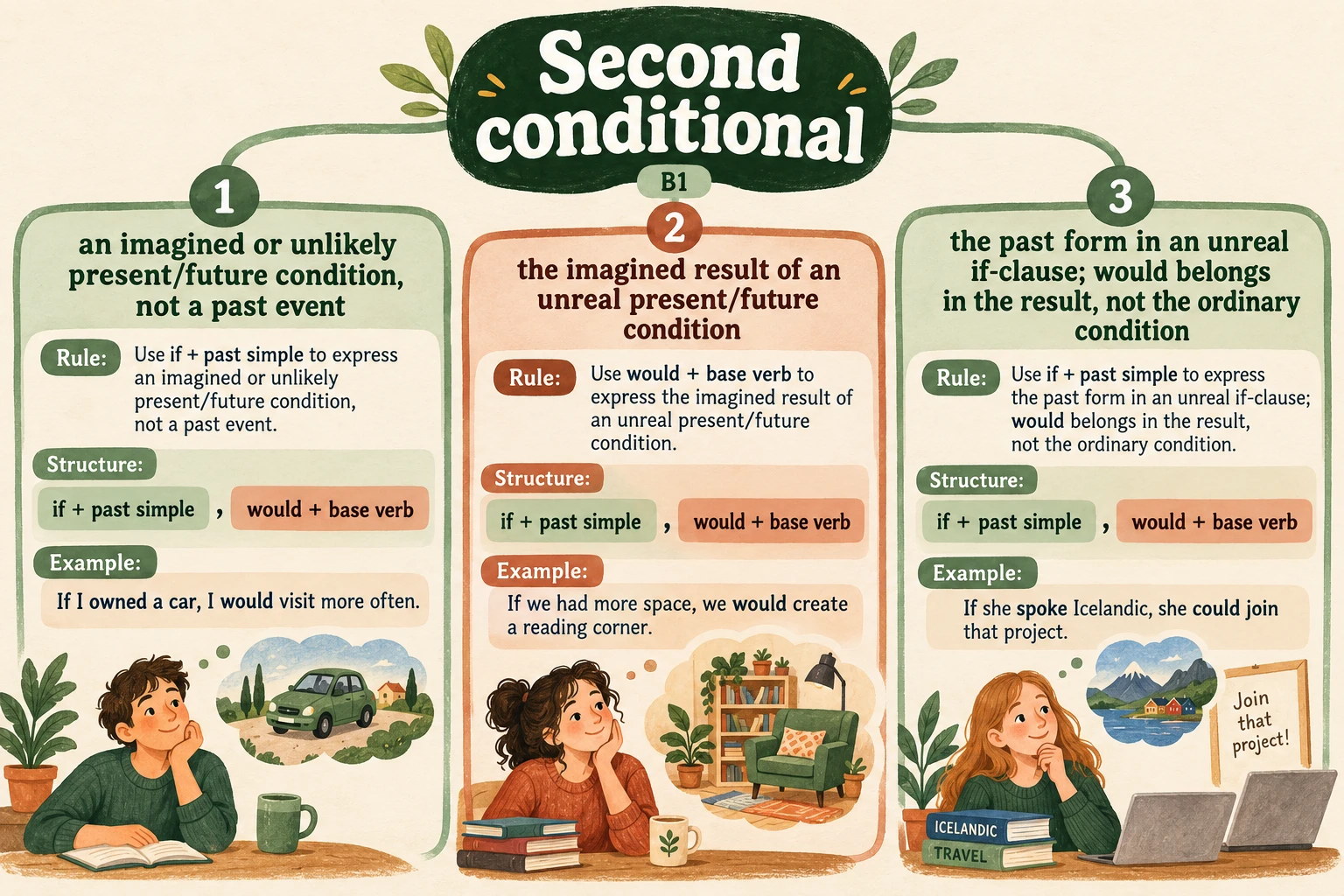
if + past simple 구조를 사용합니다. 의미: 과거 사건이 아닌 현재·미래의 가상적이거나 가능성 낮은 조건.
If I owned a car, I would visit more often.
제2조건문 · B1. if + past simple 구조를 사용합니다. 의미: 과거 사건이 아닌 현재·미래의 가상적이거나 가능성 낮은 조건.
새로 만든 12문제입니다. 상황에서 의도를 파악하고 형태를 연습한 뒤 새로운 맥락에 적용하세요.
if + past simple 구조를 사용합니다. 의미: 과거 사건이 아닌 현재·미래의 가상적이거나 가능성 낮은 조건.
If I owned a car, I would visit more often.would + base verb 구조를 사용합니다. 의미: 현재·미래의 비현실적 조건에 따른 가상의 결과.
If we had more space, we would create a reading corner.if + past simple 구조를 사용합니다. 의미: 비현실 if절의 과거형. 보통 would는 조건절이 아닌 결과절에 둠.
If she spoke Icelandic, she could join that project.
I do not own a car; imagine the opposite now. Use the ordinary hypothetical-present/future second-conditional pattern.
if + past simple 구조를 사용합니다. 의미: 과거 사건이 아닌 현재·미래의 가상적이거나 가능성 낮은 조건.
If I owned a car, I would visit more often.would + base verb 구조를 사용합니다. 의미: 현재·미래의 비현실적 조건에 따른 가상의 결과.
If we had more space, we would create a reading corner.if + past simple 구조를 사용합니다. 의미: 비현실 if절의 과거형. 보통 would는 조건절이 아닌 결과절에 둠.
If she spoke Icelandic, she could join that project.첫 시도를 남기고 변화의 이유를 이해한 뒤 새로운 상황에서 확인해 보세요.
아직 복습 노트가 없어요. 짧은 워밍업부터 해보세요.
if + past simple 구조를 사용합니다. 의미: 과거 사건이 아닌 현재·미래의 가상적이거나 가능성 낮은 조건.
If I owned a car, I would visit more often.would + base verb 구조를 사용합니다. 의미: 현재·미래의 비현실적 조건에 따른 가상의 결과.
If we had more space, we would create a reading corner.if + past simple 구조를 사용합니다. 의미: 비현실 if절의 과거형. 보통 would는 조건절이 아닌 결과절에 둠.
If she spoke Icelandic, she could join that project.정답을 열면 해당 문제에 도움 사용이 기록돼요.
I do not own a car; imagine the opposite now. Use the ordinary hypothetical-present/future second-conditional pattern.
“I do not own a car; imagine the opposite now. Use the ordinary hypothetical-present/future second-conditional pattern.”를 보세요. if + past simple 구조를 사용합니다. 의미: 과거 사건이 아닌 현재·미래의 가상적이거나 가능성 낮은 조건. 완성 문장: “If I owned a car, I would visit more often.”.
The shop is too small in reality. Imagine a larger one. Use the ordinary hypothetical-present/future second-conditional pattern.
“The shop is too small in reality. Imagine a larger one. Use the ordinary hypothetical-present/future second-conditional pattern.”를 보세요. would + base verb 구조를 사용합니다. 의미: 현재·미래의 비현실적 조건에 따른 가상의 결과. 완성 문장: “If we had more space, we would create a reading corner.”.
She cannot speak Icelandic; this is an imagined ability. Use the ordinary hypothetical-present/future second-conditional pattern.
“She cannot speak Icelandic; this is an imagined ability. Use the ordinary hypothetical-present/future second-conditional pattern.”를 보세요. if + past simple 구조를 사용합니다. 의미: 비현실 if절의 과거형. 보통 would는 조건절이 아닌 결과절에 둠. 완성 문장: “If she spoke Icelandic, she could join that project.”.
We do not live near the sea; imagine a different present. Use the ordinary hypothetical-present/future second-conditional pattern.
“We do not live near the sea; imagine a different present. Use the ordinary hypothetical-present/future second-conditional pattern.”를 보세요. if + past simple 구조를 사용합니다. 의미: 과거 사건이 아닌 현재·미래의 가상적이거나 가능성 낮은 조건. 완성 문장: “If we lived near the sea, we would sail every weekend.”.
Use a would-result with the verb reduce for the imagined situation.
완성 문장: “If the route were shorter, it would reduce our costs.” would + base verb 구조를 사용합니다. 의미: 현재·미래의 비현실적 조건에 따른 가상의 결과. 과제의 주어·시간·의미에 맞춘 형태입니다. 검토한 답만 자동으로 확인하며, 다른 표현을 자동으로 틀렸다고 하지 않습니다.
He is not the manager; the condition is hypothetical. Use the ordinary hypothetical-present/future second-conditional pattern.
“He is not the manager; the condition is hypothetical. Use the ordinary hypothetical-present/future second-conditional pattern.”를 보세요. if + past simple 구조를 사용합니다. 의미: 비현실 if절의 과거형. 보통 would는 조건절이 아닌 결과절에 둠. 완성 문장: “If he were the manager, he would change the rota.”.
Use the past simple of know to express an unreal present condition.
완성 문장: “If I knew the answer, I would tell you.” if + past simple 구조를 사용합니다. 의미: 과거 사건이 아닌 현재·미래의 가상적이거나 가능성 낮은 조건. 과제의 주어·시간·의미에 맞춘 형태입니다. 검토한 답만 자동으로 확인하며, 다른 표현을 자동으로 틀렸다고 하지 않습니다.
The museum does not have a larger budget now. Use the ordinary hypothetical-present/future second-conditional pattern.
“The museum does not have a larger budget now. Use the ordinary hypothetical-present/future second-conditional pattern.”를 보세요. if + past simple 구조를 사용합니다. 의미: 과거 사건이 아닌 현재·미래의 가상적이거나 가능성 낮은 조건. 완성 문장: “If the museum received more funding, it would restore the roof.”.
Use a would-result with the verb hire for the imagined consequence.
완성 문장: “If I ran the theatre, I would hire more technicians.” would + base verb 구조를 사용합니다. 의미: 현재·미래의 비현실적 조건에 따른 가상의 결과. 과제의 주어·시간·의미에 맞춘 형태입니다. 검토한 답만 자동으로 확인하며, 다른 표현을 자동으로 틀렸다고 하지 않습니다.
It is not possible for us to move now; imagine that it were. Use the ordinary hypothetical-present/future second-conditional pattern.
“It is not possible for us to move now; imagine that it were. Use the ordinary hypothetical-present/future second-conditional pattern.”를 보세요. if + past simple 구조를 사용합니다. 의미: 비현실 if절의 과거형. 보통 would는 조건절이 아닌 결과절에 둠. 완성 문장: “If we moved to the coast, we would miss our neighbours.”.
No such opportunity exists at present. Use the ordinary hypothetical-present/future second-conditional pattern.
“No such opportunity exists at present. Use the ordinary hypothetical-present/future second-conditional pattern.”를 보세요. would + base verb 구조를 사용합니다. 의미: 현재·미래의 비현실적 조건에 따른 가상의 결과. 완성 문장: “If someone offered me that role, I would accept it.”.
Use the past simple of have for the unreal present condition.
완성 문장: “If our flat had a balcony, we would grow herbs.” if + past simple 구조를 사용합니다. 의미: 비현실 if절의 과거형. 보통 would는 조건절이 아닌 결과절에 둠. 과제의 주어·시간·의미에 맞춘 형태입니다. 검토한 답만 자동으로 확인하며, 다른 표현을 자동으로 틀렸다고 하지 않습니다.