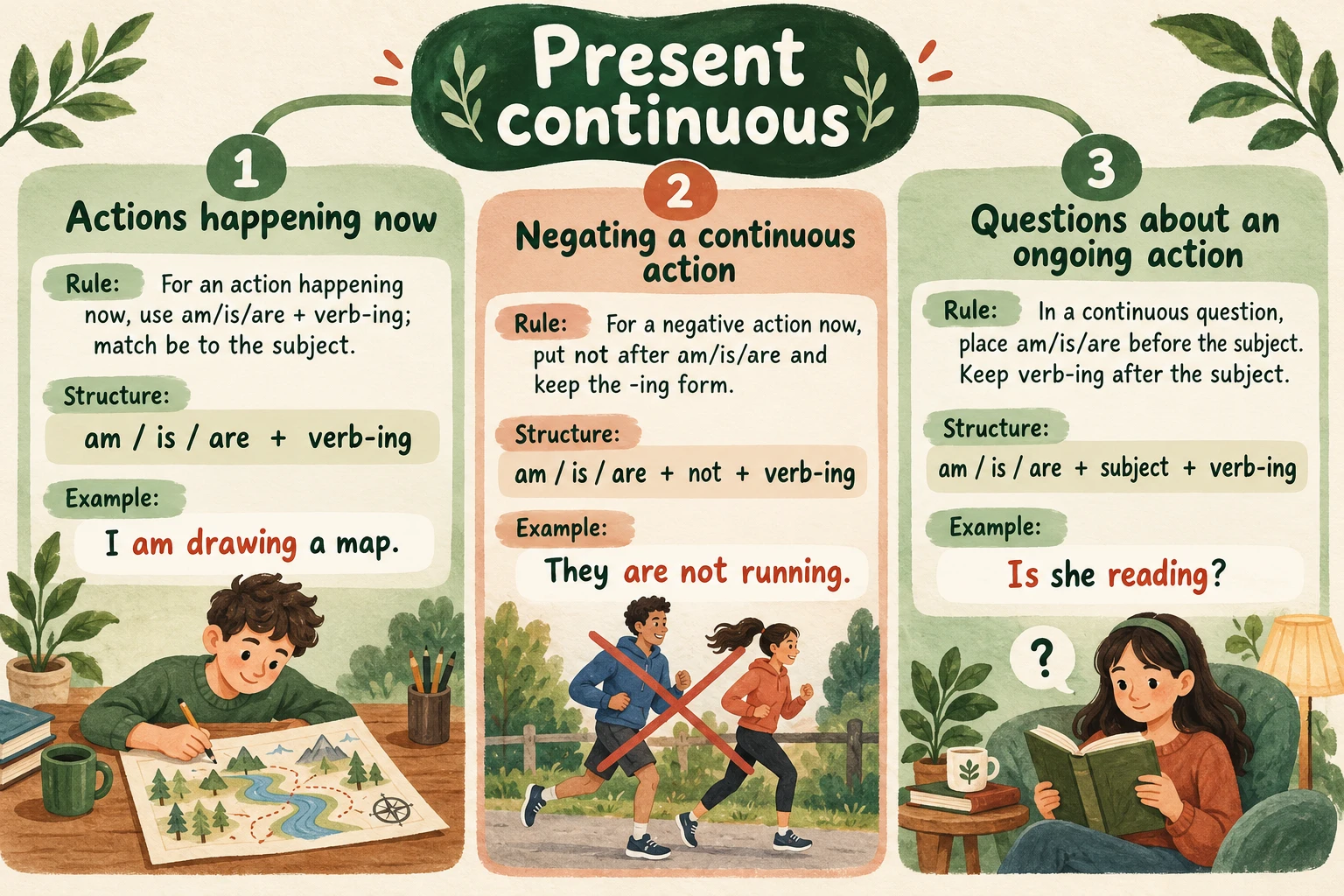
01أفعال جارية الآن
للفعل الجاري الآن نستخدم am/is/are مع الفعل المنتهي بـing حسب الفاعل.
I am drawing a map.
المضارع المستمر · A1. للفعل الجاري الآن نستخدم am/is/are مع الفعل المنتهي بـing حسب الفاعل.
تدرّب على المضارع المستمر في مواقف قصيرة. اقرأ القرينة واختر الصيغة أو اكتبها، ثم راجع السبب. المستوى دليل تحريري تقريبي.
للفعل الجاري الآن نستخدم am/is/are مع الفعل المنتهي بـing حسب الفاعل.
I am drawing a map.للنفي نضع not بعد am/is/are ونحتفظ بصيغة ing.
They are not running.في سؤال المستمر تأتي am/is/are قبل الفاعل والفعل مع ing بعده.
Is she reading?I am working.She is working.
I am not working.She isn’t working.
Are you working?Is she working?
Yes, I am.No, she isn’t.
Look! The children ___ football in the park. (play)
للفعل الجاري الآن نستخدم am/is/are مع الفعل المنتهي بـing حسب الفاعل.
I am drawing a map.للنفي نضع not بعد am/is/are ونحتفظ بصيغة ing.
They are not running.في سؤال المستمر تأتي am/is/are قبل الفاعل والفعل مع ing بعده.
Is she reading?احتفظ بالمحاولة الأولى، وافهم التغيير، ثم اختبر فهمك في موقف جديد.
لا توجد ملاحظات بعد. جرّب تهيئة قصيرة.
للفعل الجاري الآن نستخدم am/is/are مع الفعل المنتهي بـing حسب الفاعل.
I am drawing a map.للنفي نضع not بعد am/is/are ونحتفظ بصيغة ing.
They are not running.في سؤال المستمر تأتي am/is/are قبل الفاعل والفعل مع ing بعده.
Is she reading?فتح إجابة يسجّل استخدام المساعدة لذلك السؤال.
Look! The children ___ football in the park. (play)
انظر إلى «Look! The children ___ football in the park. (play)». للفعل الجاري الآن نستخدم am/is/are مع الفعل المنتهي بـing حسب الفاعل. الجملة المكتملة: «Look! The children are playing football in the park. (play)».
Sara is on the sofa with a book. She ___ television now. (not watch)
انظر إلى «Sara is on the sofa with a book. She ___ television now. (not watch)». للنفي نضع not بعد am/is/are ونحتفظ بصيغة ing. الجملة المكتملة: «Sara is on the sofa with a book. She is not watching television now. (not watch)».
___ you waiting for bus 9?
انظر إلى «___ you waiting for bus 9?». في سؤال المستمر تأتي am/is/are قبل الفاعل والفعل مع ing بعده. الجملة المكتملة: «Are you waiting for bus 9?».
I ___ dinner right now. (cook)
إكمال مرجعي: «I am cooking dinner right now. (cook)». للفعل الجاري الآن نستخدم am/is/are مع الفعل المنتهي بـing حسب الفاعل.
The workers have stopped for lunch. They ___ at the moment. (not work)
انظر إلى «The workers have stopped for lunch. They ___ at the moment. (not work)». للنفي نضع not بعد am/is/are ونحتفظ بصيغة ing. الجملة المكتملة: «The workers have stopped for lunch. They are not working at the moment. (not work)».
___ your brother sleeping? Please be quiet.
انظر إلى «___ your brother sleeping? Please be quiet.». في سؤال المستمر تأتي am/is/are قبل الفاعل والفعل مع ing بعده. الجملة المكتملة: «Is your brother sleeping? Please be quiet.».
Please hold on. The computer ___ the file now. (save)
إكمال مرجعي: «Please hold on. The computer is saving the file now. (save)». للفعل الجاري الآن نستخدم am/is/are مع الفعل المنتهي بـing حسب الفاعل. تُقبل أيضاً هذه البدائل المراجَعة في هذه المهمة: 's saving. ليست القائمة حصرية لكل صياغة إنجليزية ممكنة.
The baby ___ at this moment. (cry)
انظر إلى «The baby ___ at this moment. (cry)». للفعل الجاري الآن نستخدم am/is/are مع الفعل المنتهي بـing حسب الفاعل. الجملة المكتملة: «The baby is crying at this moment. (cry)».
My phone is off. I ___ any calls now. (not make)
انظر إلى «My phone is off. I ___ any calls now. (not make)». للنفي نضع not بعد am/is/are ونحتفظ بصيغة ing. الجملة المكتملة: «My phone is off. I am not making any calls now. (not make)».
What ___ the students writing on the board?
إكمال مرجعي: «What are the students writing on the board?». في سؤال المستمر تأتي am/is/are قبل الفاعل والفعل مع ing بعده.
Dad is in the garden, so he ___ the kitchen now. (not clean)
انظر إلى «Dad is in the garden, so he ___ the kitchen now. (not clean)». للنفي نضع not بعد am/is/are ونحتفظ بصيغة ing. الجملة المكتملة: «Dad is in the garden, so he is not cleaning the kitchen now. (not clean)».
Where ___ Nina going with that suitcase?
إكمال مرجعي: «Where is Nina going with that suitcase?». في سؤال المستمر تأتي am/is/are قبل الفاعل والفعل مع ing بعده.