Detalhes explícitos
Relacione a pessoa, horário, lugar ou quantidade ao acontecimento correto.
The doors open at eight. The class starts at nine.

Um primeiro dia de caminhada · A2. Relacione a pessoa, horário, lugar ou quantidade ao acontecimento correto.
Leia o material original em inglês e responda com evidências. O nível é uma referência editorial, não um resultado certificado.
Leia o material original em inglês e responda com evidências. O nível é uma referência editorial, não um resultado certificado.
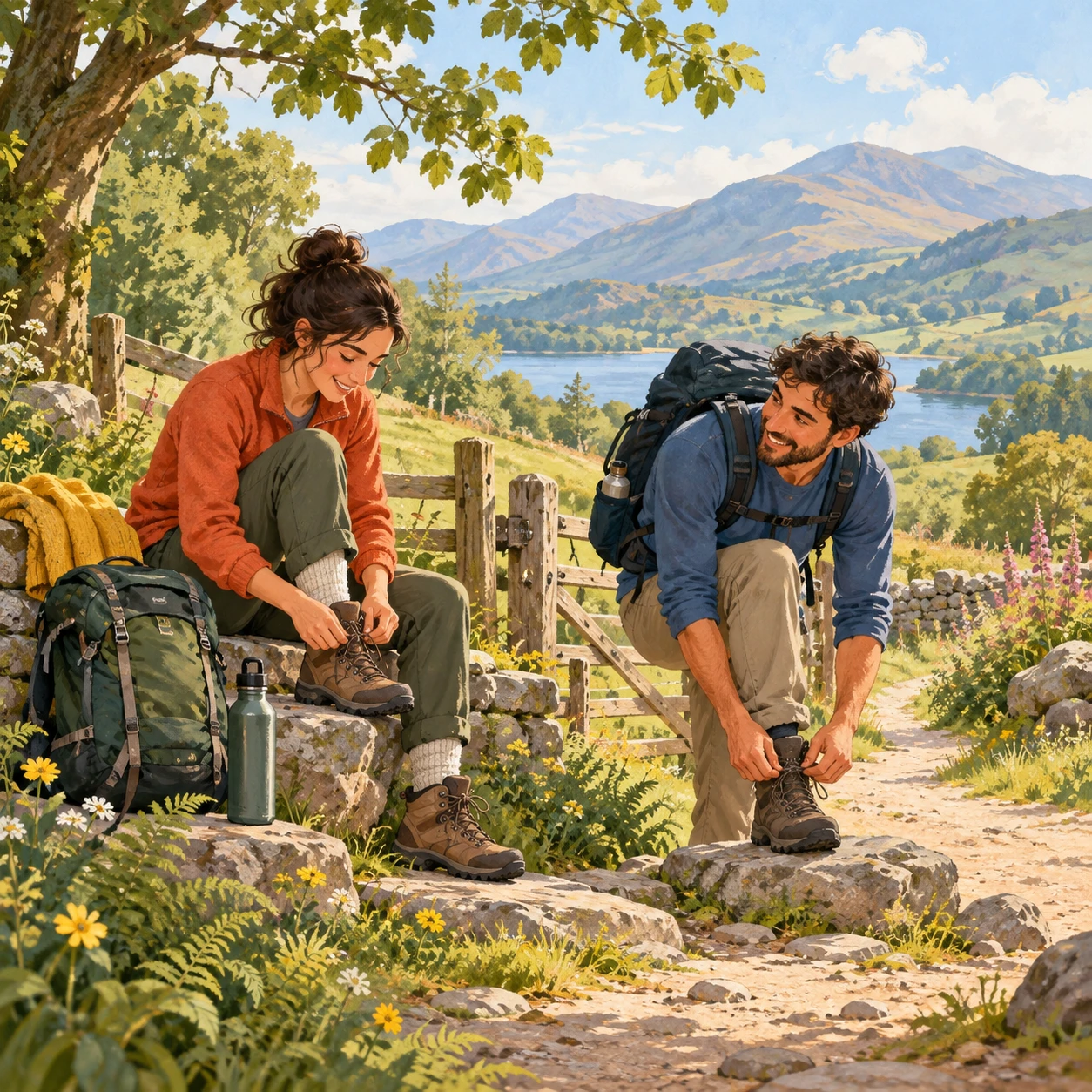
I wanted to join my friend Rosa on a hill walk, but I had never walked further than the town park. Rosa chose a short route around Pine Lake instead of the steep path to the old tower. She said that a first walk should leave me wanting another one, not make me dislike walking forever.
The evening before, we checked the forecast. It said the morning would be dry, with rain later, so we agreed to begin at eight. I put two large water bottles into my bag. Rosa suggested taking one bottle and filling it at the visitor centre halfway round. That made my bag lighter. She also checked that my new boots felt comfortable. They were too tight with thick socks, so I wore my older walking shoes instead.
At first, I walked quickly because I wanted to reach the lake early. After twenty minutes, I needed a rest. Rosa explained that a steady speed was better than walking fast and stopping often. We slowed down and talked about the birds beside the path. I enjoyed the walk much more after that.
We ate our lunch near the visitor centre. Before leaving, we put all our rubbish back in our bags. Rain began during the last ten minutes of the walk. I was glad I had packed a light jacket. We finished tired but happy, and I asked Rosa to choose another easy route for the following month.
Relacione a pessoa, horário, lugar ou quantidade ao acontecimento correto.
The doors open at eight. The class starts at nine.
Use a razão apresentada; uma razão externa apenas plausível não basta. Pergunte o que a pessoa ou mensagem pretende alcançar e para quem. Relacione a pessoa, horário, lugar ou quantidade ao acontecimento correto. Retome a pessoa, objeto ou ideia que a palavra representa nessa frase.
We meet inside because it is raining.
Leia o material original em inglês e responda com evidências. O nível é uma referência editorial, não um resultado certificado.
I wanted to join my friend Rosa on a hill walk, but I had never walked further than the town park. Rosa chose a short route around Pine Lake instead of the steep path to the old tower. She said that a first walk should leave me wanting another one, not make me dislike walking forever.
The evening before, we checked the forecast. It said the morning would be dry, with rain later, so we agreed to begin at eight. I put two large water bottles into my bag. Rosa suggested taking one bottle and filling it at the visitor centre halfway round. That made my bag lighter. She also checked that my new boots felt comfortable. They were too tight with thick socks, so I wore my older walking shoes instead.
At first, I walked quickly because I wanted to reach the lake early. After twenty minutes, I needed a rest. Rosa explained that a steady speed was better than walking fast and stopping often. We slowed down and talked about the birds beside the path. I enjoyed the walk much more after that.
We ate our lunch near the visitor centre. Before leaving, we put all our rubbish back in our bags. Rain began during the last ten minutes of the walk. I was glad I had packed a light jacket. We finished tired but happy, and I asked Rosa to choose another easy route for the following month.
A first hiking day
Use a razão apresentada; uma razão externa apenas plausível não basta. Pergunte o que a pessoa ou mensagem pretende alcançar e para quem. Relacione a pessoa, horário, lugar ou quantidade ao acontecimento correto. Retome a pessoa, objeto ou ideia que a palavra representa nessa frase.
We meet inside because it is raining.Relacione a pessoa, horário, lugar ou quantidade ao acontecimento correto.
The doors open at eight. The class starts at nine.Relacione a pessoa, horário, lugar ou quantidade ao acontecimento correto.
The doors open at eight. The class starts at nine.Mantenha a primeira resposta, confira a evidência e tente outra questão. Acertar no mesmo material não comprova transferência para outro texto.
Ainda não há revisões. Faça um aquecimento curto.
Relacione a pessoa, horário, lugar ou quantidade ao acontecimento correto.
The doors open at eight. The class starts at nine.Use a razão apresentada; uma razão externa apenas plausível não basta. Pergunte o que a pessoa ou mensagem pretende alcançar e para quem. Relacione a pessoa, horário, lugar ou quantidade ao acontecimento correto. Retome a pessoa, objeto ou ideia que a palavra representa nessa frase.
We meet inside because it is raining.Abrir uma resposta registra ajuda para essa questão.
A first hiking day
Resposta: “It was suitable for a first hill walk.”. Evidência: “I wanted to join my friend Rosa on a hill walk, but I had never walked further than the town park. Rosa chose a short route around Pine Lake instead of the steep path to the old tower.”. Confira “The writer had already climbed the tower.”: Isso diz o contrário do detalhe relevante. Evidência: “I had never walked further than the town park.”. Confira “The route had no birds.”: Isso diz o contrário do detalhe relevante. Evidência: “We slowed down and talked about the birds beside the path.”.
A first hiking day
Resposta: “The new boots were too tight with thick socks.”. Evidência: “They were too tight with thick socks, so I wore my older walking shoes instead.”. Confira “Rosa had borrowed the new boots.”: O texto não dá esse detalhe. Não o acrescente. Confira “The older shoes were waterproof.”: O texto não dá esse detalhe. Não o acrescente.
A first hiking day
Resposta: “The forecast predicted rain later in the day.”. Evidência: “It said the morning would be dry, with rain later, so we agreed to begin at eight.”. Confira “Rosa had to reach the tower by nine.”: O texto não dá esse detalhe. Não o acrescente. Confira “The writer had to work at lunchtime.”: O texto não dá esse detalhe. Não o acrescente.
A first hiking day
Resposta: “By taking one water bottle instead of two.”. Evidência: “Rosa suggested taking one bottle and filling it at the visitor centre halfway round. That made my bag lighter.”. Confira “By leaving the jacket behind.”: Isso diz o contrário do detalhe relevante. Evidência: “I was glad I had packed a light jacket.”. Confira “By leaving all food at home.”: O texto não dá esse detalhe. Não o acrescente. Evidência: “We ate our lunch near the visitor centre.”.
A first hiking day
Resposta: “At the visitor centre.”. Evidência: “filling it at the visitor centre halfway round.”. Confira “At the old tower.”: Não é o lugar indicado para essa ação. Evidência: “a short route around Pine Lake instead of the steep path to the old tower.”. Confira “In the town park.”: Não é o lugar indicado para essa ação. Evidência: “I had never walked further than the town park.”.
A first hiking day
Resposta: “Interest in going walking again.”. Evidência: “a first walk should leave me wanting another one”. Confira “A decision to avoid all future walks.”: Isso diz o contrário do detalhe relevante. Confira “A race to the tower.”: Isso dá um detalhe diferente do que foi perguntado. Evidência: “a short route around Pine Lake instead of the steep path to the old tower.”.
A first hiking day
Resposta: “The writer needed a rest.”. Evidência: “After twenty minutes, I needed a rest.”. Confira “Rain started.”: Isso confunde o horário deste evento com outro horário. Evidência: “Rain began during the last ten minutes of the walk.”. Confira “The visitor centre opened.”: O texto não dá esse detalhe. Não o acrescente.
A first hiking day
Resposta: “A pace they could keep without frequent stops.”. Evidência: “a steady speed was better than walking fast and stopping often.”. Confira “Walking quickly between frequent rests.”: Isso diz o contrário do detalhe relevante. Confira “The fastest pace possible.”: Isso diz o contrário do detalhe relevante.
A first hiking day
Resposta: “Slowing down and noticing things around them.”. Evidência: “We slowed down and talked about the birds beside the path. I enjoyed the walk much more after that.”. Confira “Turning the walk into a race.”: Isso diz o contrário do detalhe relevante. Confira “Taking the steep tower path.”: Isso dá um detalhe diferente do que foi perguntado. Evidência: “a short route around Pine Lake instead of the steep path to the old tower.”.
A first hiking day
Resposta: “They carried it away in their bags.”. Evidência: “we put all our rubbish back in our bags.”. Confira “They left it beside the visitor centre.”: Isso diz o contrário do detalhe relevante. Confira “They put it in the lake.”: Isso diz o contrário do detalhe relevante.
A first hiking day
Resposta: “During the final ten minutes.”. Evidência: “Rain began during the last ten minutes of the walk.”. Confira “At the start of lunch.”: Isso confunde o horário deste evento com outro horário. Evidência: “We ate our lunch near the visitor centre.”. Confira “After they reached home.”: Isso muda a ordem das ações.
A first hiking day
Resposta: “Asking Rosa to choose another easy route.”. Evidência: “I asked Rosa to choose another easy route for the following month.”. Confira “Deciding to walk only in the town park.”: Isso torna a afirmação mais ampla ou mais forte do que o texto permite. Confira “Returning the old walking shoes.”: O texto não dá esse detalhe. Não o acrescente.