
A1

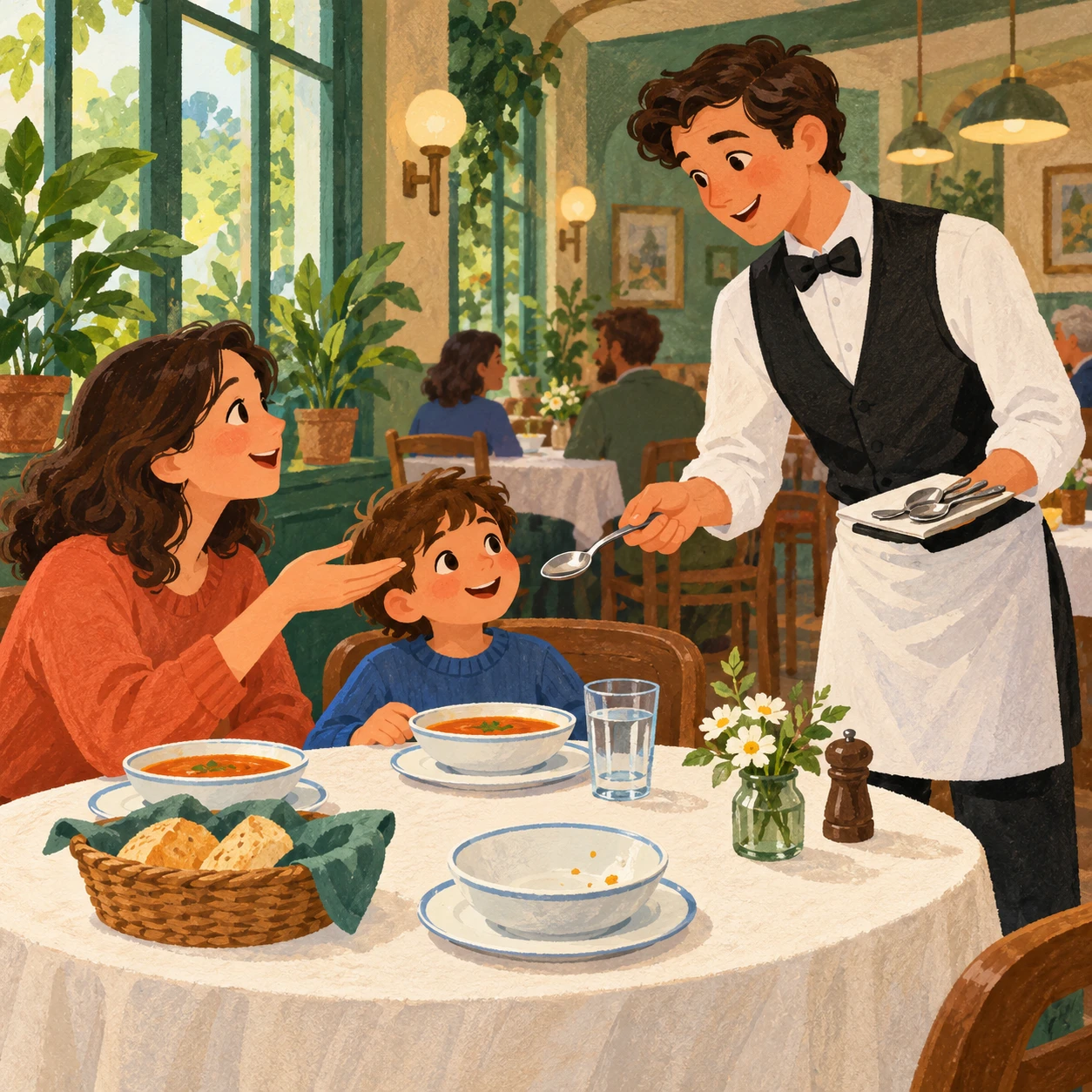
A cafe order

About this lesson

A cafe order · A1. Keep the requested person, time, place or amount attached to the correct event. Keep the stated condition or permission; a rule does not prove that an event happened.

Listen to the original script when local audio is available. Notice corrections and reasons; use the transcript after listening to check your evidence.

6 items
Save it to find it in My collection.
waiter
ListeningA1

An order at a café

Listen to the original script when local audio is available. Notice corrections and reasons; use the transcript after listening to check your evidence.

A little clarity first

Stated details · Conditions and permissions

Keep the requested person, time, place or amount attached to the correct event. Keep the stated condition or permission; a rule does not prove that an event happened.

The doors open at eight. The class starts at nine.

Stated details · Reasons

Keep the requested person, time, place or amount attached to the correct event. Use the reason actually given; a plausible reason from outside the text is not enough.

The doors open at eight. The class starts at nine.

Sequence and plans

Reconstruct the order without swapping the earlier and later actions.

First read the note. Then call the office.

Learning material
waiter
ListeningA1

An order at a café

Listen to the original script when local audio is available. Notice corrections and reasons; use the transcript after listening to check your evidence.

0/6
Questions
01 / 6D01Save it to find it in My collection.

An order at a café

Which table is ordering?

Your answer
1 / 6

Your learning route

01
Step 1 · Warm-up

Warm-up

0/2
02
Step 2 · Build the skill

Stated details · Conditions and permissions

0/1

Keep the requested person, time, place or amount attached to the correct event. Keep the stated condition or permission; a rule does not prove that an event happened.

The doors open at eight. The class starts at nine.
03
Step 3 · Build the skill

Stated details · Reasons

0/1

Keep the requested person, time, place or amount attached to the correct event. Use the reason actually given; a plausible reason from outside the text is not enough.

The doors open at eight. The class starts at nine.
04
Step 4 · Related practice

Related practice

0/1
05
Step 5 · Text challenge

Text challenge

0/1
Practice notes in this unit

Make mistakes useful.

Keep your first attempt, check the evidence and try another question. A follow-up on the same material does not prove transfer to a new text.

0

No practice notes yet. Try a short warm-up.

Lesson map

A cafe order

A1
A cafe order

Lesson points

01

Stated details · Conditions and permissions

Keep the requested person, time, place or amount attached to the correct event. Keep the stated condition or permission; a rule does not prove that an event happened.

The doors open at eight. The class starts at nine.
02

Stated details · Reasons

Keep the requested person, time, place or amount attached to the correct event. Use the reason actually given; a plausible reason from outside the text is not enough.

The doors open at eight. The class starts at nine.
03

Sequence and plans

Reconstruct the order without swapping the earlier and later actions.

First read the note. Then call the office.

Questions & answers

Opening an answer records help for that question.

D01 · Warm-up

An order at a café

Which table is ordering?

  1. Table four.
  2. Table six.
  3. Table seven.
  4. Table eleven.
Answer & explanation
Table seven.

Answer: “Table seven.”. Evidence: “Can I order for table seven”. Check “Table six.”: This is the wrong number for the thing asked about.

D02 · Warm-up

An order at a café

What coffee size does the speaker finally choose?

  1. Large.
  2. No coffee.
  3. Small.
  4. Medium.
Answer & explanation
Large.

Answer: “Large.”. Evidence: “make my coffee large.”. Check “Small.”: This was the earlier plan, not the final one. Evidence: “For drinks, a small coffee for me and a tea for her.”.

P01 · Build the skill

An order at a café

What should be left out of the sandwich?

  1. Milk.
  2. Tomato.
  3. Cheese.
  4. Bread.
Answer & explanation
Tomato.

Answer: “Tomato.”. Evidence: “a cheese sandwich, but no tomato.”. Check “Cheese.”: This says the opposite of the relevant detail.

P02 · Build the skill

An order at a café

Why should the soup arrive first?

  1. The speaker has to leave before the friend.
  2. The friend wants to pay before eating.
  3. The soup is for both people to share.
  4. The friend has to leave earlier.
Answer & explanation
The friend has to leave earlier.

Answer: “The friend has to leave earlier.”. Evidence: “My friend has to leave before I do.”. Check “The speaker has to leave before the friend.”: This says the opposite of the relevant detail.

R01 · Related practice

An order at a café

Why do they want to sit outside?

  1. There are no inside tables.
  2. They need a table closer to the door.
  3. It is sunny.
  4. The friend is meeting someone outside.
Answer & explanation
It is sunny.

Answer: “It is sunny.”. Evidence: “because it is sunny today.”. Check “There are no inside tables.”: The text does not give this detail. Do not add it.

X01 · Text challenge

An order at a café

Which bill arrangement matches the order?

  1. Separate card payments at different times.
  2. One card payment for both people.
  3. Two cash payments.
  4. One cash payment for the soup only.
Answer & explanation
One card payment for both people.

Answer: “One card payment for both people.”. Evidence: “We will pay together by card.”. Check “Two cash payments.”: This gives a different detail from the one asked for.