01형용사·부사의 정도와 그 결과
so + adjective/adverb + that 구조를 사용합니다. 의미: 형용사·부사의 정도와 그 결과.
The corridor was so narrow that the trolley would not fit.
so·such와 결과절 · B1. so + adjective/adverb + that 구조를 사용합니다. 의미: 형용사·부사의 정도와 그 결과.
새로 만든 12문제입니다. 상황에서 의도를 파악하고 형태를 연습한 뒤 새로운 맥락에 적용하세요.
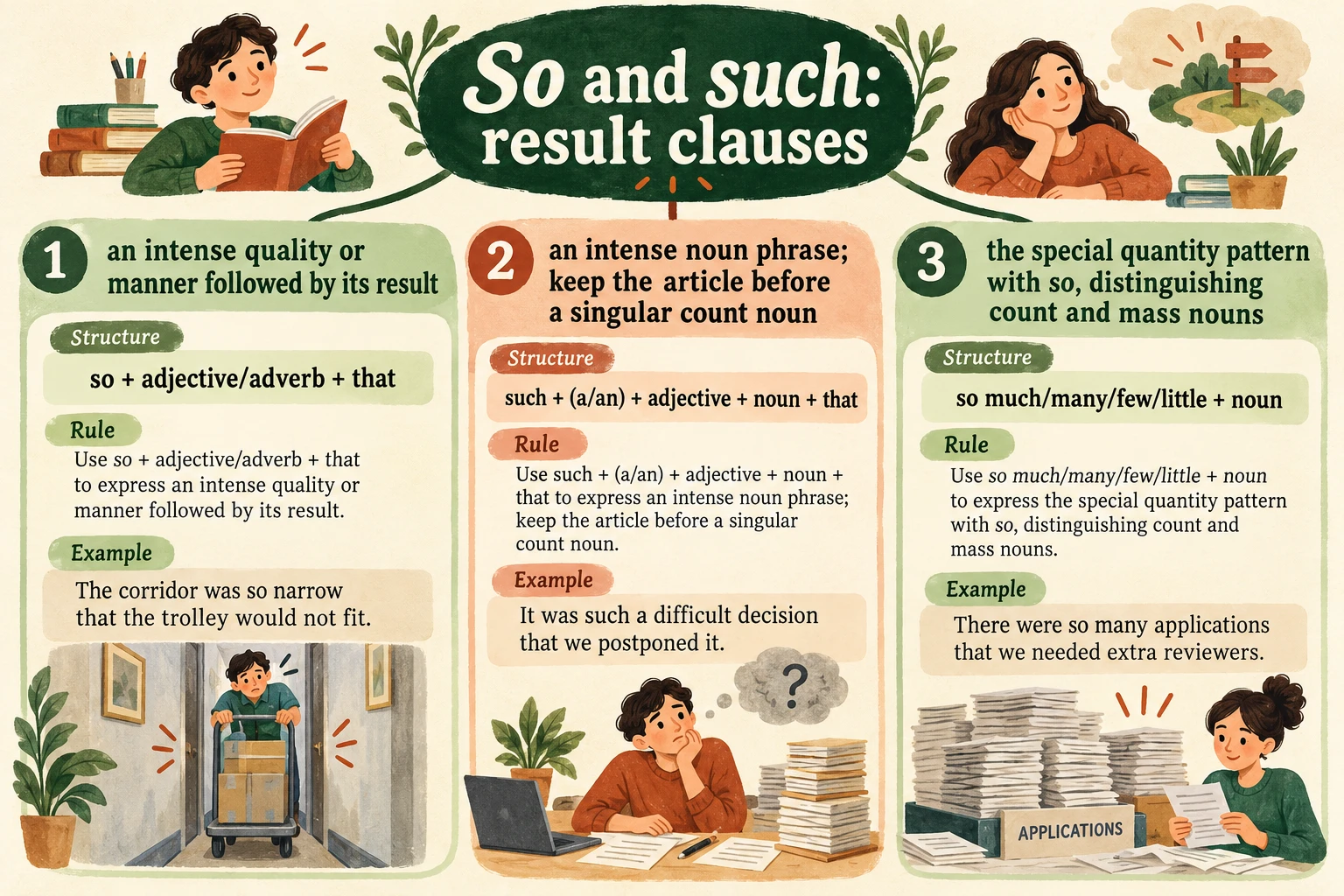
so + adjective/adverb + that 구조를 사용합니다. 의미: 형용사·부사의 정도와 그 결과.
The corridor was so narrow that the trolley would not fit.such + (a/an) + adjective + noun + that 구조를 사용합니다. 의미: 명사구의 정도. 단수 가산명사 앞 관사 유지.
It was such a difficult decision that we postponed it.so much/many/few/little + noun 구조를 사용합니다. 의미: so와 수량어의 특수 구조. 가산·불가산 구별.
There were so many applications that we needed extra reviewers.
The gap directly modifies an adjective.
so + adjective/adverb + that 구조를 사용합니다. 의미: 형용사·부사의 정도와 그 결과.
The corridor was so narrow that the trolley would not fit.such + (a/an) + adjective + noun + that 구조를 사용합니다. 의미: 명사구의 정도. 단수 가산명사 앞 관사 유지.
It was such a difficult decision that we postponed it.so much/many/few/little + noun 구조를 사용합니다. 의미: so와 수량어의 특수 구조. 가산·불가산 구별.
There were so many applications that we needed extra reviewers.첫 시도를 남기고 변화의 이유를 이해한 뒤 새로운 상황에서 확인해 보세요.
아직 복습 노트가 없어요. 짧은 워밍업부터 해보세요.
so + adjective/adverb + that 구조를 사용합니다. 의미: 형용사·부사의 정도와 그 결과.
The corridor was so narrow that the trolley would not fit.such + (a/an) + adjective + noun + that 구조를 사용합니다. 의미: 명사구의 정도. 단수 가산명사 앞 관사 유지.
It was such a difficult decision that we postponed it.so much/many/few/little + noun 구조를 사용합니다. 의미: so와 수량어의 특수 구조. 가산·불가산 구별.
There were so many applications that we needed extra reviewers.정답을 열면 해당 문제에 도움 사용이 기록돼요.
The gap directly modifies an adjective.
“The corridor was ___ narrow that the trolley would not fit.”를 보세요. so + adjective/adverb + that 구조를 사용합니다. 의미: 형용사·부사의 정도와 그 결과. 완성 문장: “The corridor was so narrow that the trolley would not fit.”.
The noun is singular and countable.
“It was ___ difficult decision that we postponed it.”를 보세요. such + (a/an) + adjective + noun + that 구조를 사용합니다. 의미: 명사구의 정도. 단수 가산명사 앞 관사 유지. 완성 문장: “It was such a difficult decision that we postponed it.”.
The following plural count noun requires a quantity pattern.
“There were ___ applications that we needed extra reviewers.”를 보세요. so much/many/few/little + noun 구조를 사용합니다. 의미: so와 수량어의 특수 구조. 가산·불가산 구별. 완성 문장: “There were so many applications that we needed extra reviewers.”.
The gap modifies an adverb.
“She spoke ___ softly that nobody at the back heard.”를 보세요. so + adjective/adverb + that 구조를 사용합니다. 의미: 형용사·부사의 정도와 그 결과. 완성 문장: “She spoke so softly that nobody at the back heard.”.
Complete the result construction before a singular countable noun phrase.
완성 문장: “It was such a convincing argument that the committee changed its view.” such + (a/an) + adjective + noun + that 구조를 사용합니다. 의미: 명사구의 정도. 단수 가산명사 앞 관사 유지. 과제의 주어·시간·의미에 맞춘 형태입니다. 검토한 답만 자동으로 확인하며, 다른 표현을 자동으로 틀렸다고 하지 않습니다.
Noise is uncountable in this context.
“There was ___ noise that we could not record.”를 보세요. so much/many/few/little + noun 구조를 사용합니다. 의미: so와 수량어의 특수 구조. 가산·불가산 구별. 완성 문장: “There was so much noise that we could not record.”.
Complete the result construction directly before the adjective.
완성 문장: “The instructions were so vague that nobody knew where to start.” so + adjective/adverb + that 구조를 사용합니다. 의미: 형용사·부사의 정도와 그 결과. 과제의 주어·시간·의미에 맞춘 형태입니다. 검토한 답만 자동으로 확인하며, 다른 표현을 자동으로 틀렸다고 하지 않습니다.
The gap modifies the adjective bright.
“The sign was ___ bright that drivers complained.”를 보세요. so + adjective/adverb + that 구조를 사용합니다. 의미: 형용사·부사의 정도와 그 결과. 완성 문장: “The sign was so bright that drivers complained.”.
Complete the result construction before a plural noun phrase.
완성 문장: “They were such helpful volunteers that we invited them back.” such + (a/an) + adjective + noun + that 구조를 사용합니다. 의미: 명사구의 정도. 단수 가산명사 앞 관사 유지. 과제의 주어·시간·의미에 맞춘 형태입니다. 검토한 답만 자동으로 확인하며, 다른 표현을 자동으로 틀렸다고 하지 않습니다.
There was a very small amount of time, so lunch was skipped. Use the quantity pattern for that small amount.
“There was a very small amount of time, so lunch was skipped. Use the quantity pattern for that small amount.”를 보세요. so much/many/few/little + noun 구조를 사용합니다. 의미: so와 수량어의 특수 구조. 가산·불가산 구별. 완성 문장: “We had so little time left that we skipped lunch.”.
The number of mistakes was very small, so checking was quick. Use the quantity pattern for that small number.
“The number of mistakes was very small, so checking was quick. Use the quantity pattern for that small number.”를 보세요. such + (a/an) + adjective + noun + that 구조를 사용합니다. 의미: 명사구의 정도. 단수 가산명사 앞 관사 유지. 완성 문장: “She made so few mistakes that checking took minutes.”.
Complete the result construction expressing a large number of countable delays.
완성 문장: “There were so many delays that we missed the final connection.” so much/many/few/little + noun 구조를 사용합니다. 의미: so와 수량어의 특수 구조. 가산·불가산 구별. 과제의 주어·시간·의미에 맞춘 형태입니다. 검토한 답만 자동으로 확인하며, 다른 표현을 자동으로 틀렸다고 하지 않습니다.