01습관을 나타내는 긍정문
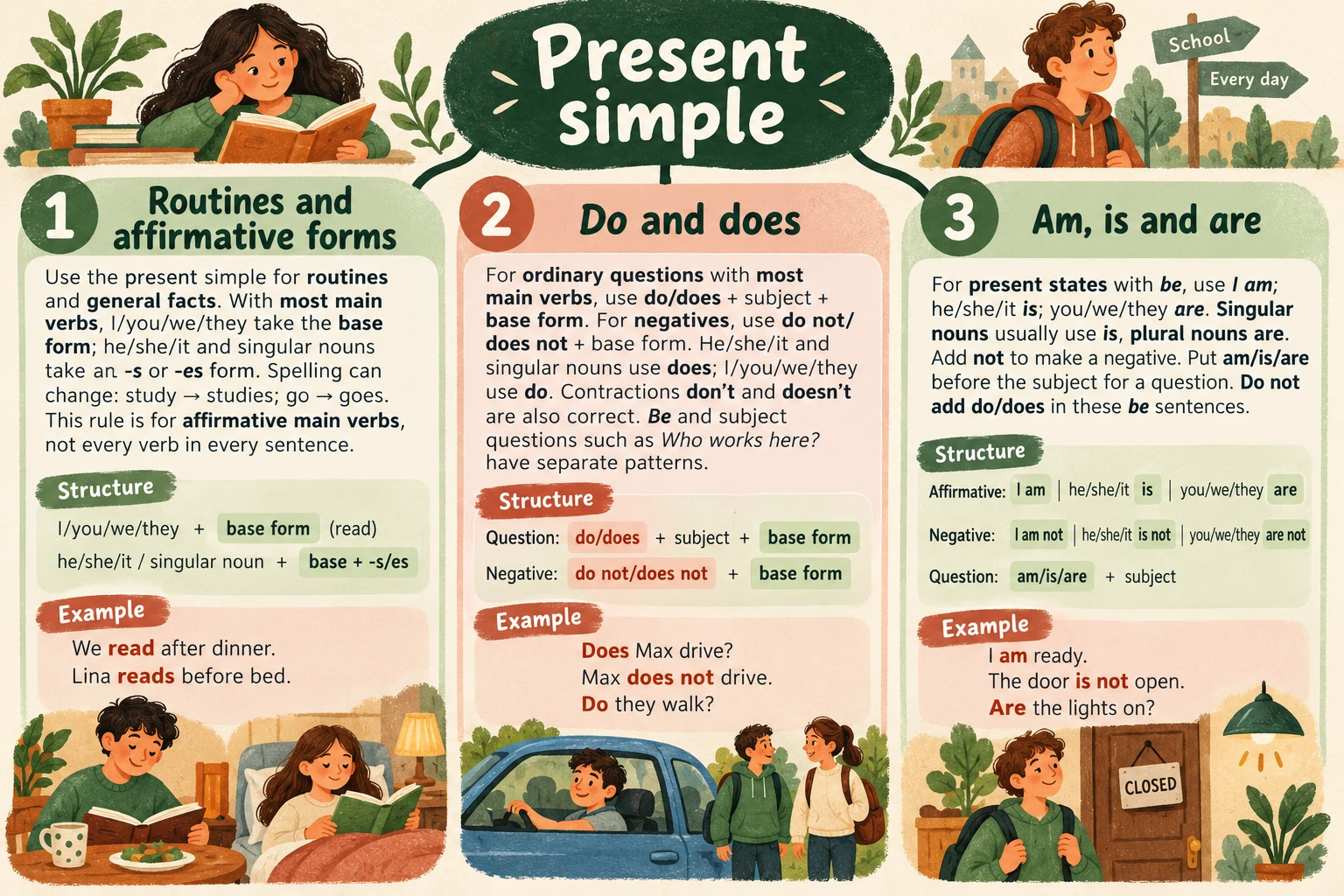
습관이나 일반적인 사실에는 현재 단순형을 씁니다. 대부분의 일반동사는 I/you/we/they에 원형을, he/she/it과 단수 명사에 -s나 -es가 붙은 형태를 씁니다. study → studies, go → goes처럼 철자가 바뀌기도 합니다. 이 규칙은 긍정문의 본동사에 해당하며 모든 문장의 모든 동사에 적용되지는 않습니다.
I work · she works
현재 단순형 · A1. 습관이나 일반적인 사실에는 현재 단순형을 씁니다. 대부분의 일반동사는 I/you/we/they에 원형을, he/she/it과 단수 명사에 -s나 -es가 붙은 형태를 씁니다. study → studies, go → goes처럼 철자가 바뀌기도 합니다. 이 규칙은 긍정문의 본동사에 해당하며 모든 문장의 모든 동사에 적용되지는 않습니다.
습관과 현재 상태를 표현해 보세요. 동사 어미, do/does, am/is/are를 연습합니다.
습관이나 일반적인 사실에는 현재 단순형을 씁니다. 대부분의 일반동사는 I/you/we/they에 원형을, he/she/it과 단수 명사에 -s나 -es가 붙은 형태를 씁니다. study → studies, go → goes처럼 철자가 바뀌기도 합니다. 이 규칙은 긍정문의 본동사에 해당하며 모든 문장의 모든 동사에 적용되지는 않습니다.
I work · she works대부분의 일반동사를 쓰는 보통의 의문문은 do/does + 주어 + 동사원형, 부정문은 do not/does not + 동사원형입니다. he/she/it과 단수 명사에는 does, I/you/we/they에는 do를 씁니다. 축약형 don’t와 doesn’t도 맞습니다. be동사와 Who works here?처럼 주어를 묻는 의문문은 다른 형태를 씁니다.
Do/Does + subject + base verb?be동사로 현재 상태를 나타낼 때 I am, he/she/it is, you/we/they are를 씁니다. 단수 명사에는 보통 is, 복수 명사에는 are를 씁니다. 부정문은 not을 붙이고 의문문은 am/is/are를 주어 앞으로 옮깁니다. 이런 be동사 문장에 do/does를 더하지 않습니다.
I am · she is · they areI work here.She works here.
I don’t work here.She doesn’t work here.
Do you work here?Does she work here?
Yes, I do.No, she doesn’t.
Walking to college is Leila’s daily routine.
습관이나 일반적인 사실에는 현재 단순형을 씁니다. 대부분의 일반동사는 I/you/we/they에 원형을, he/she/it과 단수 명사에 -s나 -es가 붙은 형태를 씁니다. study → studies, go → goes처럼 철자가 바뀌기도 합니다. 이 규칙은 긍정문의 본동사에 해당하며 모든 문장의 모든 동사에 적용되지는 않습니다.
We read after dinner. Lina reads before bed.be동사로 현재 상태를 나타낼 때 I am, he/she/it is, you/we/they are를 씁니다. 단수 명사에는 보통 is, 복수 명사에는 are를 씁니다. 부정문은 not을 붙이고 의문문은 am/is/are를 주어 앞으로 옮깁니다. 이런 be동사 문장에 do/does를 더하지 않습니다.
I am ready. The door is not open. Are the lights on?대부분의 일반동사를 쓰는 보통의 의문문은 do/does + 주어 + 동사원형, 부정문은 do not/does not + 동사원형입니다. he/she/it과 단수 명사에는 does, I/you/we/they에는 do를 씁니다. 축약형 don’t와 doesn’t도 맞습니다. be동사와 Who works here?처럼 주어를 묻는 의문문은 다른 형태를 씁니다.
Does Max drive? Max does not drive. Do they walk?첫 시도를 남기고 변화의 이유를 이해한 뒤 새로운 상황에서 확인해 보세요.
아직 복습 노트가 없어요. 짧은 워밍업부터 해보세요.
습관이나 일반적인 사실에는 현재 단순형을 씁니다. 대부분의 일반동사는 I/you/we/they에 원형을, he/she/it과 단수 명사에 -s나 -es가 붙은 형태를 씁니다. study → studies, go → goes처럼 철자가 바뀌기도 합니다. 이 규칙은 긍정문의 본동사에 해당하며 모든 문장의 모든 동사에 적용되지는 않습니다.
We read after dinner. Lina reads before bed.대부분의 일반동사를 쓰는 보통의 의문문은 do/does + 주어 + 동사원형, 부정문은 do not/does not + 동사원형입니다. he/she/it과 단수 명사에는 does, I/you/we/they에는 do를 씁니다. 축약형 don’t와 doesn’t도 맞습니다. be동사와 Who works here?처럼 주어를 묻는 의문문은 다른 형태를 씁니다.
Does Max drive? Max does not drive. Do they walk?be동사로 현재 상태를 나타낼 때 I am, he/she/it is, you/we/they are를 씁니다. 단수 명사에는 보통 is, 복수 명사에는 are를 씁니다. 부정문은 not을 붙이고 의문문은 am/is/are를 주어 앞으로 옮깁니다. 이런 be동사 문장에 do/does를 더하지 않습니다.
I am ready. The door is not open. Are the lights on?정답을 열면 해당 문제에 도움 사용이 기록돼요.
Walking to college is Leila’s daily routine.
“Walking to college is Leila’s daily routine.”를 보세요. 습관이나 일반적인 사실에는 현재 단순형을 씁니다. 대부분의 일반동사는 I/you/we/they에 원형을, he/she/it과 단수 명사에 -s나 -es가 붙은 형태를 씁니다. study → studies, go → goes처럼 철자가 바뀌기도 합니다. 이 규칙은 긍정문의 본동사에 해당하며 모든 문장의 모든 동사에 적용되지는 않습니다. 완성 문장: “Leila walks to college every day.”.
You want to ask about your friend’s brother’s usual Monday routine.
“You want to ask about your friend’s brother’s usual Monday routine.”를 보세요. 대부분의 일반동사를 쓰는 보통의 의문문은 do/does + 주어 + 동사원형, 부정문은 do not/does not + 동사원형입니다. he/she/it과 단수 명사에는 does, I/you/we/they에는 do를 씁니다. 축약형 don’t와 doesn’t도 맞습니다. be동사와 Who works here?처럼 주어를 묻는 의문문은 다른 형태를 씁니다. 완성 문장: “Does your brother cook on Mondays?”.
Location note: two keys, inside the drawer, now.
“Location note: two keys, inside the drawer, now.”를 보세요. be동사로 현재 상태를 나타낼 때 I am, he/she/it is, you/we/they are를 씁니다. 단수 명사에는 보통 is, 복수 명사에는 are를 씁니다. 부정문은 not을 붙이고 의문문은 am/is/are를 주어 앞으로 옮깁니다. 이런 be동사 문장에 do/does를 더하지 않습니다. 완성 문장: “The keys are in the drawer.”.
Arun has a regular evening study routine.
Arun은 한 사람이고 every evening은 습관을 나타냅니다. study는 자음 + y로 끝나므로 y를 i로 바꾸고 -es를 붙여 studies로 씁니다.
You have your book and pencil. Tell the teacher that you are ready.
“You have your book and pencil. Tell the teacher that you are ready.”를 보세요. be동사로 현재 상태를 나타낼 때 I am, he/she/it is, you/we/they are를 씁니다. 단수 명사에는 보통 is, 복수 명사에는 are를 씁니다. 부정문은 not을 붙이고 의문문은 am/is/are를 주어 앞으로 옮깁니다. 이런 be동사 문장에 do/does를 더하지 않습니다. 완성 문장: “I am ready for the lesson.”.
Coffee is not part of your sister’s usual diet.
“Coffee is not part of your sister’s usual diet.”를 보세요. 대부분의 일반동사를 쓰는 보통의 의문문은 do/does + 주어 + 동사원형, 부정문은 do not/does not + 동사원형입니다. he/she/it과 단수 명사에는 does, I/you/we/they에는 do를 씁니다. 축약형 don’t와 doesn’t도 맞습니다. be동사와 Who works here?처럼 주어를 묻는 의문문은 다른 형태를 씁니다. 완성 문장: “My sister does not drink coffee.”.
The library is closed every Sunday. Correct this claim by making it negative: The library is open on Sundays.
The library는 단수이므로 is를 유지하고 not을 붙입니다. is not과 isn’t 모두 맞으며 나머지는 그대로 둡니다. The library’s not도 The library is not의 올바른 축약형입니다.
This sentence has one verb-form error: My uncle go to work by train every day.
My uncle은 한 사람입니다. 현재 단순형 긍정문에서 go는 goes가 되며 every day는 일상 습관을 나타냅니다.
You want to ask about the town where Niko has his home.
“You want to ask about the town where Niko has his home.”를 보세요. 대부분의 일반동사를 쓰는 보통의 의문문은 do/does + 주어 + 동사원형, 부정문은 do not/does not + 동사원형입니다. he/she/it과 단수 명사에는 does, I/you/we/they에는 do를 씁니다. 축약형 don’t와 doesn’t도 맞습니다. be동사와 Who works here?처럼 주어를 묻는 의문문은 다른 형태를 씁니다. 완성 문장: “Where does Niko live?”.
You want to know whether the students usually feel tired after class.
“You want to know whether the students usually feel tired after class.”를 보세요. be동사로 현재 상태를 나타낼 때 I am, he/she/it is, you/we/they are를 씁니다. 단수 명사에는 보통 is, 복수 명사에는 are를 씁니다. 부정문은 not을 붙이고 의문문은 am/is/are를 주어 앞으로 옮깁니다. 이런 be동사 문장에 do/does를 더하지 않습니다. 완성 문장: “Are the students tired after class?”.
The museum’s regular opening time is ten o’clock on every weekday.
“The museum’s regular opening time is ten o’clock on every weekday.”를 보세요. 습관이나 일반적인 사실에는 현재 단순형을 씁니다. 대부분의 일반동사는 I/you/we/they에 원형을, he/she/it과 단수 명사에 -s나 -es가 붙은 형태를 씁니다. study → studies, go → goes처럼 철자가 바뀌기도 합니다. 이 규칙은 긍정문의 본동사에 해당하며 모든 문장의 모든 동사에 적용되지는 않습니다. 완성 문장: “The museum opens at ten every weekday.”.
You do not know whether both of your friend’s parents usually work on Saturdays.
Your parents는 복수이므로 Do로 시작합니다. 주어 뒤에 동사원형 work를 써서 토요일의 일상 습관을 묻습니다.