01習慣を表す肯定文
習慣や一般的な事実には現在形を使います。多くの一般動詞では I/you/we/they に原形を、he/she/it や単数の名詞に -s または -es の付く形を使います。study → studies、go → goes などの変化に注意しましょう。これは肯定文の一般動詞についての規則で、すべての文のすべての動詞に当てはまるわけではありません。
I work · she works
現在形 · A1. 習慣や一般的な事実には現在形を使います。多くの一般動詞では I/you/we/they に原形を、he/she/it や単数の名詞に -s または -es の付く形を使います。study → studies、go → goes などの変化に注意しましょう。これは肯定文の一般動詞についての規則で、すべての文のすべての動詞に当てはまるわけではありません。
習慣や今の状態を表す練習です。動詞の語尾、do/does、am/is/areを確かめましょう。
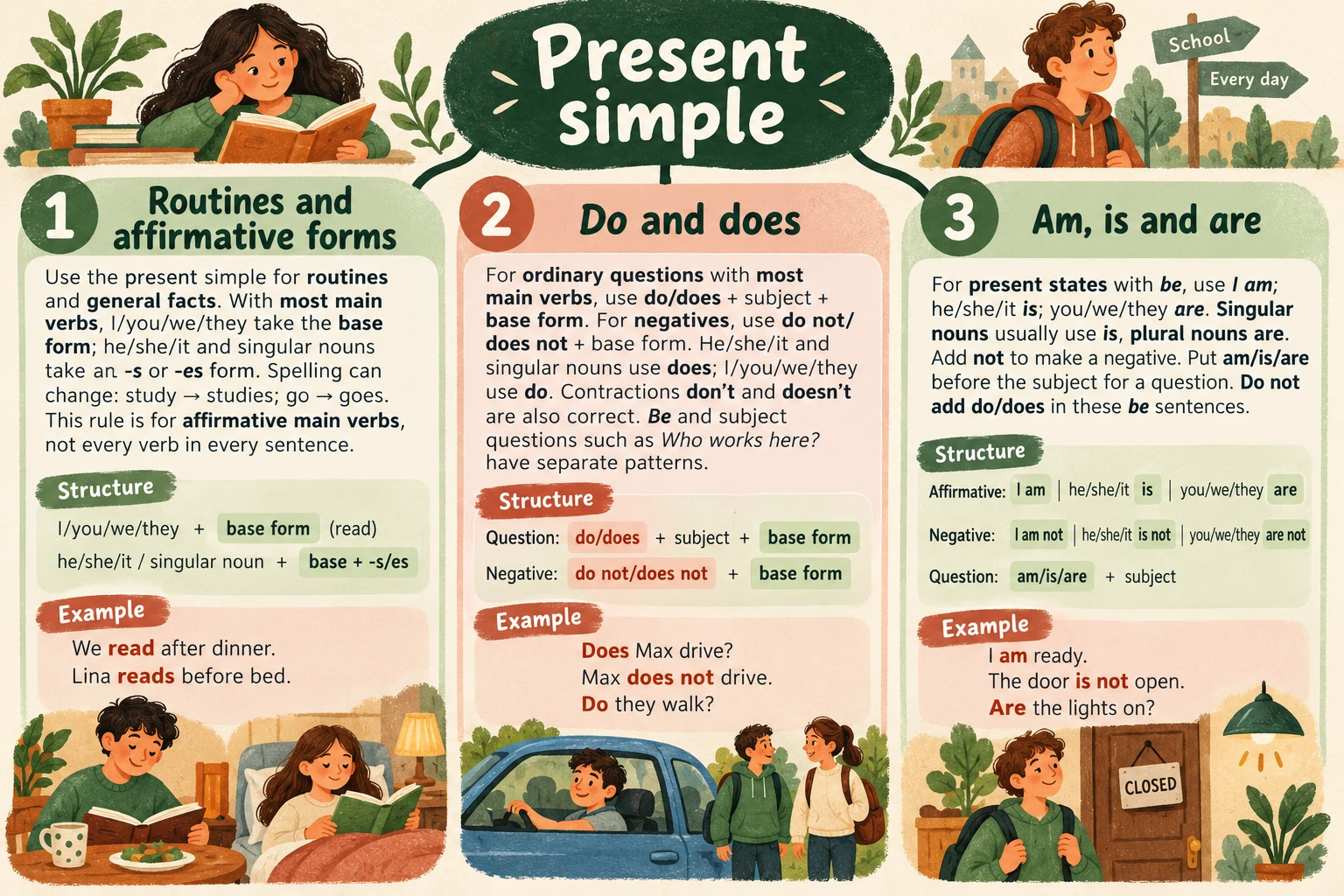
習慣や一般的な事実には現在形を使います。多くの一般動詞では I/you/we/they に原形を、he/she/it や単数の名詞に -s または -es の付く形を使います。study → studies、go → goes などの変化に注意しましょう。これは肯定文の一般動詞についての規則で、すべての文のすべての動詞に当てはまるわけではありません。
I work · she works多くの一般動詞の通常の疑問文は do/does+主語+原形、否定文は do not/does not+原形にします。he/she/it や単数の名詞には does、I/you/we/they には do を使います。don’t と doesn’t という短縮形も使えます。be 動詞や Who works here? のように主語を尋ねる疑問文は別の形です。
Do/Does + subject + base verb?be 動詞で現在の状態を表す場合は I am、he/she/it is、you/we/they are とします。単数の名詞には通常 is、複数の名詞には are を使います。否定文は not を加え、疑問文は am/is/are を主語の前に置きます。これらの be 動詞の文に do/does は加えません。
I am · she is · they areI work here.She works here.
I don’t work here.She doesn’t work here.
Do you work here?Does she work here?
Yes, I do.No, she doesn’t.

Walking to college is Leila’s daily routine.
習慣や一般的な事実には現在形を使います。多くの一般動詞では I/you/we/they に原形を、he/she/it や単数の名詞に -s または -es の付く形を使います。study → studies、go → goes などの変化に注意しましょう。これは肯定文の一般動詞についての規則で、すべての文のすべての動詞に当てはまるわけではありません。
We read after dinner. Lina reads before bed.be 動詞で現在の状態を表す場合は I am、he/she/it is、you/we/they are とします。単数の名詞には通常 is、複数の名詞には are を使います。否定文は not を加え、疑問文は am/is/are を主語の前に置きます。これらの be 動詞の文に do/does は加えません。
I am ready. The door is not open. Are the lights on?多くの一般動詞の通常の疑問文は do/does+主語+原形、否定文は do not/does not+原形にします。he/she/it や単数の名詞には does、I/you/we/they には do を使います。don’t と doesn’t という短縮形も使えます。be 動詞や Who works here? のように主語を尋ねる疑問文は別の形です。
Does Max drive? Max does not drive. Do they walk?初回答を残し、変化の理由を理解して、別の場面で確かめます。
まだ復習ノートはありません。まずは短いウォームアップを。
習慣や一般的な事実には現在形を使います。多くの一般動詞では I/you/we/they に原形を、he/she/it や単数の名詞に -s または -es の付く形を使います。study → studies、go → goes などの変化に注意しましょう。これは肯定文の一般動詞についての規則で、すべての文のすべての動詞に当てはまるわけではありません。
We read after dinner. Lina reads before bed.多くの一般動詞の通常の疑問文は do/does+主語+原形、否定文は do not/does not+原形にします。he/she/it や単数の名詞には does、I/you/we/they には do を使います。don’t と doesn’t という短縮形も使えます。be 動詞や Who works here? のように主語を尋ねる疑問文は別の形です。
Does Max drive? Max does not drive. Do they walk?be 動詞で現在の状態を表す場合は I am、he/she/it is、you/we/they are とします。単数の名詞には通常 is、複数の名詞には are を使います。否定文は not を加え、疑問文は am/is/are を主語の前に置きます。これらの be 動詞の文に do/does は加えません。
I am ready. The door is not open. Are the lights on?解答を開くと、その問題にヒント利用が記録されます。
Walking to college is Leila’s daily routine.
「Walking to college is Leila’s daily routine.」に注目しましょう。習慣や一般的な事実には現在形を使います。多くの一般動詞では I/you/we/they に原形を、he/she/it や単数の名詞に -s または -es の付く形を使います。study → studies、go → goes などの変化に注意しましょう。これは肯定文の一般動詞についての規則で、すべての文のすべての動詞に当てはまるわけではありません。 完成文:「Leila walks to college every day.」。
You want to ask about your friend’s brother’s usual Monday routine.
「You want to ask about your friend’s brother’s usual Monday routine.」に注目しましょう。多くの一般動詞の通常の疑問文は do/does+主語+原形、否定文は do not/does not+原形にします。he/she/it や単数の名詞には does、I/you/we/they には do を使います。don’t と doesn’t という短縮形も使えます。be 動詞や Who works here? のように主語を尋ねる疑問文は別の形です。 完成文:「Does your brother cook on Mondays?」。
Location note: two keys, inside the drawer, now.
「Location note: two keys, inside the drawer, now.」に注目しましょう。be 動詞で現在の状態を表す場合は I am、he/she/it is、you/we/they are とします。単数の名詞には通常 is、複数の名詞には are を使います。否定文は not を加え、疑問文は am/is/are を主語の前に置きます。これらの be 動詞の文に do/does は加えません。 完成文:「The keys are in the drawer.」。
Arun has a regular evening study routine.
Arun は一人で、every evening は習慣を表します。study は子音字+y で終わるため、y を i に変えて -es を付け、studies にします。
You have your book and pencil. Tell the teacher that you are ready.
「You have your book and pencil. Tell the teacher that you are ready.」に注目しましょう。be 動詞で現在の状態を表す場合は I am、he/she/it is、you/we/they are とします。単数の名詞には通常 is、複数の名詞には are を使います。否定文は not を加え、疑問文は am/is/are を主語の前に置きます。これらの be 動詞の文に do/does は加えません。 完成文:「I am ready for the lesson.」。
Coffee is not part of your sister’s usual diet.
「Coffee is not part of your sister’s usual diet.」に注目しましょう。多くの一般動詞の通常の疑問文は do/does+主語+原形、否定文は do not/does not+原形にします。he/she/it や単数の名詞には does、I/you/we/they には do を使います。don’t と doesn’t という短縮形も使えます。be 動詞や Who works here? のように主語を尋ねる疑問文は別の形です。 完成文:「My sister does not drink coffee.」。
The library is closed every Sunday. Correct this claim by making it negative: The library is open on Sundays.
The library は単数なので is の後に not を加えます。is not と isn’t のどちらも使えます。ほかの部分は変えません。 The library’s not も The library is not の正しい短縮形です。
This sentence has one verb-form error: My uncle go to work by train every day.
My uncle は一人の人物です。現在形の肯定文では go を goes にします。every day は毎日の習慣を示します。
You want to ask about the town where Niko has his home.
「You want to ask about the town where Niko has his home.」に注目しましょう。多くの一般動詞の通常の疑問文は do/does+主語+原形、否定文は do not/does not+原形にします。he/she/it や単数の名詞には does、I/you/we/they には do を使います。don’t と doesn’t という短縮形も使えます。be 動詞や Who works here? のように主語を尋ねる疑問文は別の形です。 完成文:「Where does Niko live?」。
You want to know whether the students usually feel tired after class.
「You want to know whether the students usually feel tired after class.」に注目しましょう。be 動詞で現在の状態を表す場合は I am、he/she/it is、you/we/they are とします。単数の名詞には通常 is、複数の名詞には are を使います。否定文は not を加え、疑問文は am/is/are を主語の前に置きます。これらの be 動詞の文に do/does は加えません。 完成文:「Are the students tired after class?」。
The museum’s regular opening time is ten o’clock on every weekday.
「The museum’s regular opening time is ten o’clock on every weekday.」に注目しましょう。習慣や一般的な事実には現在形を使います。多くの一般動詞では I/you/we/they に原形を、he/she/it や単数の名詞に -s または -es の付く形を使います。study → studies、go → goes などの変化に注意しましょう。これは肯定文の一般動詞についての規則で、すべての文のすべての動詞に当てはまるわけではありません。 完成文:「The museum opens at ten every weekday.」。
You do not know whether both of your friend’s parents usually work on Saturdays.
Your parents は複数なので Do で始めます。主語の後に原形の work を置き、土曜日の習慣を尋ねます。