01부정·제한 부사구를 앞세울 때 주어와 조동사 도치
negative fronted adverbial + auxiliary + subject 구조를 사용합니다. 의미: 부정·제한 부사구를 앞세울 때 주어와 조동사 도치.
Never have I heard such a clear explanation.
부정 부사구 뒤의 도치 · B2. negative fronted adverbial + auxiliary + subject 구조를 사용합니다. 의미: 부정·제한 부사구를 앞세울 때 주어와 조동사 도치.
새로 만든 12문제입니다. 상황에서 의도를 파악하고 형태를 연습한 뒤 새로운 맥락에 적용하세요.
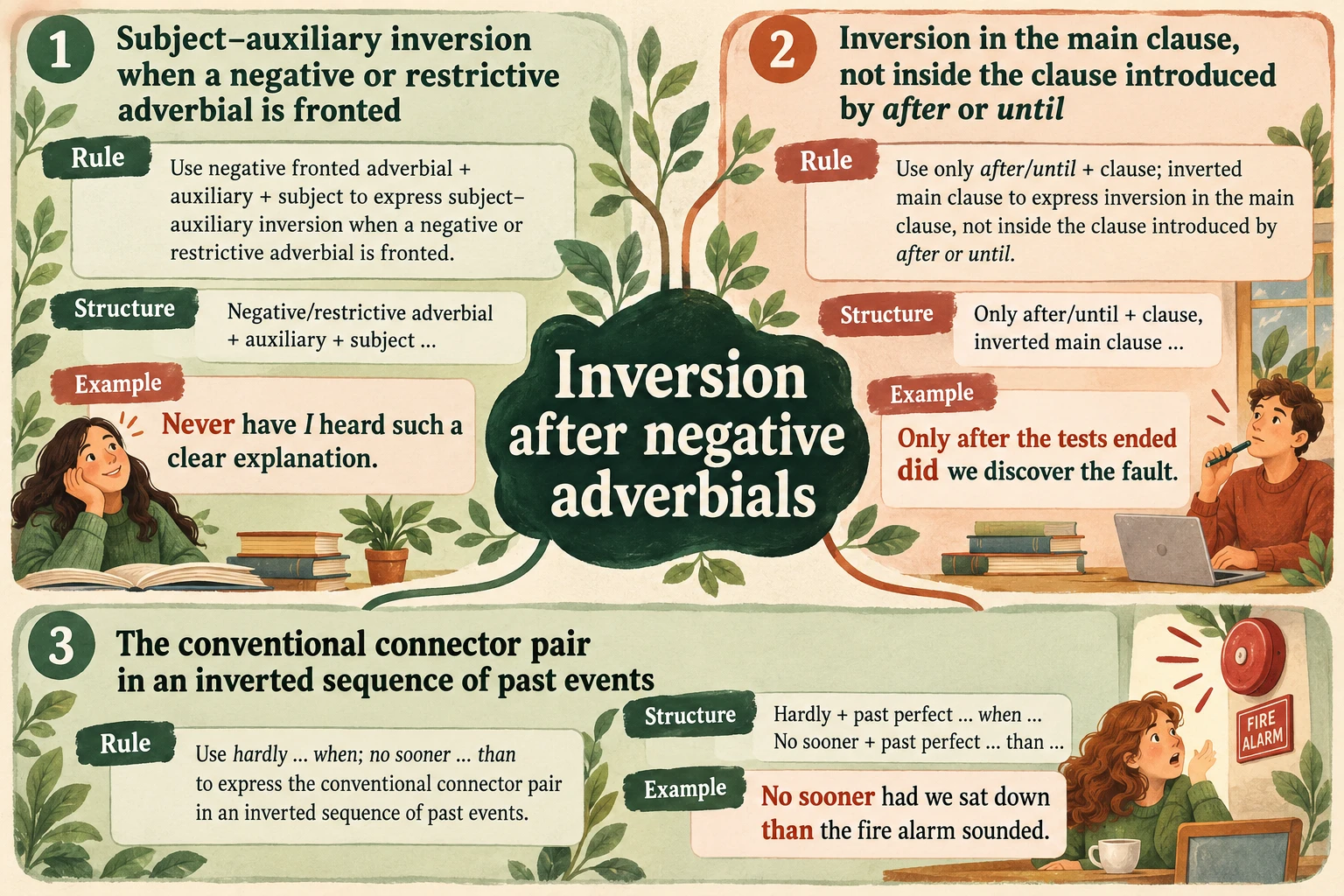
negative fronted adverbial + auxiliary + subject 구조를 사용합니다. 의미: 부정·제한 부사구를 앞세울 때 주어와 조동사 도치.
Never have I heard such a clear explanation.only after/until + clause; inverted main clause 구조를 사용합니다. 의미: after·until 절 내부가 아닌 주절에서 도치.
Only after the tests ended did we discover the fault.hardly ... when; no sooner ... than 구조를 사용합니다. 의미: 과거 연속 사건의 도치에서 쓰는 관용적 연결어 쌍.
No sooner had we sat down than the fire alarm sounded.
Never is fronted for formal emphasis; invert auxiliary and subject.
negative fronted adverbial + auxiliary + subject 구조를 사용합니다. 의미: 부정·제한 부사구를 앞세울 때 주어와 조동사 도치.
Never have I heard such a clear explanation.only after/until + clause; inverted main clause 구조를 사용합니다. 의미: after·until 절 내부가 아닌 주절에서 도치.
Only after the tests ended did we discover the fault.hardly ... when; no sooner ... than 구조를 사용합니다. 의미: 과거 연속 사건의 도치에서 쓰는 관용적 연결어 쌍.
No sooner had we sat down than the fire alarm sounded.첫 시도를 남기고 변화의 이유를 이해한 뒤 새로운 상황에서 확인해 보세요.
아직 복습 노트가 없어요. 짧은 워밍업부터 해보세요.
negative fronted adverbial + auxiliary + subject 구조를 사용합니다. 의미: 부정·제한 부사구를 앞세울 때 주어와 조동사 도치.
Never have I heard such a clear explanation.only after/until + clause; inverted main clause 구조를 사용합니다. 의미: after·until 절 내부가 아닌 주절에서 도치.
Only after the tests ended did we discover the fault.hardly ... when; no sooner ... than 구조를 사용합니다. 의미: 과거 연속 사건의 도치에서 쓰는 관용적 연결어 쌍.
No sooner had we sat down than the fire alarm sounded.정답을 열면 해당 문제에 도움 사용이 기록돼요.
Never is fronted for formal emphasis; invert auxiliary and subject.
판단 단서는 “Never is fronted for formal emphasis; invert auxiliary and subject.”입니다. negative fronted adverbial + auxiliary + subject 구조를 사용합니다. 의미: 부정·제한 부사구를 앞세울 때 주어와 조동사 도치. 이 과제의 완성 문장은 “Never have I heard such a clear explanation.”입니다.
The after-clause keeps normal order; invert the main clause.
판단 단서는 “The after-clause keeps normal order; invert the main clause.”입니다. only after/until + clause; inverted main clause 구조를 사용합니다. 의미: after·until 절 내부가 아닌 주절에서 도치. 이 과제의 완성 문장은 “Only after the tests ended did we discover the fault.”입니다.
Select the conventional connector after no sooner.
판단 단서는 “Select the conventional connector after no sooner.”입니다. hardly ... when; no sooner ... than 구조를 사용합니다. 의미: 과거 연속 사건의 도치에서 쓰는 관용적 연결어 쌍. 이 과제의 완성 문장은 “No sooner had we sat down than the fire alarm sounded.”입니다.
Under no circumstances requires inversion.
판단 단서는 “Under no circumstances requires inversion.”입니다. negative fronted adverbial + auxiliary + subject 구조를 사용합니다. 의미: 부정·제한 부사구를 앞세울 때 주어와 조동사 도치. 이 과제의 완성 문장은 “Under no circumstances should you open this door.”입니다.
Use she and the past simple of realise in the main clause after Only then.
완성 문장: “Only then did she realise the scale of the problem.” only after/until + clause; inverted main clause 구조를 사용합니다. 의미: after·until 절 내부가 아닌 주절에서 도치. 과제의 주어·시간·의미에 맞춘 형태입니다. 검토한 답만 자동으로 확인하며, 다른 표현을 자동으로 틀렸다고 하지 않습니다.
Select the conventional connector after hardly.
판단 단서는 “Select the conventional connector after hardly.”입니다. hardly ... when; no sooner ... than 구조를 사용합니다. 의미: 과거 연속 사건의 도치에서 쓰는 관용적 연결어 쌍. 이 과제의 완성 문장은 “Hardly had the lecture begun when the power failed.”입니다.
Use we and the present perfect of see after Rarely.
완성 문장: “Rarely have we seen such rapid progress.” negative fronted adverbial + auxiliary + subject 구조를 사용합니다. 의미: 부정·제한 부사구를 앞세울 때 주어와 조동사 도치. 과제의 주어·시간·의미에 맞춘 형태입니다. 검토한 답만 자동으로 확인하며, 다른 표현을 자동으로 틀렸다고 하지 않습니다.
Not only is fronted; the auxiliary must precede the subject.
판단 단서는 “Not only is fronted; the auxiliary must precede the subject.”입니다. negative fronted adverbial + auxiliary + subject 구조를 사용합니다. 의미: 부정·제한 부사구를 앞세울 때 주어와 조동사 도치. 이 과제의 완성 문장은 “Not only did she meet the deadline, but she also reduced the cost.”입니다.
Use he and the past simple of speak in the main clause after the complete until-clause.
완성 문장: “Not until the room was silent did he speak again.” only after/until + clause; inverted main clause 구조를 사용합니다. 의미: after·until 절 내부가 아닌 주절에서 도치. 과제의 주어·시간·의미에 맞춘 형태입니다. 검토한 답만 자동으로 확인하며, 다른 표현을 자동으로 틀렸다고 하지 않습니다.
A conventional inverted sequence starts with scarcely.
판단 단서는 “A conventional inverted sequence starts with scarcely.”입니다. hardly ... when; no sooner ... than 구조를 사용합니다. 의미: 과거 연속 사건의 도치에서 쓰는 관용적 연결어 쌍. 이 과제의 완성 문장은 “Scarcely had they landed when the storm began.”입니다.
The main clause inverts after a fronted restrictive time phrase.
판단 단서는 “The main clause inverts after a fronted restrictive time phrase.”입니다. only after/until + clause; inverted main clause 구조를 사용합니다. 의미: after·until 절 내부가 아닌 주절에서 도치. 이 과제의 완성 문장은 “Only when the audit was complete did they publish the accounts.”입니다.
Complete the conventional connector pair after No sooner.
완성 문장: “No sooner had I opened the file than the program crashed.” hardly ... when; no sooner ... than 구조를 사용합니다. 의미: 과거 연속 사건의 도치에서 쓰는 관용적 연결어 쌍. 과제의 주어·시간·의미에 맞춘 형태입니다. 검토한 답만 자동으로 확인하며, 다른 표현을 자동으로 틀렸다고 하지 않습니다.