01주어 본인이 아닌 다른 사람이 대상에 해 주는 작업
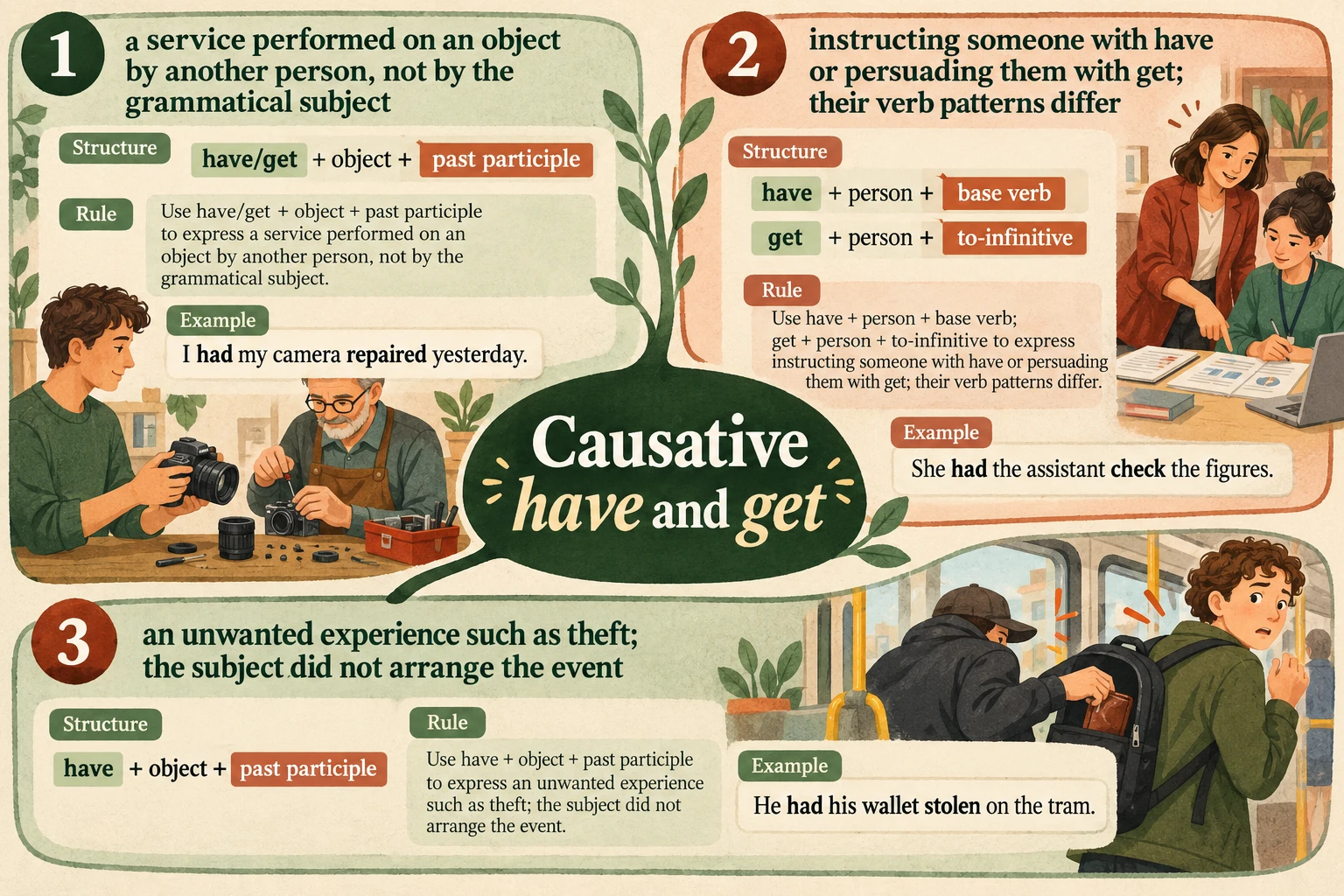
have/get + object + past participle 구조를 사용합니다. 의미: 주어 본인이 아닌 다른 사람이 대상에 해 주는 작업.
I had my camera repaired yesterday.
사역 have와 get · B2. have/get + object + past participle 구조를 사용합니다. 의미: 주어 본인이 아닌 다른 사람이 대상에 해 주는 작업.
새로 만든 12문제입니다. 상황에서 의도를 파악하고 형태를 연습한 뒤 새로운 맥락에 적용하세요.
have/get + object + past participle 구조를 사용합니다. 의미: 주어 본인이 아닌 다른 사람이 대상에 해 주는 작업.
I had my camera repaired yesterday.have + person + base verb; get + person + to-infinitive 구조를 사용합니다. 의미: have로 지시하거나 get으로 설득. 뒤 동사 형태가 다름.
She had the assistant check the figures.have + object + past participle 구조를 사용합니다. 의미: 도난 같은 원치 않는 경험. 주어가 계획한 일이 아님.
He had his wallet stolen on the tram.
A specialist repaired the camera for me; I did not do it myself.
have/get + object + past participle 구조를 사용합니다. 의미: 주어 본인이 아닌 다른 사람이 대상에 해 주는 작업.
I had my camera repaired yesterday.have + person + base verb; get + person + to-infinitive 구조를 사용합니다. 의미: have로 지시하거나 get으로 설득. 뒤 동사 형태가 다름.
She had the assistant check the figures.have + object + past participle 구조를 사용합니다. 의미: 도난 같은 원치 않는 경험. 주어가 계획한 일이 아님.
He had his wallet stolen on the tram.첫 시도를 남기고 변화의 이유를 이해한 뒤 새로운 상황에서 확인해 보세요.
아직 복습 노트가 없어요. 짧은 워밍업부터 해보세요.
have/get + object + past participle 구조를 사용합니다. 의미: 주어 본인이 아닌 다른 사람이 대상에 해 주는 작업.
I had my camera repaired yesterday.have + person + base verb; get + person + to-infinitive 구조를 사용합니다. 의미: have로 지시하거나 get으로 설득. 뒤 동사 형태가 다름.
She had the assistant check the figures.have + object + past participle 구조를 사용합니다. 의미: 도난 같은 원치 않는 경험. 주어가 계획한 일이 아님.
He had his wallet stolen on the tram.정답을 열면 해당 문제에 도움 사용이 기록돼요.
A specialist repaired the camera for me; I did not do it myself.
판단 단서는 “A specialist repaired the camera for me; I did not do it myself.”입니다. have/get + object + past participle 구조를 사용합니다. 의미: 주어 본인이 아닌 다른 사람이 대상에 해 주는 작업. 이 과제의 완성 문장은 “I had my camera repaired yesterday.”입니다.
Use the have + person + bare-infinitive instruction pattern for a complete task, rather than the alternative have + person + -ing pattern for an ongoing situation.
판단 단서는 “Use the have + person + bare-infinitive instruction pattern for a complete task, rather than the alternative have + person + -ing pattern for an ongoing situation.”입니다. have + person + base verb; get + person + to-infinitive 구조를 사용합니다. 의미: have로 지시하거나 get으로 설득. 뒤 동사 형태가 다름. 이 과제의 완성 문장은 “She had the assistant check the figures.”입니다.
This was an unwanted theft, not an arranged service.
판단 단서는 “This was an unwanted theft, not an arranged service.”입니다. have + object + past participle 구조를 사용합니다. 의미: 도난 같은 원치 않는 경험. 주어가 계획한 일이 아님. 이 과제의 완성 문장은 “He had his wallet stolen on the tram.”입니다.
A professional is shortening the curtains for us.
판단 단서는 “A professional is shortening the curtains for us.”입니다. have/get + object + past participle 구조를 사용합니다. 의미: 주어 본인이 아닌 다른 사람이 대상에 해 주는 작업. 이 과제의 완성 문장은 “We are having the curtains shortened.”입니다.
Use a to-infinitive of inspect after get the engineer, meaning arrange for that person to act.
완성 문장: “We got the engineer to inspect the roof.” have + person + base verb; get + person + to-infinitive 구조를 사용합니다. 의미: have로 지시하거나 get으로 설득. 뒤 동사 형태가 다름. 과제의 주어·시간·의미에 맞춘 형태입니다. 검토한 답만 자동으로 확인하며, 다른 표현을 자동으로 틀렸다고 하지 않습니다.
The burglar damaged our window without our consent.
판단 단서는 “The burglar damaged our window without our consent.”입니다. have + object + past participle 구조를 사용합니다. 의미: 도난 같은 원치 않는 경험. 주어가 계획한 일이 아님. 이 과제의 완성 문장은 “We had a window smashed during the break-in.”입니다.
Use the appropriate form of test after have the water; a laboratory performs the service.
완성 문장: “We need to have the water tested.” have/get + object + past participle 구조를 사용합니다. 의미: 주어 본인이 아닌 다른 사람이 대상에 해 주는 작업. 과제의 주어·시간·의미에 맞춘 형태입니다. 검토한 답만 자동으로 확인하며, 다른 표현을 자동으로 틀렸다고 하지 않습니다.
The dentist will perform the treatment on my tooth.
판단 단서는 “The dentist will perform the treatment on my tooth.”입니다. have/get + object + past participle 구조를 사용합니다. 의미: 주어 본인이 아닌 다른 사람이 대상에 해 주는 작업. 이 과제의 완성 문장은 “I am getting a tooth filled tomorrow.”입니다.
Use the bare infinitive (base form without to) of RECHECK after had the clerk; the clerk performs the action.
완성 문장: “The supervisor had the clerk recheck the address.” have + person + base verb; get + person + to-infinitive 구조를 사용합니다. 의미: have로 지시하거나 get으로 설득. 뒤 동사 형태가 다름. 과제의 주어·시간·의미에 맞춘 형태입니다. 검토한 답만 자동으로 확인하며, 다른 표현을 자동으로 틀렸다고 하지 않습니다.
An unwanted damage event happened to the cyclist.
판단 단서는 “An unwanted damage event happened to the cyclist.”입니다. have + object + past participle 구조를 사용합니다. 의미: 도난 같은 원치 않는 경험. 주어가 계획한 일이 아님. 이 과제의 완성 문장은 “She had her bicycle damaged by a falling branch.”입니다.
Get plus a person requires a to-infinitive for persuasion.
판단 단서는 “Get plus a person requires a to-infinitive for persuasion.”입니다. have + person + base verb; get + person + to-infinitive 구조를 사용합니다. 의미: have로 지시하거나 get으로 설득. 뒤 동사 형태가 다름. 이 과제의 완성 문장은 “I finally got him to acknowledge the mistake.”입니다.
Use the correct form of steal for an unwanted theft of the company’s tools.
완성 문장: “The firm had several tools stolen overnight.” have + object + past participle 구조를 사용합니다. 의미: 도난 같은 원치 않는 경험. 주어가 계획한 일이 아님. 과제의 주어·시간·의미에 맞춘 형태입니다. 검토한 답만 자동으로 확인하며, 다른 표현을 자동으로 틀렸다고 하지 않습니다.