文中の指示関係・明示された詳細・理由
その語が文中のどの人・物・考えを指すかたどります。 問われた人・時刻・場所・量を正しい出来事に結び付けます。 実際に示された理由を使います。文外のもっともらしい理由だけでは足りません。
In “Mia lost her key”, her refers to Mia.

忘れられた写真 · B2. 問われた人・時刻・場所・量を正しい出来事に結び付けます。
オリジナルの英文を読み、根拠を基に答えましょう。レベルは編集上の目安で、認定結果ではありません。
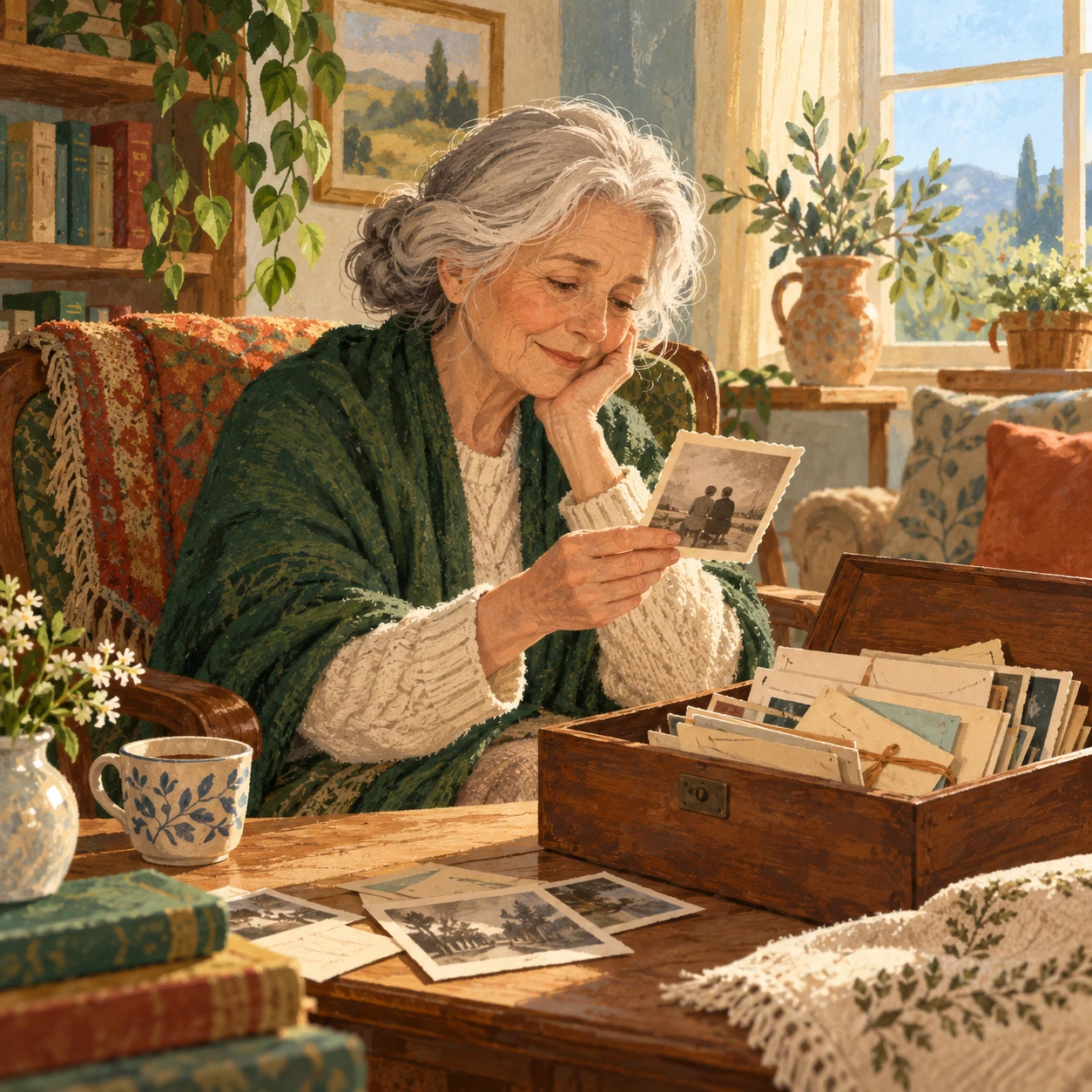
The photograph fell from a book I was packing for the charity shop. At first I recognised only the gate: two pale posts and a latch that had always caught on the sleeve of my coat. Then I saw my brother, small and unsmiling, standing beside our mother. Someone had cut the edge of the picture, removing most of the person whose hand rested on his shoulder.
I was certain I knew the day. It was the afternoon we had been told that we were leaving the house, and my brother had refused to speak because nobody had asked what he wanted. I had repeated that version of events so often that it felt less like a memory than a fact entered in a family record.
I sent him a photograph of the photograph. His reply arrived while I was still packing. “You have the wrong day,” he wrote. “That was before the school play. I was frightened of forgetting my lines.” He remembered the borrowed jacket, which itched, and our mother telling him not to pull at the collar. The departing house and the silent protest belonged to another afternoon.
For a moment, I wanted to defend my account. The expression on his face seemed to support it. Then I noticed the paper flower pinned to his jacket, a detail I had previously treated as an unimportant blur. It did not prove every part of his story, but it fitted a school performance more comfortably than a sudden announcement about moving.
I asked about the missing person at the edge. He thought it was our aunt, though he was not certain. I had assumed it was me. Neither of us could explain why the photograph had been cut. We agreed to ask our cousin, who still had some of our aunt’s albums, rather than invent a reason that happened to suit us.
That evening, I put the photograph in a new envelope and wrote both accounts on a sheet of paper. I marked mine as a memory I was now questioning, not one I had proved false in every detail. My brother’s recollection deserved attention without being promoted automatically into a complete record.
The book continued into the donation box. The photograph stayed. It had become more interesting after it stopped illustrating the story I thought I knew. I no longer looked at my brother’s expression and saw a single obvious explanation. The unfamiliar space around it was not an empty place to fill quickly, but a reason to look again.
その語が文中のどの人・物・考えを指すかたどります。 問われた人・時刻・場所・量を正しい出来事に結び付けます。 実際に示された理由を使います。文外のもっともらしい理由だけでは足りません。
In “Mia lost her key”, her refers to Mia.
問われた人・時刻・場所・量を正しい出来事に結び付けます。 実際の手がかりを組み合わせ、裏付けのない事実を足しません。
The doors open at eight. The class starts at nine.
The photograph fell from a book I was packing for the charity shop. At first I recognised only the gate: two pale posts and a latch that had always caught on the sleeve of my coat. Then I saw my brother, small and unsmiling, standing beside our mother. Someone had cut the edge of the picture, removing most of the person whose hand rested on his shoulder.
I was certain I knew the day. It was the afternoon we had been told that we were leaving the house, and my brother had refused to speak because nobody had asked what he wanted. I had repeated that version of events so often that it felt less like a memory than a fact entered in a family record.
I sent him a photograph of the photograph. His reply arrived while I was still packing. “You have the wrong day,” he wrote. “That was before the school play. I was frightened of forgetting my lines.” He remembered the borrowed jacket, which itched, and our mother telling him not to pull at the collar. The departing house and the silent protest belonged to another afternoon.
For a moment, I wanted to defend my account. The expression on his face seemed to support it. Then I noticed the paper flower pinned to his jacket, a detail I had previously treated as an unimportant blur. It did not prove every part of his story, but it fitted a school performance more comfortably than a sudden announcement about moving.
I asked about the missing person at the edge. He thought it was our aunt, though he was not certain. I had assumed it was me. Neither of us could explain why the photograph had been cut. We agreed to ask our cousin, who still had some of our aunt’s albums, rather than invent a reason that happened to suit us.
That evening, I put the photograph in a new envelope and wrote both accounts on a sheet of paper. I marked mine as a memory I was now questioning, not one I had proved false in every detail. My brother’s recollection deserved attention without being promoted automatically into a complete record.
The book continued into the donation box. The photograph stayed. It had become more interesting after it stopped illustrating the story I thought I knew. I no longer looked at my brother’s expression and saw a single obvious explanation. The unfamiliar space around it was not an empty place to fill quickly, but a reason to look again.
A forgotten photograph
その語が文中のどの人・物・考えを指すかたどります。 問われた人・時刻・場所・量を正しい出来事に結び付けます。 実際に示された理由を使います。文外のもっともらしい理由だけでは足りません。
In “Mia lost her key”, her refers to Mia.問われた人・時刻・場所・量を正しい出来事に結び付けます。 実際の手がかりを組み合わせ、裏付けのない事実を足しません。
The doors open at eight. The class starts at nine.問われた人・時刻・場所・量を正しい出来事に結び付けます。
The doors open at eight. The class starts at nine.初回答を残し、根拠を確かめて別の問題に挑戦します。同じ教材での正解は、新しい文章への応用を証明するものではありません。
まだ復習ノートはありません。まずは短いウォームアップを。
その語が文中のどの人・物・考えを指すかたどります。 問われた人・時刻・場所・量を正しい出来事に結び付けます。 実際に示された理由を使います。文外のもっともらしい理由だけでは足りません。
In “Mia lost her key”, her refers to Mia.問われた人・時刻・場所・量を正しい出来事に結び付けます。 実際の手がかりを組み合わせ、裏付けのない事実を足しません。
The doors open at eight. The class starts at nine.解答を開くと、その問題にヒント利用が記録されます。
A forgotten photograph
根拠に合う答えは「It fell from a book being packed for donation.」です。 根拠:「The photograph fell from a book I was packing for the charity shop.」。 別の選択肢「It arrived with the brother’s account in a new envelope.」と比べてみましょう。 初期の状況と、その後の検証・決定という二つの段階を混同しています。 別の選択肢「The narrator found it among albums already borrowed from the cousin.」と比べてみましょう。 初期の状況と、その後の検証・決定という二つの段階を混同しています。
A forgotten photograph
根拠に合う答えは「The gate.」です。 根拠:「At first I recognised only the gate」。 別の選択肢「The paper flower.」と比べてみましょう。 初期の状況と、その後の検証・決定という二つの段階を混同しています。 別の選択肢「The identity of the person whose hand was visible.」と比べてみましょう。 本文にない具体的な情報を付け足しています。もっともらしさは本文の根拠ではありません。
A forgotten photograph
根拠に合う答えは「A protest about leaving the house.」です。 根拠:「It was the afternoon we had been told that we were leaving the house, and my brother had refused to speak because nobody had asked what he wanted.」。 別の選択肢「Anger about an itchy borrowed jacket.」と比べてみましょう。 初期の状況と、その後の検証・決定という二つの段階を混同しています。 別の選択肢「Reluctance to have a photograph taken before donating the book.」と比べてみましょう。 本文にない具体的な情報を付け足しています。もっともらしさは本文の根拠ではありません。
A forgotten photograph
根拠に合う答えは「Repetition had made the narrator’s version feel unquestionable.」です。 根拠:「I had repeated that version of events so often」。 別の選択肢「The narrator had avoided repeating the family story before this discovery.」と比べてみましょう。 本文に示された関係を逆にしています。 別の選択肢「An independently checked family record had confirmed the date.」と比べてみましょう。 この根拠から言える確実さや適用範囲を超えています。
A forgotten photograph
根拠に合う答えは「A school play.」です。 根拠:「That was before the school play.」。 別の選択肢「An announcement that they were moving.」と比べてみましょう。 初期の状況と、その後の検証・決定という二つの段階を混同しています。 別の選択肢「The day the book was first selected for donation.」と比べてみましょう。 初期の状況と、その後の検証・決定という二つの段階を混同しています。
A forgotten photograph
根拠に合う答えは「It fits the brother’s account but does not prove all of it.」です。 根拠:「It did not prove every part of his story, but it fitted a school performance more comfortably」。 別の選択肢「It makes the brother’s recollection a complete and independently verified record.」と比べてみましょう。 この根拠から言える確実さや適用範囲を超えています。 別の選択肢「It is no more compatible with the play than with the moving announcement.」と比べてみましょう。 本文に示された関係を逆にしています。
A forgotten photograph
根拠に合う答えは「A paper flower pinned to the jacket.」です。 根拠:「the paper flower pinned to his jacket」。 別の選択肢「The gate latch that had caught on the narrator’s coat.」と比べてみましょう。 初期の状況と、その後の検証・決定という二つの段階を混同しています。 別の選択肢「The visible hand resting on the brother’s shoulder.」と比べてみましょう。 手は写真に写っていますが、語り手が考え直すきっかけではありません。その役割を果たすのは花です。 本文の表現「whose hand rested on his shoulder.」を、問いと主張「The visible hand resting on the brother’s shoulder.」に照らして確認しましょう。
A forgotten photograph
根拠に合う答えは「Fear of forgetting his lines.」です。 根拠:「I was frightened of forgetting my lines.」。 別の選択肢「Embarrassment that the photograph had been cut.」と比べてみましょう。 本文にない具体的な情報を付け足しています。もっともらしさは本文の根拠ではありません。 別の選択肢「Certainty that moving house was unfair.」と比べてみましょう。 初期の状況と、その後の検証・決定という二つの段階を混同しています。
A forgotten photograph
根拠に合う答えは「Why the photograph was cut.」です。 根拠:「Neither of us could explain why the photograph had been cut.」。 別の選択肢「Whether the flower was visible on the jacket.」と比べてみましょう。 これは物語の中ですでに分かっていることです。問われているのは、なお解明されていない点です。 別の選択肢「Whether the brother connected the image with a school play.」と比べてみましょう。 これは物語の中ですでに分かっていることです。問われているのは、なお解明されていない点です。
A forgotten photograph
根拠に合う答えは「The cousin may have further evidence in the aunt’s albums.」です。 根拠:「our cousin, who still had some of our aunt’s albums」。 別の選択肢「They hope the cousin will choose the more comforting account without more evidence.」と比べてみましょう。 本文に示された関係を逆にしています。 別の選択肢「They believe the cousin has already identified the missing person with certainty.」と比べてみましょう。 この根拠から言える確実さや適用範囲を超えています。
A forgotten photograph
根拠に合う答えは「By writing both down and qualifying the certainty of each.」です。 根拠:「That evening, I put the photograph in a new envelope and wrote both accounts on a sheet of paper. I marked mine as a memory I was now questioning, not one I had proved false in every detail. My brother’s recollection deserved attention without being promoted automatically into a complete record.」。 別の選択肢「By marking the narrator’s whole account as conclusively false.」と比べてみましょう。 限定付きの結果を、例外のない主張に広げています。 別の選択肢「By presenting the brother’s version as a complete official record.」と比べてみましょう。 この根拠から言える確実さや適用範囲を超えています。
A forgotten photograph
根拠に合う答えは「The narrator accepts uncertainty as a reason for further attention.」です。 根拠:「I no longer looked at my brother’s expression and saw a single obvious explanation. The unfamiliar space around it was not an empty place to fill quickly, but a reason to look again.」。 別の選択肢「The narrator treats the competing accounts as proof that photographs cannot offer evidence.」と比べてみましょう。 限定付きの結果を、例外のない主張に広げています。 別の選択肢「The narrator accepts the brother’s account as the only explanation worth considering.」と比べてみましょう。 本文に示された関係を逆にしています。