B2

Una fotografía olvidada

Sobre esta lección

Una fotografía olvidada · B2. Relaciona la persona, hora, lugar o cantidad con el hecho correcto.

Lee el material original en inglés y responde con pruebas. El nivel es una orientación editorial, no un resultado certificado.

12 preguntas
Guárdalo para encontrarlo en Mi colección.
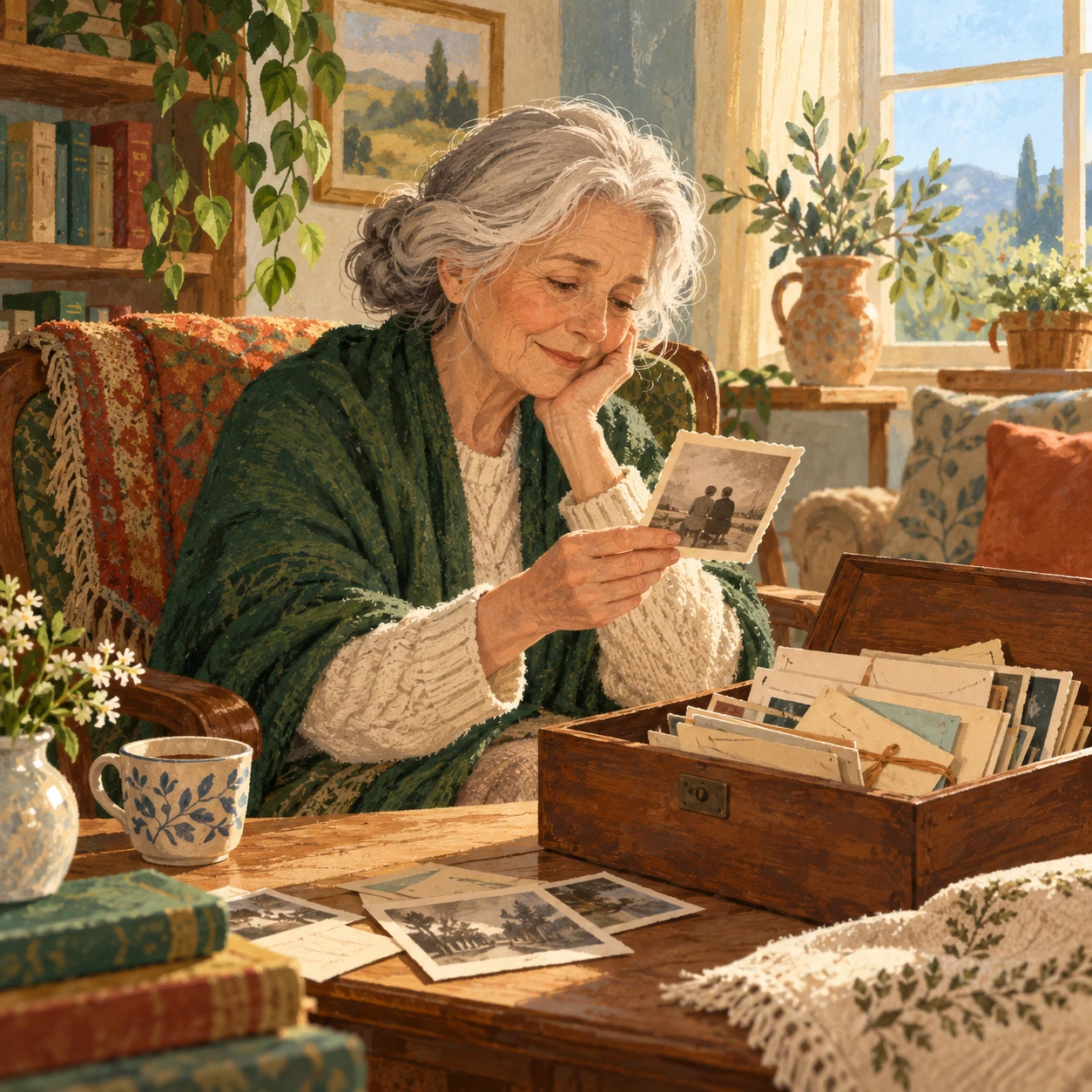
A forgotten photograph — context illustration
LecturaB2

A forgotten photograph

Lee el material original en inglés y responde con pruebas. El nivel es una orientación editorial, no un resultado certificado.

The photograph fell from a book I was packing for the charity shop. At first I recognised only the gate: two pale posts and a latch that had always caught on the sleeve of my coat. Then I saw my brother, small and unsmiling, standing beside our mother. Someone had cut the edge of the picture, removing most of the person whose hand rested on his shoulder.

I was certain I knew the day. It was the afternoon we had been told that we were leaving the house, and my brother had refused to speak because nobody had asked what he wanted. I had repeated that version of events so often that it felt less like a memory than a fact entered in a family record.

I sent him a photograph of the photograph. His reply arrived while I was still packing. “You have the wrong day,” he wrote. “That was before the school play. I was frightened of forgetting my lines.” He remembered the borrowed jacket, which itched, and our mother telling him not to pull at the collar. The departing house and the silent protest belonged to another afternoon.

For a moment, I wanted to defend my account. The expression on his face seemed to support it. Then I noticed the paper flower pinned to his jacket, a detail I had previously treated as an unimportant blur. It did not prove every part of his story, but it fitted a school performance more comfortably than a sudden announcement about moving.

I asked about the missing person at the edge. He thought it was our aunt, though he was not certain. I had assumed it was me. Neither of us could explain why the photograph had been cut. We agreed to ask our cousin, who still had some of our aunt’s albums, rather than invent a reason that happened to suit us.

That evening, I put the photograph in a new envelope and wrote both accounts on a sheet of paper. I marked mine as a memory I was now questioning, not one I had proved false in every detail. My brother’s recollection deserved attention without being promoted automatically into a complete record.

The book continued into the donation box. The photograph stayed. It had become more interesting after it stopped illustrating the story I thought I knew. I no longer looked at my brother’s expression and saw a single obvious explanation. The unfamiliar space around it was not an empty place to fill quickly, but a reason to look again.

Un poco de claridad

Referencias en contexto · Detalles explícitos · Razones

Relaciona la palabra con la persona, objeto o idea que representa en esa oración. Relaciona la persona, hora, lugar o cantidad con el hecho correcto. Usa la razón dada; una razón externa que parece posible no basta.

In “Mia lost her key”, her refers to Mia.

Detalles explícitos · Inferencias a partir de pistas

Relaciona la persona, hora, lugar o cantidad con el hecho correcto. Combina las pistas reales sin añadir hechos no respaldados.

The doors open at eight. The class starts at nine.

Material de aprendizaje
A forgotten photograph — context illustration
LecturaB2

A forgotten photograph

Lee el material original en inglés y responde con pruebas. El nivel es una orientación editorial, no un resultado certificado.

The photograph fell from a book I was packing for the charity shop. At first I recognised only the gate: two pale posts and a latch that had always caught on the sleeve of my coat. Then I saw my brother, small and unsmiling, standing beside our mother. Someone had cut the edge of the picture, removing most of the person whose hand rested on his shoulder.

I was certain I knew the day. It was the afternoon we had been told that we were leaving the house, and my brother had refused to speak because nobody had asked what he wanted. I had repeated that version of events so often that it felt less like a memory than a fact entered in a family record.

I sent him a photograph of the photograph. His reply arrived while I was still packing. “You have the wrong day,” he wrote. “That was before the school play. I was frightened of forgetting my lines.” He remembered the borrowed jacket, which itched, and our mother telling him not to pull at the collar. The departing house and the silent protest belonged to another afternoon.

For a moment, I wanted to defend my account. The expression on his face seemed to support it. Then I noticed the paper flower pinned to his jacket, a detail I had previously treated as an unimportant blur. It did not prove every part of his story, but it fitted a school performance more comfortably than a sudden announcement about moving.

I asked about the missing person at the edge. He thought it was our aunt, though he was not certain. I had assumed it was me. Neither of us could explain why the photograph had been cut. We agreed to ask our cousin, who still had some of our aunt’s albums, rather than invent a reason that happened to suit us.

That evening, I put the photograph in a new envelope and wrote both accounts on a sheet of paper. I marked mine as a memory I was now questioning, not one I had proved false in every detail. My brother’s recollection deserved attention without being promoted automatically into a complete record.

The book continued into the donation box. The photograph stayed. It had become more interesting after it stopped illustrating the story I thought I knew. I no longer looked at my brother’s expression and saw a single obvious explanation. The unfamiliar space around it was not an empty place to fill quickly, but a reason to look again.

0/12
Preguntas
01 / 12D01Guárdalo para encontrarlo en Mi colección.

A forgotten photograph

How did the narrator find the photograph?

Tu respuesta
1 / 12

Tu ruta de aprendizaje

01
Paso 1 · Calentamiento

Calentamiento

0/3
02
Paso 2 · Practicar la habilidad

Referencias en contexto · Detalles explícitos · Razones

0/2

Relaciona la palabra con la persona, objeto o idea que representa en esa oración. Relaciona la persona, hora, lugar o cantidad con el hecho correcto. Usa la razón dada; una razón externa que parece posible no basta.

In “Mia lost her key”, her refers to Mia.
03
Paso 3 · Practicar la habilidad

Detalles explícitos · Inferencias a partir de pistas

0/1

Relaciona la persona, hora, lugar o cantidad con el hecho correcto. Combina las pistas reales sin añadir hechos no respaldados.

The doors open at eight. The class starts at nine.
04
Paso 4 · Practicar la habilidad

Detalles explícitos

0/1

Relaciona la persona, hora, lugar o cantidad con el hecho correcto.

The doors open at eight. The class starts at nine.
05
Paso 5 · Práctica relacionada

Práctica relacionada

0/3
06
Paso 6 · Reto del texto

Reto del texto

0/2
Repasos de esta unidad

Haz que los errores sirvan.

Conserva el primer intento, comprueba la evidencia y prueba otra pregunta. Responder sobre el mismo material no demuestra transferencia a otro texto.

0

Aún no hay repasos. Prueba un calentamiento corto.

Mapa de la lección

Una fotografía olvidada

B2
A forgotten photograph

Puntos de la lección

01

Referencias en contexto · Detalles explícitos · Razones

Relaciona la palabra con la persona, objeto o idea que representa en esa oración. Relaciona la persona, hora, lugar o cantidad con el hecho correcto. Usa la razón dada; una razón externa que parece posible no basta.

In “Mia lost her key”, her refers to Mia.
02

Detalles explícitos · Inferencias a partir de pistas

Relaciona la persona, hora, lugar o cantidad con el hecho correcto. Combina las pistas reales sin añadir hechos no respaldados.

The doors open at eight. The class starts at nine.

Preguntas y respuestas

Abrir una respuesta registra ayuda para esa pregunta.

D01 · Calentamiento

A forgotten photograph

How did the narrator find the photograph?

  1. It arrived with the brother’s account in a new envelope.
  2. It fell from a book being packed for donation.
  3. The narrator found it among albums already borrowed from the cousin.
  4. It was placed in a donation box by the brother.
Respuesta y explicación
It fell from a book being packed for donation.

La respuesta respaldada es «It fell from a book being packed for donation.». Prueba: «The photograph fell from a book I was packing for the charity shop.». Compara la alternativa «It arrived with the brother’s account in a new envelope.». Esto confunde dos fases: la situación inicial y una comprobación o decisión posterior. Compara la alternativa «The narrator found it among albums already borrowed from the cousin.». Esto confunde dos fases: la situación inicial y una comprobación o decisión posterior.

D02 · Calentamiento

A forgotten photograph

What did the narrator recognise first?

  1. The borrowed jacket.
  2. The identity of the person whose hand was visible.
  3. The gate.
  4. The paper flower.
Respuesta y explicación
The gate.

La respuesta respaldada es «The gate.». Prueba: «At first I recognised only the gate». Compara la alternativa «The paper flower.». Esto confunde dos fases: la situación inicial y una comprobación o decisión posterior. Compara la alternativa «The identity of the person whose hand was visible.». Esto añade un detalle que el relato no aporta; que parezca plausible no lo convierte en prueba textual.

D03 · Calentamiento

A forgotten photograph

What did the narrator initially believe the brother’s expression showed?

  1. Anger about an itchy borrowed jacket.
  2. Reluctance to have a photograph taken before donating the book.
  3. A protest about leaving the house.
  4. Fear of forgetting lines in a play.
Respuesta y explicación
A protest about leaving the house.

La respuesta respaldada es «A protest about leaving the house.». Prueba: «It was the afternoon we had been told that we were leaving the house, and my brother had refused to speak because nobody had asked what he wanted.». Compara la alternativa «Anger about an itchy borrowed jacket.». Esto confunde dos fases: la situación inicial y una comprobación o decisión posterior. Compara la alternativa «Reluctance to have a photograph taken before donating the book.». Esto añade un detalle que el relato no aporta; que parezca plausible no lo convierte en prueba textual.

P01 · Practicar la habilidad

A forgotten photograph

What does the comparison with “a family record” suggest?

  1. Repetition had made the narrator’s version feel unquestionable.
  2. The family had agreed to preserve both versions before seeing the photograph.
  3. An independently checked family record had confirmed the date.
  4. The narrator had avoided repeating the family story before this discovery.
Respuesta y explicación
Repetition had made the narrator’s version feel unquestionable.

La respuesta respaldada es «Repetition had made the narrator’s version feel unquestionable.». Prueba: «I had repeated that version of events so often». Compara la alternativa «The narrator had avoided repeating the family story before this discovery.». Esto invierte la relación indicada en el texto. Compara la alternativa «An independently checked family record had confirmed the date.». Esto atribuye a las pruebas más certeza o alcance del que permiten.

P02 · Practicar la habilidad

A forgotten photograph

What event did the brother connect with the photograph?

  1. The day the book was first selected for donation.
  2. An announcement that they were moving.
  3. A school play.
  4. A visit at which the aunt deliberately cut the photograph.
Respuesta y explicación
A school play.

La respuesta respaldada es «A school play.». Prueba: «That was before the school play.». Compara la alternativa «An announcement that they were moving.». Esto confunde dos fases: la situación inicial y una comprobación o decisión posterior. Compara la alternativa «The day the book was first selected for donation.». Esto confunde dos fases: la situación inicial y una comprobación o decisión posterior.

P03 · Practicar la habilidad

A forgotten photograph

How conclusive does the narrator consider the visual evidence for the brother’s account?

  1. It fits the brother’s account but does not prove all of it.
  2. It establishes who stood at the cut edge of the photograph.
  3. It makes the brother’s recollection a complete and independently verified record.
  4. It is no more compatible with the play than with the moving announcement.
Respuesta y explicación
It fits the brother’s account but does not prove all of it.

La respuesta respaldada es «It fits the brother’s account but does not prove all of it.». Prueba: «It did not prove every part of his story, but it fitted a school performance more comfortably». Compara la alternativa «It makes the brother’s recollection a complete and independently verified record.». Esto atribuye a las pruebas más certeza o alcance del que permiten. Compara la alternativa «It is no more compatible with the play than with the moving announcement.». Esto invierte la relación indicada en el texto.

P04 · Practicar la habilidad

A forgotten photograph

Which visual detail made the narrator reconsider?

  1. The visible hand resting on the brother’s shoulder.
  2. The gate latch that had caught on the narrator’s coat.
  3. The expression that had seemed to support the narrator’s first account.
  4. A paper flower pinned to the jacket.
Respuesta y explicación
A paper flower pinned to the jacket.

La respuesta respaldada es «A paper flower pinned to the jacket.». Prueba: «the paper flower pinned to his jacket». Compara la alternativa «The gate latch that had caught on the narrator’s coat.». Esto confunde dos fases: la situación inicial y una comprobación o decisión posterior. Compara la alternativa «The visible hand resting on the brother’s shoulder.». La mano aparece en la fotografía, pero no es el detalle que provoca la reconsideración; esa función corresponde a la flor. Contrasta el pasaje «whose hand rested on his shoulder.» con la pregunta y la afirmación «The visible hand resting on the brother’s shoulder.».

R01 · Práctica relacionada

A forgotten photograph

What feeling does the brother remember?

  1. Certainty that moving house was unfair.
  2. Comfort in the jacket he had borrowed for the performance.
  3. Embarrassment that the photograph had been cut.
  4. Fear of forgetting his lines.
Respuesta y explicación
Fear of forgetting his lines.

La respuesta respaldada es «Fear of forgetting his lines.». Prueba: «I was frightened of forgetting my lines.». Compara la alternativa «Embarrassment that the photograph had been cut.». Esto añade un detalle que el relato no aporta; que parezca plausible no lo convierte en prueba textual. Compara la alternativa «Certainty that moving house was unfair.». Esto confunde dos fases: la situación inicial y una comprobación o decisión posterior.

R02 · Práctica relacionada

A forgotten photograph

What remains uncertain about the cut edge?

  1. Whether the brother connected the image with a school play.
  2. Whether the flower was visible on the jacket.
  3. Whether the image had come from the donated book.
  4. Why the photograph was cut.
Respuesta y explicación
Why the photograph was cut.

La respuesta respaldada es «Why the photograph was cut.». Prueba: «Neither of us could explain why the photograph had been cut.». Compara la alternativa «Whether the flower was visible on the jacket.». Este detalle ya está establecido en el relato; se pregunta qué cuestión sigue sin resolverse. Compara la alternativa «Whether the brother connected the image with a school play.». Este detalle ya está establecido en el relato; se pregunta qué cuestión sigue sin resolverse.

R03 · Práctica relacionada

A forgotten photograph

Why do they decide to contact their cousin?

  1. The cousin may have further evidence in the aunt’s albums.
  2. They hope the cousin will choose the more comforting account without more evidence.
  3. They believe the cousin has already identified the missing person with certainty.
  4. They want the cousin to confirm which charity shop received the book.
Respuesta y explicación
The cousin may have further evidence in the aunt’s albums.

La respuesta respaldada es «The cousin may have further evidence in the aunt’s albums.». Prueba: «our cousin, who still had some of our aunt’s albums». Compara la alternativa «They hope the cousin will choose the more comforting account without more evidence.». Esto invierte la relación indicada en el texto. Compara la alternativa «They believe the cousin has already identified the missing person with certainty.». Esto atribuye a las pruebas más certeza o alcance del que permiten.

X01 · Reto del texto

A forgotten photograph

How does the narrator preserve the competing accounts?

  1. By retaining the photograph while omitting both conflicting written accounts.
  2. By marking the narrator’s whole account as conclusively false.
  3. By presenting the brother’s version as a complete official record.
  4. By writing both down and qualifying the certainty of each.
Respuesta y explicación
By writing both down and qualifying the certainty of each.

La respuesta respaldada es «By writing both down and qualifying the certainty of each.». Prueba: «That evening, I put the photograph in a new envelope and wrote both accounts on a sheet of paper. I marked mine as a memory I was now questioning, not one I had proved false in every detail. My brother’s recollection deserved attention without being promoted automatically into a complete record.». Compara la alternativa «By marking the narrator’s whole account as conclusively false.». Esto convierte un resultado matizado en una afirmación sin excepciones. Compara la alternativa «By presenting the brother’s version as a complete official record.». Esto atribuye a las pruebas más certeza o alcance del que permiten.

X02 · Reto del texto

A forgotten photograph

What change is expressed in the final paragraph?

  1. The narrator accepts the brother’s account as the only explanation worth considering.
  2. The narrator considers the image less valuable because its story is uncertain.
  3. The narrator accepts uncertainty as a reason for further attention.
  4. The narrator treats the competing accounts as proof that photographs cannot offer evidence.
Respuesta y explicación
The narrator accepts uncertainty as a reason for further attention.

La respuesta respaldada es «The narrator accepts uncertainty as a reason for further attention.». Prueba: «I no longer looked at my brother’s expression and saw a single obvious explanation. The unfamiliar space around it was not an empty place to fill quickly, but a reason to look again.». Compara la alternativa «The narrator treats the competing accounts as proof that photographs cannot offer evidence.». Esto convierte un resultado matizado en una afirmación sin excepciones. Compara la alternativa «The narrator accepts the brother’s account as the only explanation worth considering.». Esto invierte la relación indicada en el texto.