01主語と時制のある動詞が続く譲歩
although/even though + finite clause を用います。表す内容:主語と時制のある動詞が続く譲歩。
Although it was raining, the match continued.
対比と目的をつなぐ表現 · B1. although/even though + finite clause を用います。表す内容:主語と時制のある動詞が続く譲歩。
12問のオリジナル問題です。状況から意味を読み取り、形を練習して、新しい場面で応用します。
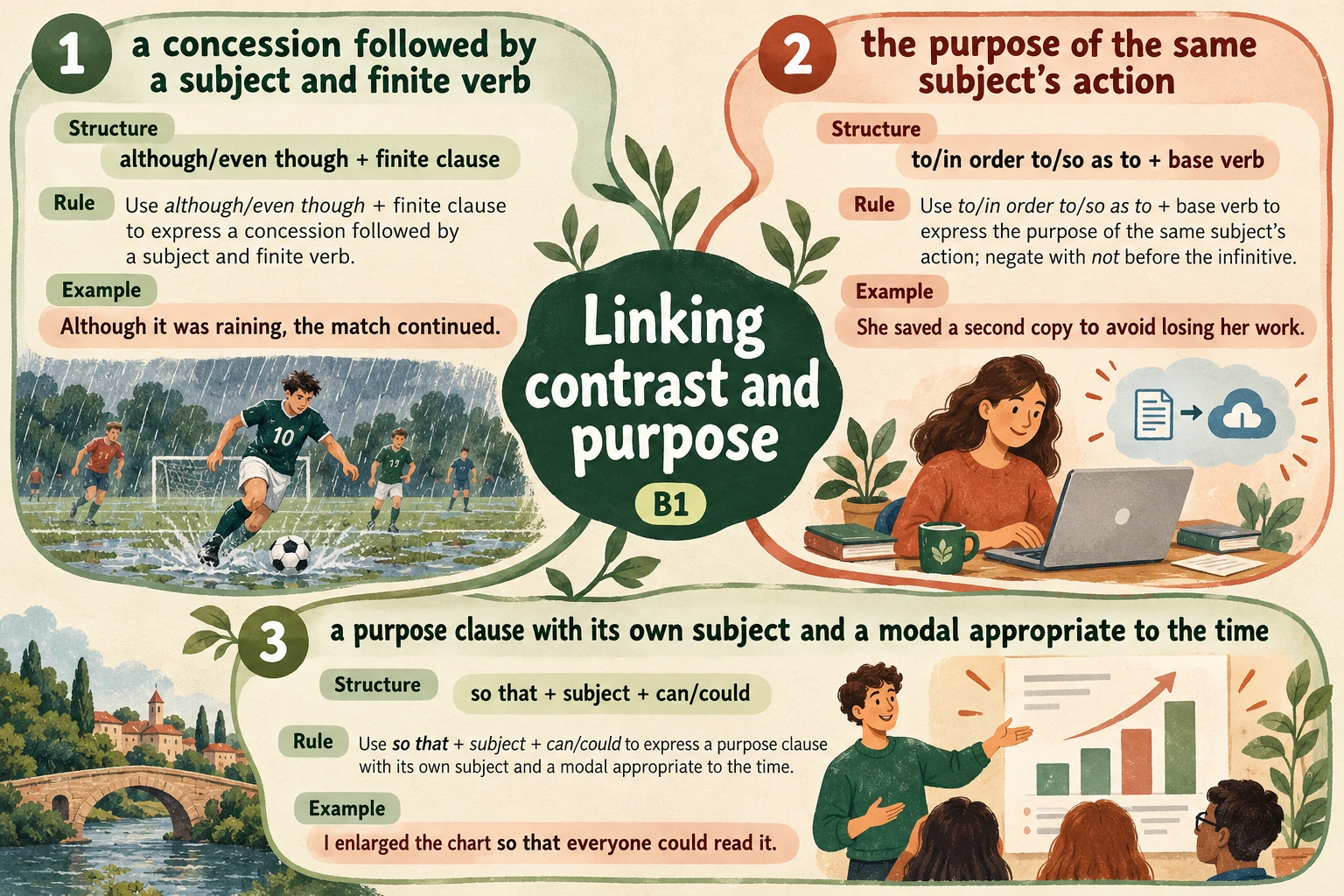
although/even though + finite clause を用います。表す内容:主語と時制のある動詞が続く譲歩。
Although it was raining, the match continued.to/in order to/so as to + base verb を用います。表す内容:同じ主語の動作の目的。否定は不定詞の前の not。
She saved a second copy to avoid losing her work.so that + subject + can/could を用います。表す内容:独自の主語と、時に合う助動詞を持つ目的節。
I enlarged the chart so that everyone could read it.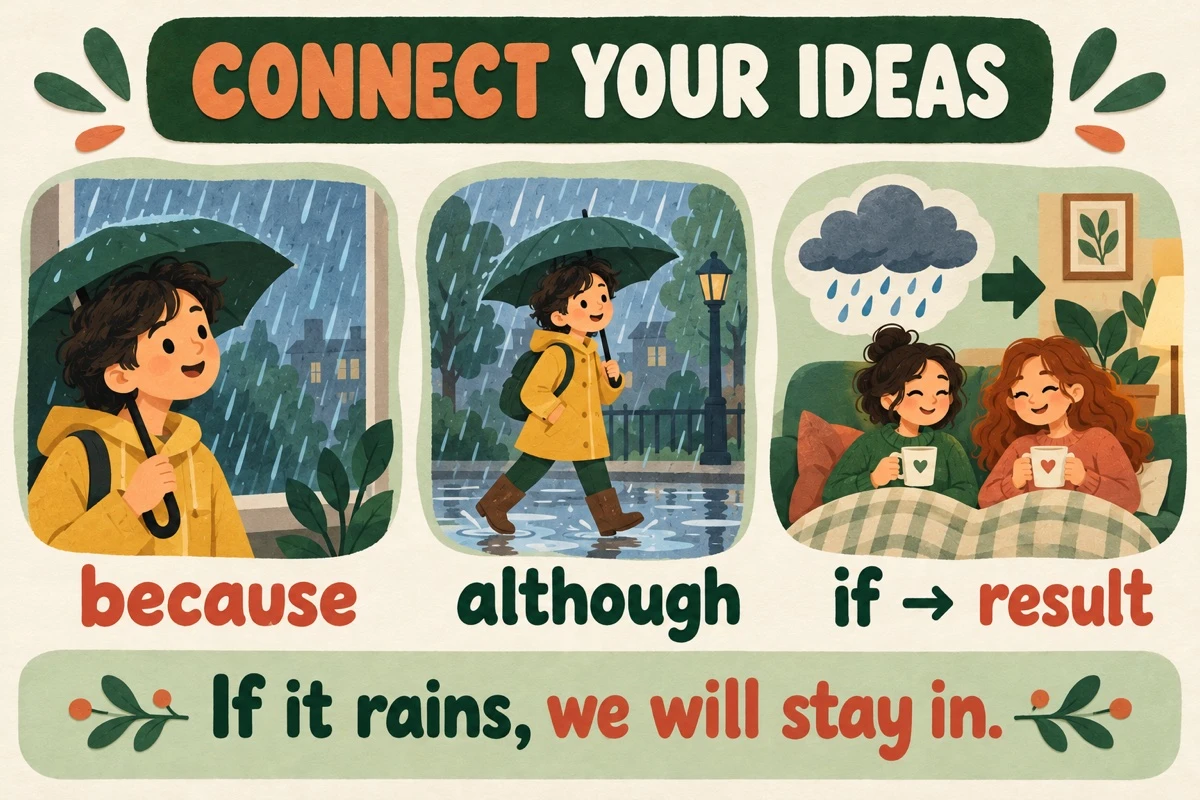
The result is surprising given the bad weather; a full clause follows.
although/even though + finite clause を用います。表す内容:主語と時制のある動詞が続く譲歩。
Although it was raining, the match continued.to/in order to/so as to + base verb を用います。表す内容:同じ主語の動作の目的。否定は不定詞の前の not。
She saved a second copy to avoid losing her work.so that + subject + can/could を用います。表す内容:独自の主語と、時に合う助動詞を持つ目的節。
I enlarged the chart so that everyone could read it.初回答を残し、変化の理由を理解して、別の場面で確かめます。
まだ復習ノートはありません。まずは短いウォームアップを。
although/even though + finite clause を用います。表す内容:主語と時制のある動詞が続く譲歩。
Although it was raining, the match continued.to/in order to/so as to + base verb を用います。表す内容:同じ主語の動作の目的。否定は不定詞の前の not。
She saved a second copy to avoid losing her work.so that + subject + can/could を用います。表す内容:独自の主語と、時に合う助動詞を持つ目的節。
I enlarged the chart so that everyone could read it.解答を開くと、その問題にヒント利用が記録されます。
The result is surprising given the bad weather; a full clause follows.
「___ it was raining, the match continued.」に注目しましょう。although/even though + finite clause を用います。表す内容:主語と時制のある動詞が続く譲歩。 完成文:「Although it was raining, the match continued.」。
The gap states why she saved the file; same subject.
「She saved a second copy ___ avoid losing her work.」に注目しましょう。to/in order to/so as to + base verb を用います。表す内容:同じ主語の動作の目的。否定は不定詞の前の not。 完成文:「She saved a second copy to avoid losing her work.」。
A different subject follows the connector and needs an ability modal.
「I enlarged the chart so that everyone ___ read it.」に注目しましょう。so that + subject + can/could を用います。表す内容:独自の主語と、時に合う助動詞を持つ目的節。 完成文:「I enlarged the chart so that everyone could read it.」。
A full finite clause presents an unexpected contrast.
「___ the route was longer, it was safer.」に注目しましょう。although/even though + finite clause を用います。表す内容:主語と時制のある動詞が続く譲歩。 完成文:「Even though the route was longer, it was safer.」。
Use the three-word purpose expression beginning with in, followed by the correct form of reserve.
完成文:「I called early in order to reserve a quiet table.」 to/in order to/so as to + base verb を用います。表す内容:同じ主語の動作の目的。否定は不定詞の前の not。 問題の主語・時間・意味に合わせた形です。確認済みの解答だけを自動照合します。別の表現を自動的に誤りとはしません。
A purpose clause with a past reference and its own subject.
「We lowered the shelf so that the children ___ reach it.」に注目しましょう。so that + subject + can/could を用います。表す内容:独自の主語と、時に合う助動詞を持つ目的節。 完成文:「We lowered the shelf so that the children could reach it.」。
Supply a concessive conjunction before the finite clause.
完成文:「Although the evidence was incomplete, the board made a decision.」 although/even though + finite clause を用います。表す内容:主語と時制のある動詞が続く譲歩。 問題の主語・時間・意味に合わせた形です。確認済みの解答だけを自動照合します。別の表現を自動的に誤りとはしません。
An unexpected result follows a full concession clause.
「___ she had little experience, she solved the problem.」に注目しましょう。although/even though + finite clause を用います。表す内容:主語と時制のある動詞が続く譲歩。 完成文:「Although she had little experience, she solved the problem.」。
Use the purpose expression beginning with so as, keeping the negative meaning, followed by disturb.
完成文:「He silenced his phone so as not to disturb the audience.」 to/in order to/so as to + base verb を用います。表す内容:同じ主語の動作の目的。否定は不定詞の前の not。 問題の主語・時間・意味に合わせた形です。確認済みの解答だけを自動照合します。別の表現を自動的に誤りとはしません。
A purpose clause describes what the team would be able to do.
「We shared the data so that the team ___ compare the results.」に注目しましょう。so that + subject + can/could を用います。表す内容:独自の主語と、時に合う助動詞を持つ目的節。 完成文:「We shared the data so that the team could compare the results.」。
A complete subject-verb clause follows; the aim is future understanding.
「I will label the cables so that you ___ reconnect them.」に注目しましょう。to/in order to/so as to + base verb を用います。表す内容:同じ主語の動作の目的。否定は不定詞の前の not。 完成文:「I will label the cables so that you can reconnect them.」。
Use a past-form ability modal in the purpose clause.
完成文:「The host repeated the question so that everybody could hear it.」 so that + subject + can/could を用います。表す内容:独自の主語と、時に合う助動詞を持つ目的節。 問題の主語・時間・意味に合わせた形です。確認済みの解答だけを自動照合します。別の表現を自動的に誤りとはしません。