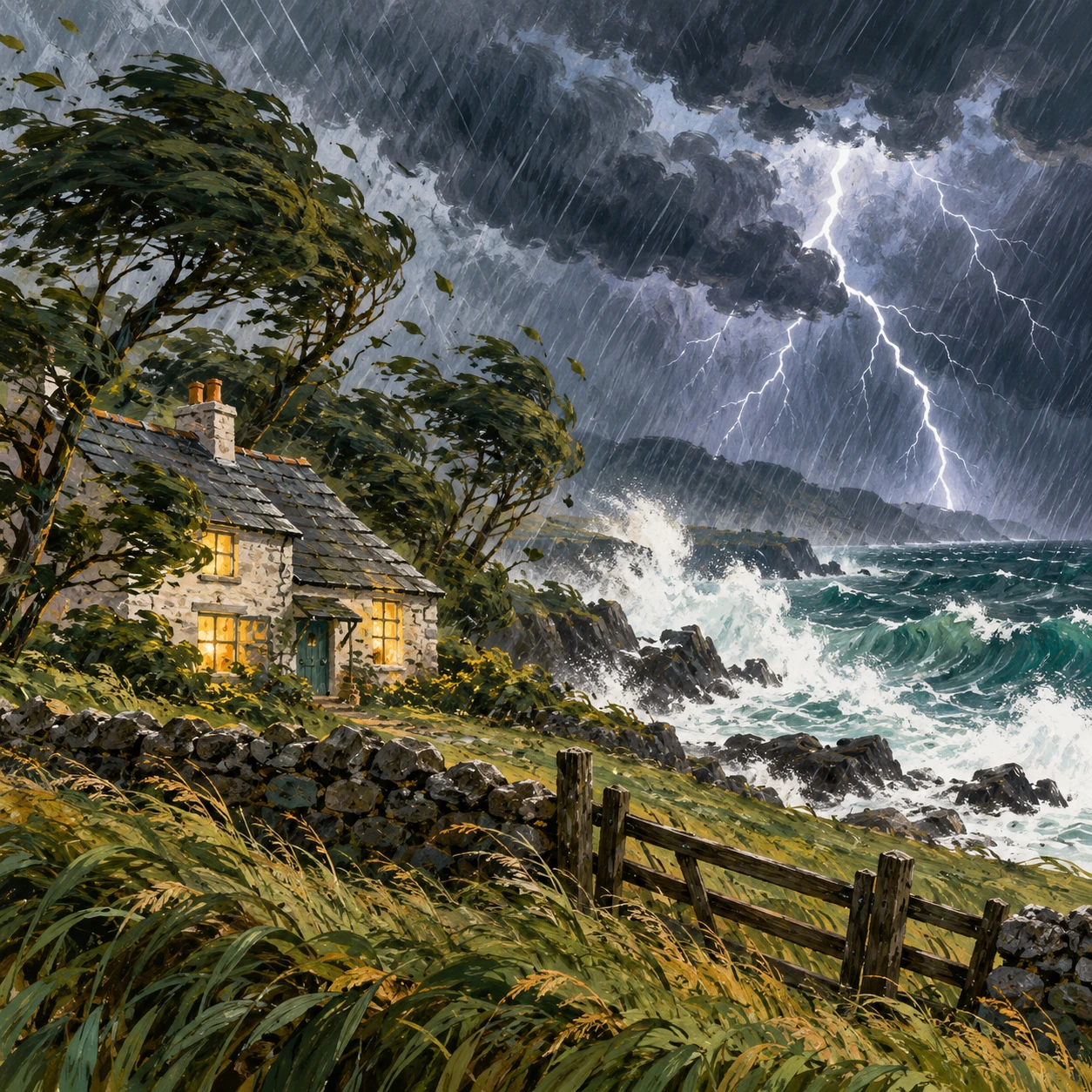
bewölkt · windig · sonnig · neblig
Unterscheide diese Bedeutungen anhand der Situation: cloudy = bewölkt; windy = windig; sunny = sonnig; foggy = neblig.
There are many clouds covering the sky. It is cloudy.

Wetter und Jahreszeiten · A2. Unterscheide diese Bedeutungen anhand der Situation: cloudy = bewölkt; windy = windig; sunny = sonnig; foggy = neblig.
Übe Wetter und Jahreszeiten in kurzen Situationen. Lies den Hinweis, wähle oder schreibe eine Form und prüfe die Begründung. Die Stufe dient der redaktionellen Orientierung. Erkunde 12 Lernkarten und 24 Kontextfragen, einschließlich neuer Wiederholungs- und Transferaufgaben.

With many clouds in the sky.
The morning was cloudy, but the afternoon was clear.
Der Morgen war bewölkt, aber der Nachmittag war klar.
Diese Angaben beziehen sich auf diese Bedeutung. Verwandte Wörter können andere Bedeutungen haben; ähnliche Ausdrücke sind nicht immer austauschbar.
Verwende „cloudy“ für bewölkt. Vergleiche „windy“ (windig); die Bedeutungen sind verschieden.
Unterscheide diese Bedeutungen anhand der Situation: cloudy = bewölkt; windy = windig; sunny = sonnig; foggy = neblig.
There are many clouds covering the sky. It is cloudy.
Unterscheide diese Bedeutungen anhand der Situation: spring = Frühling; summer = Sommer; autumn = Herbst; winter = Winter.
The season after winter and before summer is spring.
Unterscheide diese Bedeutungen anhand der Situation: forecast = Wettervorhersage; temperature = Temperatur; storm = Sturm; shower = Regenschauer.
A report predicting tomorrow’s weather is a weather forecast.
Clouds cover the sky, but there is no fog near the ground and the air is still. It is ___.
Unterscheide diese Bedeutungen anhand der Situation: cloudy = bewölkt; windy = windig; sunny = sonnig; foggy = neblig.
There are many clouds covering the sky. It is cloudy.Unterscheide diese Bedeutungen anhand der Situation: spring = Frühling; summer = Sommer; autumn = Herbst; winter = Winter.
The season after winter and before summer is spring.Unterscheide diese Bedeutungen anhand der Situation: forecast = Wettervorhersage; temperature = Temperatur; storm = Sturm; shower = Regenschauer.
A report predicting tomorrow’s weather is a weather forecast.Bewahre den ersten Versuch. Verstehe die Änderung. Prüfe sie in einer neuen Situation.
Noch keine Lernnotizen. Starte mit einem kurzen Einstieg.
Das Öffnen einer Antwort wird für diese Aufgabe als Hilfe erfasst.
Clouds cover the sky, but there is no fog near the ground and the air is still. It is ___.
Achte auf „Clouds cover the sky“. Hier ist „bewölkt“ gemeint: „cloudy“. Diese Merkmale können zusammen auftreten. Antworte auf das gefragte Merkmal, nicht auf ein möglicherweise zusätzliches. Vollständiger Satz: „Clouds cover the sky, but there is no fog near the ground and the air is still. It is cloudy.” / “There are many clouds covering the sky. It is cloudy.“.
The season after winter and before summer is ___.
Achte auf „after winter and before summer“. Hier ist „Frühling“ gemeint: „spring“. Nutze die feste Folge: Frühling, Sommer, Herbst, Winter. Vollständiger Satz: „The season after winter and before summer is spring.“.
A report predicting tomorrow’s weather is a weather ___.
Achte auf „predicting tomorrow’s weather“. Hier ist „Wettervorhersage“ gemeint: „forecast“. Eine Vorhersage ist keine Messung oder ein Ereignis. Kurzer Regen unterscheidet sich von schwerem Unwetter. Vollständiger Satz: „A report predicting tomorrow’s weather is a weather forecast.“.
The sky is not clear and there is no fog near the ground. Which word describes the strong movement of air blowing my hat away? It is ___.
Achte auf „strong movement of air“. Hier ist „windig“ gemeint: „windy“. Diese Merkmale können zusammen auftreten. Antworte auf das gefragte Merkmal, nicht auf ein möglicherweise zusätzliches. Vollständiger Satz: „The sky is not clear and there is no fog near the ground. Which word describes the strong movement of air blowing my hat away? It is windy.” / “The air is moving strongly and blowing my hat away. It is windy.“.
The season after spring and before autumn is ___.
Achte auf „after spring and before autumn“. Hier ist „Sommer“ gemeint: „summer“. Nutze die feste Folge: Frühling, Sommer, Herbst, Winter. Vollständiger Satz: „The season after spring and before autumn is summer.“.
The number of degrees showing how hot or cold the air is is its ___.
Achte auf „number of degrees“. Hier ist „Temperatur“ gemeint: „temperature“. Eine Vorhersage ist keine Messung oder ein Ereignis. Kurzer Regen unterscheidet sich von schwerem Unwetter. Vollständiger Satz: „The number of degrees showing how hot or cold the air is is its temperature.“.
Which word describes the bright sun shining from a clear sky? It is ___.
Achte auf „bright sun“. Hier ist „sonnig“ gemeint: „sunny“. Diese Merkmale können zusammen auftreten. Antworte auf das gefragte Merkmal, nicht auf ein möglicherweise zusätzliches. Vollständiger Satz: „Which word describes the bright sun shining from a clear sky? It is sunny.” / “The sun is shining brightly from a clear sky. It is sunny.“.
Which word specifically describes low cloud near the ground making the road hard to see? It is ___.
Achte auf „low cloud near the ground“. Hier ist „neblig“ gemeint: „foggy“. Diese Merkmale können zusammen auftreten. Antworte auf das gefragte Merkmal, nicht auf ein möglicherweise zusätzliches. Vollständiger Satz: „Which word specifically describes low cloud near the ground making the road hard to see? It is foggy.” / “Low cloud near the ground makes it hard to see the road. It is foggy.“.
The season after summer and before winter is ___.
Achte auf „after summer and before winter“. Hier ist „Herbst“ gemeint: „autumn“. Nutze die feste Folge: Frühling, Sommer, Herbst, Winter. Vollständiger Satz: „The season after summer and before winter is autumn.“.
There is violent weather with thunder, lightning and strong wind: a ___.
Achte auf „thunder, lightning and strong wind“. Hier ist „Sturm“ gemeint: „storm“. Eine Vorhersage ist keine Messung oder ein Ereignis. Kurzer Regen unterscheidet sich von schwerem Unwetter. Vollständiger Satz: „There is violent weather with thunder, lightning and strong wind: a storm.“.
The season after autumn and before spring is ___.
Achte auf „after autumn and before spring“. Hier ist „Winter“ gemeint: „winter“. Nutze die feste Folge: Frühling, Sommer, Herbst, Winter. Vollständiger Satz: „The season after autumn and before spring is winter.“.
A short period of rain that soon stops is a ___.
Achte auf „short period of rain“. Hier ist „Regenschauer“ gemeint: „shower“. Eine Vorhersage ist keine Messung oder ein Ereignis. Kurzer Regen unterscheidet sich von schwerem Unwetter. Vollständiger Satz: „A short period of rain that soon stops is a shower.“.
A thick layer of clouds covers the sky; the air is still and there is no ground-level fog. It is ___.
Achte auf „layer of clouds“. Hier ist „bewölkt“ gemeint: „cloudy“. Diese Merkmale können zusammen auftreten. Antworte auf das gefragte Merkmal, nicht auf ein möglicherweise zusätzliches. Vollständiger Satz: „A thick layer of clouds covers the sky; the air is still and there is no ground-level fog. It is cloudy.” / “A thick layer of clouds covers the sky. It is cloudy.“.
In Britain, this season comes after winter and before summer. It is ___.
Achte auf „after winter and before summer“. Hier ist „Frühling“ gemeint: „spring“. Nutze die feste Folge: Frühling, Sommer, Herbst, Winter. Vollständiger Satz: „In Britain, this season comes after winter and before summer. It is spring.“.
The report of tomorrow’s weather is the weather ___.
Achte auf „report of tomorrow’s weather“. Hier ist „Wettervorhersage“ gemeint: „forecast“. Eine Vorhersage ist keine Messung oder ein Ereignis. Kurzer Regen unterscheidet sich von schwerem Unwetter. Vollständiger Satz: „The report of tomorrow’s weather is the weather forecast.“.
Which word describes the strong movement of air that bends the trees? It is ___.
Achte auf „strong movement of air“. Hier ist „windig“ gemeint: „windy“. Diese Merkmale können zusammen auftreten. Antworte auf das gefragte Merkmal, nicht auf ein möglicherweise zusätzliches. Vollständiger Satz: „Which word describes the strong movement of air that bends the trees? It is windy.” / “The air is moving strongly and the trees are bending. It is windy.“.
In Britain, the season after spring and before autumn is ___.
Achte auf „after spring and before autumn“. Hier ist „Sommer“ gemeint: „summer“. Nutze die feste Folge: Frühling, Sommer, Herbst, Winter. Vollständiger Satz: „In Britain, the season after spring and before autumn is summer.“.
The thermometer shows 22 degrees. It measures the ___.
Achte auf „thermometer“. Hier ist „Temperatur“ gemeint: „temperature“. Eine Vorhersage ist keine Messung oder ein Ereignis. Kurzer Regen unterscheidet sich von schwerem Unwetter. Vollständiger Satz: „The thermometer shows 22 degrees. It measures the temperature.“.
Which word describes bright sunshine from a clear sky? It is ___.
Achte auf „bright sunshine“. Hier ist „sonnig“ gemeint: „sunny“. Diese Merkmale können zusammen auftreten. Antworte auf das gefragte Merkmal, nicht auf ein möglicherweise zusätzliches. Vollständiger Satz: „Which word describes bright sunshine from a clear sky? It is sunny.” / “The sun is shining in a clear sky. It is sunny.“.
Which word specifically describes fog near the ground making the road hard to see? It is ___.
Achte auf „fog near the ground“. Hier ist „neblig“ gemeint: „foggy“. Diese Merkmale können zusammen auftreten. Antworte auf das gefragte Merkmal, nicht auf ein möglicherweise zusätzliches. Vollständiger Satz: „Which word specifically describes fog near the ground making the road hard to see? It is foggy.” / “Fog makes it hard to see the road. It is foggy.“.
In Britain, the season after summer and before winter is ___.
Achte auf „after summer and before winter“. Hier ist „Herbst“ gemeint: „autumn“. Nutze die feste Folge: Frühling, Sommer, Herbst, Winter. Vollständiger Satz: „In Britain, the season after summer and before winter is autumn.“.
For several hours, severe wind, heavy rain and thunder affect the whole town, rather than a brief burst of rain. A ___ is passing over it.
Achte auf „severe wind, heavy rain and thunder“. Hier ist „Sturm“ gemeint: „storm“. Eine Vorhersage ist keine Messung oder ein Ereignis. Kurzer Regen unterscheidet sich von schwerem Unwetter. Vollständiger Satz: „For several hours, severe wind, heavy rain and thunder affect the whole town, rather than a brief burst of rain. A storm is passing over it.“.
In Britain, the season after autumn and before spring is ___.
Achte auf „after autumn and before spring“. Hier ist „Winter“ gemeint: „winter“. Nutze die feste Folge: Frühling, Sommer, Herbst, Winter. Vollständiger Satz: „In Britain, the season after autumn and before spring is winter.“.
A short period of light rain begins, then quickly ends. It is a ___.
Achte auf „quickly ends“. Hier ist „Regenschauer“ gemeint: „shower“. Eine Vorhersage ist keine Messung oder ein Ereignis. Kurzer Regen unterscheidet sich von schwerem Unwetter. Vollständiger Satz: „A short period of light rain begins, then quickly ends. It is a shower.“.