01much와 many 구별
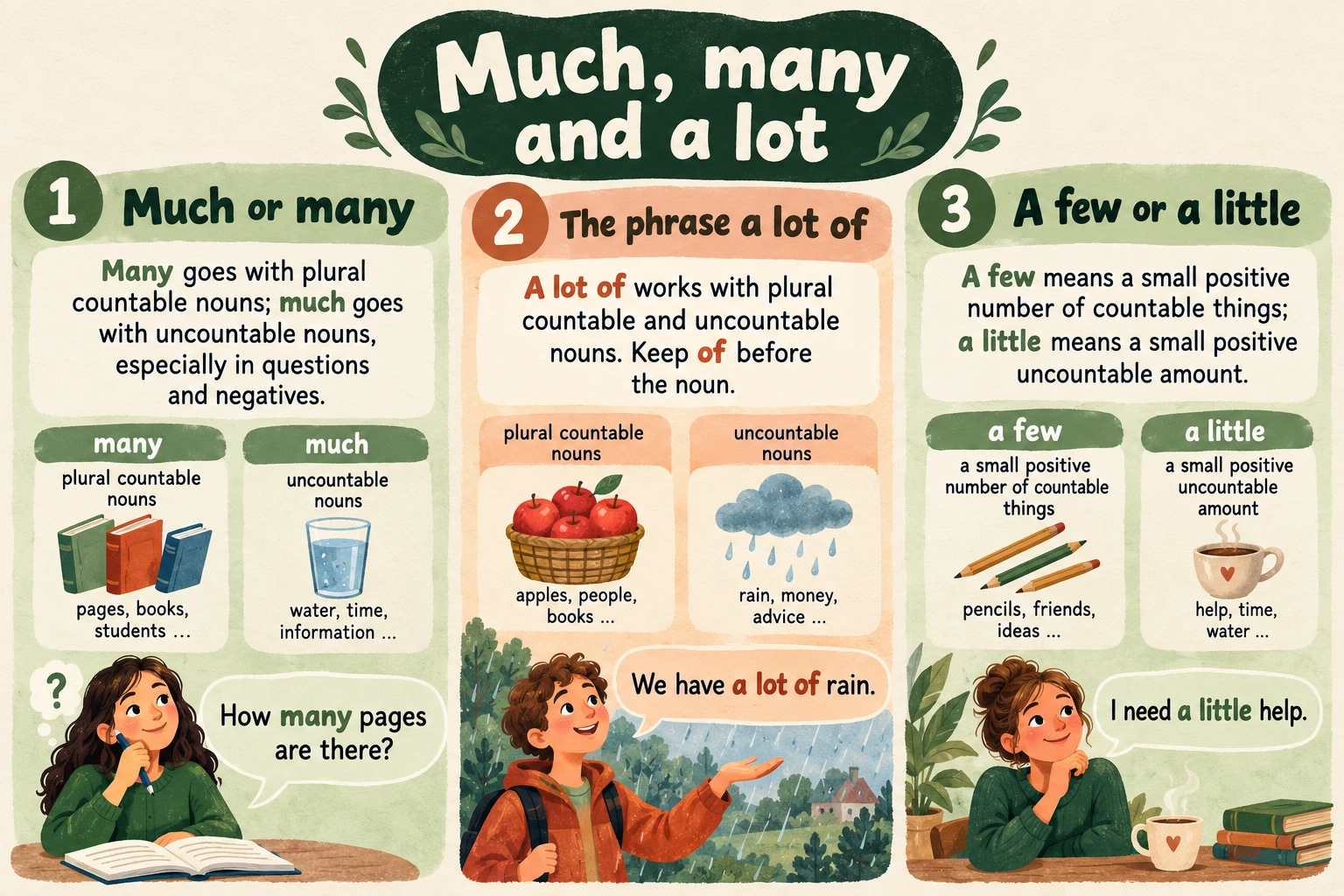
many는 가산 복수, much는 불가산명사와 쓰며 특히 질문과 부정문에서 자주 씁니다.
How many pages are there?
수량표현 much·many·a lot · A2. many는 가산 복수, much는 불가산명사와 쓰며 특히 질문과 부정문에서 자주 씁니다.
짧은 상황에서 ‘수량표현 much·many·a lot’을 연습합니다. 단서를 읽고 형태를 고르거나 쓴 뒤 이유를 확인하세요. 수준은 편집상 안내입니다.
many는 가산 복수, much는 불가산명사와 쓰며 특히 질문과 부정문에서 자주 씁니다.
How many pages are there?a lot of는 가산 복수와 불가산 모두에 쓰며 명사 앞의 of를 유지합니다.
We have a lot of rain.a few는 적지만 있는 가산 수, a little은 적지만 있는 불가산 양을 나타냅니다.
I need a little help.
How ___ chairs do we need?
many는 가산 복수, much는 불가산명사와 쓰며 특히 질문과 부정문에서 자주 씁니다.
How many pages are there?a lot of는 가산 복수와 불가산 모두에 쓰며 명사 앞의 of를 유지합니다.
We have a lot of rain.a few는 적지만 있는 가산 수, a little은 적지만 있는 불가산 양을 나타냅니다.
I need a little help.첫 시도를 남기고 변화의 이유를 이해한 뒤 새로운 상황에서 확인해 보세요.
아직 복습 노트가 없어요. 짧은 워밍업부터 해보세요.
many는 가산 복수, much는 불가산명사와 쓰며 특히 질문과 부정문에서 자주 씁니다.
How many pages are there?a lot of는 가산 복수와 불가산 모두에 쓰며 명사 앞의 of를 유지합니다.
We have a lot of rain.a few는 적지만 있는 가산 수, a little은 적지만 있는 불가산 양을 나타냅니다.
I need a little help.정답을 열면 해당 문제에 도움 사용이 기록돼요.
How ___ chairs do we need?
“How ___ chairs do we need?”를 보세요. many는 가산 복수, much는 불가산명사와 쓰며 특히 질문과 부정문에서 자주 씁니다. 완성 문장: “How many chairs do we need?”.
There are a lot ___ people outside.
“There are a lot ___ people outside.”를 보세요. a lot of는 가산 복수와 불가산 모두에 쓰며 명사 앞의 of를 유지합니다. 완성 문장: “There are a lot of people outside.”.
We have ___ minutes left, perhaps three or four.
“We have ___ minutes left, perhaps three or four.”를 보세요. a few는 적지만 있는 가산 수, a little은 적지만 있는 불가산 양을 나타냅니다. 완성 문장: “We have a few minutes left, perhaps three or four.”.
How ___ flour should I add?
완성 예문: “How much flour should I add?”. many는 가산 복수, much는 불가산명사와 쓰며 특히 질문과 부정문에서 자주 씁니다.
He drinks a lot ___ water after exercise.
“He drinks a lot ___ water after exercise.”를 보세요. a lot of는 가산 복수와 불가산 모두에 쓰며 명사 앞의 of를 유지합니다. 완성 문장: “He drinks a lot of water after exercise.”.
There is ___ oil left, enough to fry one egg.
“There is ___ oil left, enough to fry one egg.”를 보세요. a few는 적지만 있는 가산 수, a little은 적지만 있는 불가산 양을 나타냅니다. 완성 문장: “There is a little oil left, enough to fry one egg.”.
We do not have ___ time before the train leaves.
완성 예문: “We do not have much time before the train leaves.”. many는 가산 복수, much는 불가산명사와 쓰며 특히 질문과 부정문에서 자주 씁니다. 이 문제에서는 다음 표현도 확인된 답으로 인정합니다: any / enough / a lot of / lots of / sufficient. 가능한 모든 영어 표현의 목록은 아닙니다.
There are not ___ cars on the road today.
“There are not ___ cars on the road today.”를 보세요. many는 가산 복수, much는 불가산명사와 쓰며 특히 질문과 부정문에서 자주 씁니다. 완성 문장: “There are not many cars on the road today.”.
She takes a lot ___ photos on holiday.
“She takes a lot ___ photos on holiday.”를 보세요. a lot of는 가산 복수와 불가산 모두에 쓰며 명사 앞의 of를 유지합니다. 완성 문장: “She takes a lot of photos on holiday.”.
I invited ___ friends, only two.
완성 예문: “I invited a few friends, only two.”. a few는 적지만 있는 가산 수, a little은 적지만 있는 불가산 양을 나타냅니다. 이 문제에서는 다음 표현도 확인된 답으로 인정합니다: some / two / a couple of / few. 가능한 모든 영어 표현의 목록은 아닙니다.
The new café sells a lot ___ bread.
“The new café sells a lot ___ bread.”를 보세요. a lot of는 가산 복수와 불가산 모두에 쓰며 명사 앞의 of를 유지합니다. 완성 문장: “The new café sells a lot of bread.”.
Add ___ salt, just a tiny amount.
완성 예문: “Add a little salt, just a tiny amount.”. a few는 적지만 있는 가산 수, a little은 적지만 있는 불가산 양을 나타냅니다. 이 문제에서는 다음 표현도 확인된 답으로 인정합니다: some / a bit of / a tiny amount of / a small amount of / a pinch of / a dash of / a touch of / little. 가능한 모든 영어 표현의 목록은 아닙니다.