01終わった過去の時点
yesterday・last week・in 2019など終わった過去の時点を示す場合は過去形です。
I called her yesterday.
現在完了と過去形 · A2. yesterday・last week・in 2019など終わった過去の時点を示す場合は過去形です。
短い場面で「現在完了と過去形」を練習します。手がかりを読み、形を選ぶか入力してから理由を確認しましょう。レベルは編集上の目安です。
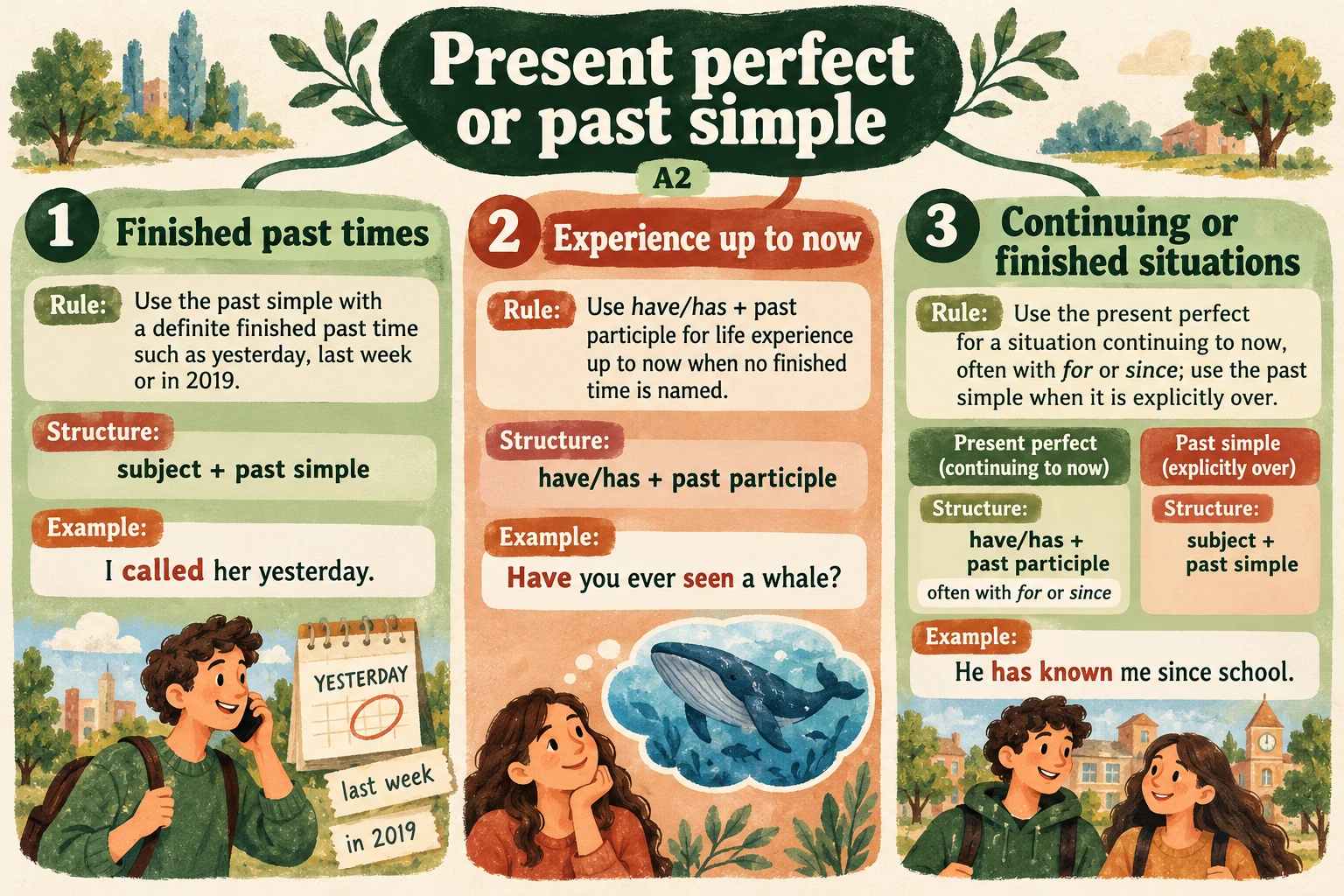
yesterday・last week・in 2019など終わった過去の時点を示す場合は過去形です。
I called her yesterday.終わった時点を示さず今までの経験を述べるときはhave/has+過去分詞です。
Have you ever seen a whale?今も続く状態はfor/sinceと現在完了を使い、明確に終了した状態は過去形にします。
He has known me since school.
I ___ that film last Saturday. (see)
yesterday・last week・in 2019など終わった過去の時点を示す場合は過去形です。
I called her yesterday.終わった時点を示さず今までの経験を述べるときはhave/has+過去分詞です。
Have you ever seen a whale?今も続く状態はfor/sinceと現在完了を使い、明確に終了した状態は過去形にします。
He has known me since school.初回答を残し、変化の理由を理解して、別の場面で確かめます。
まだ復習ノートはありません。まずは短いウォームアップを。
yesterday・last week・in 2019など終わった過去の時点を示す場合は過去形です。
I called her yesterday.終わった時点を示さず今までの経験を述べるときはhave/has+過去分詞です。
Have you ever seen a whale?今も続く状態はfor/sinceと現在完了を使い、明確に終了した状態は過去形にします。
He has known me since school.解答を開くと、その問題にヒント利用が記録されます。
I ___ that film last Saturday. (see)
「I ___ that film last Saturday. (see)」に注目しましょう。yesterday・last week・in 2019など終わった過去の時点を示す場合は過去形です。 完成文:「I saw that film last Saturday. (see)」。
In her life up to now, Lea ___ three novels. (write)
「In her life up to now, Lea ___ three novels. (write)」に注目しましょう。終わった時点を示さず今までの経験を述べるときはhave/has+過去分詞です。 完成文:「In her life up to now, Lea has written three novels. (write)」。
We moved here in 2020 and still live here. We ___ here since 2020. (live)
「We moved here in 2020 and still live here. We ___ here since 2020. (live)」に注目しましょう。今も続く状態はfor/sinceと現在完了を使い、明確に終了した状態は過去形にします。 完成文:「We moved here in 2020 and still live here. We have lived here since 2020. (live)」。
They ___ the museum yesterday. (visit)
完成例:「They visited the museum yesterday. (visit)」。yesterday・last week・in 2019など終わった過去の時点を示す場合は過去形です。
I ___ sushi before in my life. (never eat)
「I ___ sushi before in my life. (never eat)」に注目しましょう。終わった時点を示さず今までの経験を述べるときはhave/has+過去分詞です。 完成文:「I have never eaten sushi before in my life. (never eat)」。
She worked at the café from 2018 to 2020, then left. She ___ there for two years. (work)
「She worked at the café from 2018 to 2020, then left. She ___ there for two years. (work)」に注目しましょう。今も続く状態はfor/sinceと現在完了を使い、明確に終了した状態は過去形にします。 完成文:「She worked at the café from 2018 to 2020, then left. She worked there for two years. (work)」。
Ben ___ his driving test in 2022. (pass)
完成例:「Ben passed his driving test in 2022. (pass)」。yesterday・last week・in 2019など終わった過去の時点を示す場合は過去形です。
Our train ___ an hour ago. (arrive)
「Our train ___ an hour ago. (arrive)」に注目しましょう。yesterday・last week・in 2019など終わった過去の時点を示す場合は過去形です。 完成文:「Our train arrived an hour ago. (arrive)」。
Up to now, we ___ to Iceland. (never be)
「Up to now, we ___ to Iceland. (never be)」に注目しましょう。終わった時点を示さず今までの経験を述べるときはhave/has+過去分詞です。 完成文:「Up to now, we have never been to Iceland. (never be)」。
I still own this bike. I ___ it for five years. (have)
完成例:「I still own this bike. I have had it for five years. (have)」。今も続く状態はfor/sinceと現在完了を使い、明確に終了した状態は過去形にします。 この問題では次の別表現も確認済みです:'ve had。可能な英語表現をすべて列挙したものではありません。
Has he ever ___ a mountain? (climb)
「Has he ever ___ a mountain? (climb)」に注目しましょう。終わった時点を示さず今までの経験を述べるときはhave/has+過去分詞です。 完成文:「Has he ever climbed a mountain? (climb)」。
They left Paris in 2021 after a three-year stay. They ___ there for three years. (live)
完成例:「They left Paris in 2021 after a three-year stay. They lived there for three years. (live)」。今も続く状態はfor/sinceと現在完了を使い、明確に終了した状態は過去形にします。