
A2

Ein Fahrrad ausleihen

Über diese Lektion

Ein Fahrrad ausleihen · A2. Ordne die gefragte Person, Zeit, den Ort oder Betrag dem richtigen Ereignis zu. Behalte die genannte Bedingung oder Erlaubnis bei; eine Regel beweist nicht, dass etwas geschehen ist.

Höre die englische Originalaufnahme, beantworte die Fragen und prüfe die Belege anschließend im Transkript. Die zusammengehörigen Fragen verwenden dieselbe Aufnahme; die Stufe ist eine redaktionelle Orientierung, kein zertifiziertes Ergebnis.

10 Aufgaben
Speichere es für deine Sammlung.
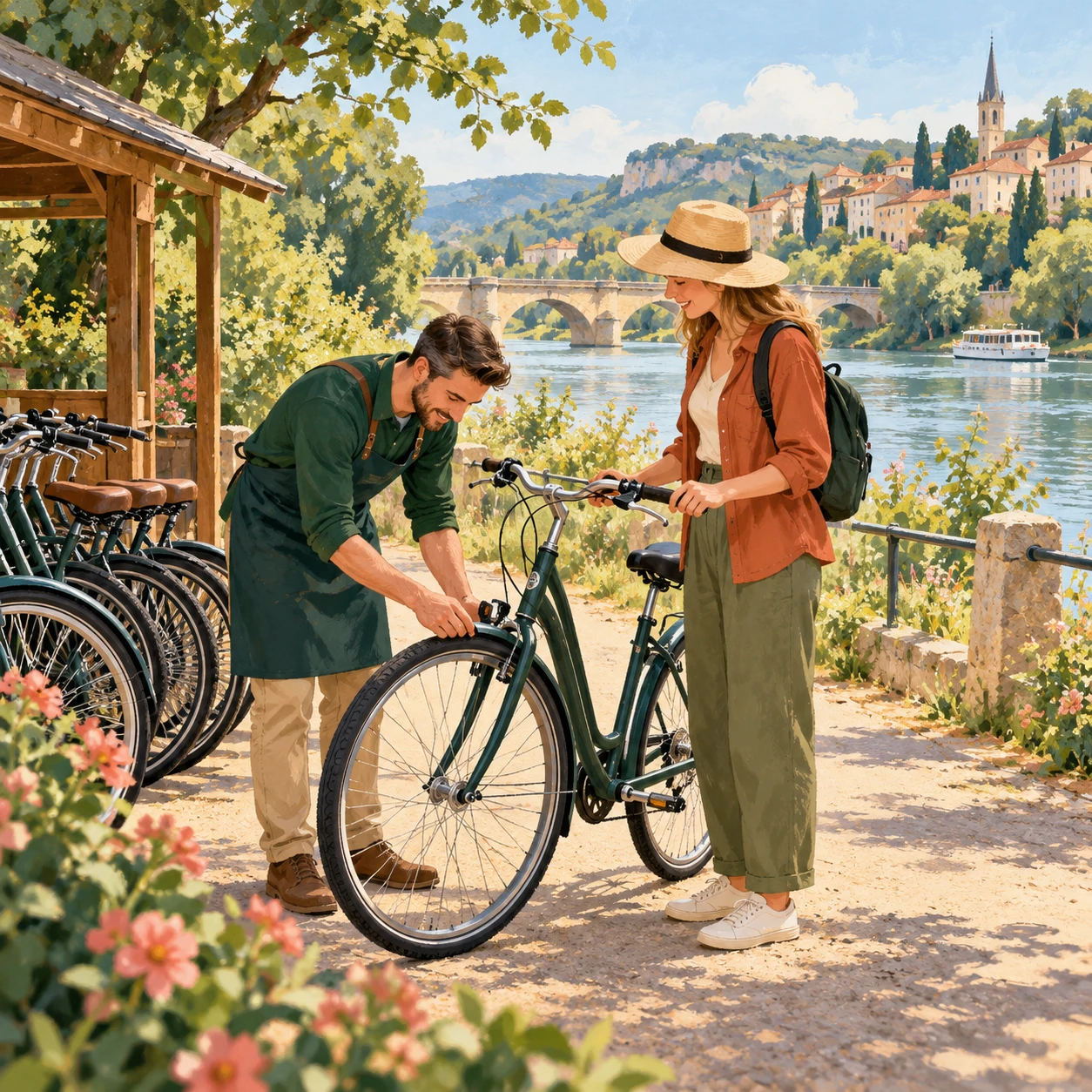
Hiring a bicycle — context illustration
HörenA2

Before you leave the cycle shop

Höre die englische Originalaufnahme, beantworte die Fragen und prüfe die Belege anschließend im Transkript. Die zusammengehörigen Fragen verwenden dieselbe Aufnahme; die Stufe ist eine redaktionelle Orientierung, kein zertifiziertes Ergebnis.

Erst ein wenig Klarheit

Genannte Einzelheiten · Bedingungen und Erlaubnis

Ordne die gefragte Person, Zeit, den Ort oder Betrag dem richtigen Ereignis zu. Behalte die genannte Bedingung oder Erlaubnis bei; eine Regel beweist nicht, dass etwas geschehen ist.

The doors open at eight. The class starts at nine.

Genannte Einzelheiten · Gründe

Ordne die gefragte Person, Zeit, den Ort oder Betrag dem richtigen Ereignis zu. Nutze den tatsächlich genannten Grund; ein nur plausibler Grund von außen reicht nicht.

The doors open at eight. The class starts at nine.

Grenzen der Belege · Absicht und angestrebtes Ergebnis

Trenne belegte Aussagen von offenen Fragen. Eine fehlende Erwähnung beweist keine Abwesenheit. Frage, was die Person oder Mitteilung erreichen will und für wen.

The notice gives a price, but says nothing about delivery.

Lernmaterial
Hiring a bicycle — context illustration
HörenA2

Before you leave the cycle shop

Höre die englische Originalaufnahme, beantworte die Fragen und prüfe die Belege anschließend im Transkript. Die zusammengehörigen Fragen verwenden dieselbe Aufnahme; die Stufe ist eine redaktionelle Orientierung, kein zertifiziertes Ergebnis.

0/10
Aufgaben
01 / 10D01Speichere es für deine Sammlung.

Before you leave the cycle shop

Will the customer pay for the additional hour?

Deine Antwort
1 / 10

Dein Lernweg

01
Schritt 1 · Einstieg

Einstieg

0/3
02
Schritt 2 · Gezielt üben

Genannte Einzelheiten · Bedingungen und Erlaubnis

0/1

Ordne die gefragte Person, Zeit, den Ort oder Betrag dem richtigen Ereignis zu. Behalte die genannte Bedingung oder Erlaubnis bei; eine Regel beweist nicht, dass etwas geschehen ist.

The doors open at eight. The class starts at nine.
03
Schritt 3 · Gezielt üben

Genannte Einzelheiten · Gründe

0/1

Ordne die gefragte Person, Zeit, den Ort oder Betrag dem richtigen Ereignis zu. Nutze den tatsächlich genannten Grund; ein nur plausibler Grund von außen reicht nicht.

The doors open at eight. The class starts at nine.
04
Schritt 4 · Gezielt üben

Grenzen der Belege · Absicht und angestrebtes Ergebnis

0/1

Trenne belegte Aussagen von offenen Fragen. Eine fehlende Erwähnung beweist keine Abwesenheit. Frage, was die Person oder Mitteilung erreichen will und für wen.

The notice gives a price, but says nothing about delivery.
05
Schritt 5 · Passende Übungen

Passende Übungen

0/2
06
Schritt 6 · Textaufgabe

Textaufgabe

0/2
Lernnotizen dieser Einheit

Aus Fehlern lernen.

Behalte den Erstversuch, prüfe den Beleg und versuche eine weitere Frage. Eine Folgefrage zum selben Material belegt keinen Transfer auf einen neuen Text.

0

Noch keine Lernnotizen. Starte mit einem kurzen Einstieg.

Lernübersicht

Ein Fahrrad ausleihen

A2
Hiring a bicycle

Lektionspunkte

01

Genannte Einzelheiten · Bedingungen und Erlaubnis

Ordne die gefragte Person, Zeit, den Ort oder Betrag dem richtigen Ereignis zu. Behalte die genannte Bedingung oder Erlaubnis bei; eine Regel beweist nicht, dass etwas geschehen ist.

The doors open at eight. The class starts at nine.
02

Genannte Einzelheiten · Gründe

Ordne die gefragte Person, Zeit, den Ort oder Betrag dem richtigen Ereignis zu. Nutze den tatsächlich genannten Grund; ein nur plausibler Grund von außen reicht nicht.

The doors open at eight. The class starts at nine.
03

Grenzen der Belege · Absicht und angestrebtes Ergebnis

Trenne belegte Aussagen von offenen Fragen. Eine fehlende Erwähnung beweist keine Abwesenheit. Frage, was die Person oder Mitteilung erreichen will und für wen.

The notice gives a price, but says nothing about delivery.

Fragen & Antworten

Das Öffnen einer Antwort wird für diese Aufgabe als Hilfe erfasst.

D01 · Einstieg

Before you leave the cycle shop

Will the customer pay for the additional hour?

  1. Only if the river path opens again.
  2. No, the additional hour is free.
  3. Yes, but only when returning the bicycle.
  4. Yes, at the normal hourly price.
Antwort und Erklärung
No, the additional hour is free.

Antwort: „No, the additional hour is free.“. Beleg: „we have added an extra hour at no charge.“. Prüfe „Yes, at the normal hourly price.“: Dies sagt das Gegenteil der betreffenden Angabe. Prüfe „Yes, but only when returning the bicycle.“: Dies sagt das Gegenteil der betreffenden Angabe.

D02 · Einstieg

Before you leave the cycle shop

By what time should the bicycle now be returned?

  1. Five in the afternoon.
  2. Four in the afternoon.
  3. Three in the afternoon.
  4. Six in the evening.
Antwort und Erklärung
Five in the afternoon.

Antwort: „Five in the afternoon.“. Beleg: „Please return it by five.“. Prüfe „Three in the afternoon.“: Der Text nennt diese Einzelheit nicht. Ergänze sie nicht. Prüfe „Six in the evening.“: Prüfe die Rechnung anhand der angegebenen Zeiten oder Mengen.

D03 · Einstieg

Before you leave the cycle shop

What can the shop promise if the customer calls about a problem?

  1. A visit before any advice is given.
  2. An immediate visit to every possible location.
  3. Advice only after the customer returns to the shop.
  4. Advice by phone, but not an immediate visit everywhere.
Antwort und Erklärung
Advice by phone, but not an immediate visit everywhere.

Antwort: „Advice by phone, but not an immediate visit everywhere.“. Beleg: „We can advise you by phone, but we cannot promise to reach every place immediately.“. Prüfe „Advice only after the customer returns to the shop.“: Dies sagt das Gegenteil der betreffenden Angabe. Prüfe „An immediate visit to every possible location.“: Dies fasst die Aussage weiter oder stärker, als es der Text erlaubt.

P01 · Gezielt üben

Before you leave the cycle shop

What should the customer check by riding around the yard?

  1. Whether the seat is at the right height.
  2. Whether the map shows the quickest route.
  3. Whether the electric motor works.
  4. Whether the brakes have already been checked.
Antwort und Erklärung
Whether the seat is at the right height.

Antwort: „Whether the seat is at the right height.“. Beleg: „please ride slowly around the yard so you can see whether the seat is at the right height.“. Prüfe „Whether the brakes have already been checked.“: Dies nennt eine andere Einzelheit als die erfragte. Beleg: „We have already checked the brakes“. Prüfe „Whether the map shows the quickest route.“: Der Text nennt diese Einzelheit nicht. Ergänze sie nicht. Beleg: „I have marked a quieter route on the paper map in the front basket.“.

P02 · Gezielt üben

Before you leave the cycle shop

Why has the shop added an extra hour?

  1. The staff have not checked the brakes.
  2. Part of the river path is closed.
  3. The customer arrived an hour late.
  4. The bicycle lock is missing.
Antwort und Erklärung
Part of the river path is closed.

Antwort: „Part of the river path is closed.“. Beleg: „Because the river path is closed near the old bridge, we have added an extra hour at no charge.“. Prüfe „The customer arrived an hour late.“: Der Text nennt diese Einzelheit nicht. Ergänze sie nicht. Prüfe „The bicycle lock is missing.“: Dies sagt das Gegenteil der betreffenden Angabe. Beleg: „A helmet and a bicycle lock are included in the hire price.“.

P03 · Gezielt üben

Before you leave the cycle shop

What is the main purpose of the speaker’s instructions?

  1. To arrange a new bicycle booking for tomorrow.
  2. To explain how to use and return the hired bicycle.
  3. To persuade the customer to buy an electric bicycle.
  4. To explain how to repair the closed river path.
Antwort und Erklärung
To explain how to use and return the hired bicycle.

Antwort: „To explain how to use and return the hired bicycle.“. Beleg: „Before you leave the shop, let me explain how our bicycle hire works.“. Prüfe „To explain how to repair the closed river path.“: Dies ist nicht der Hauptzweck der Nachricht oder des Textes. Prüfe „To arrange a new bicycle booking for tomorrow.“: Dies ist nicht der Hauptzweck der Nachricht oder des Textes.

R01 · Passende Übungen

Before you leave the cycle shop

Where is the paper map?

  1. Under the seat.
  2. Inside the customer’s helmet.
  3. In the front basket.
  4. At the side entrance.
Antwort und Erklärung
In the front basket.

Antwort: „In the front basket.“. Beleg: „the paper map in the front basket.“. Prüfe „Inside the customer’s helmet.“: Dies ist nicht der für diese Handlung genannte Ort. Prüfe „Under the seat.“: Dies ist nicht der für diese Handlung genannte Ort.

R02 · Passende Übungen

Before you leave the cycle shop

What is included in the hire price?

  1. An electric bicycle and a lock.
  2. A lunch and a helmet.
  3. A repair visit anywhere on the route.
  4. A helmet and a bicycle lock.
Antwort und Erklärung
A helmet and a bicycle lock.

Antwort: „A helmet and a bicycle lock.“. Beleg: „A helmet and a bicycle lock are included in the hire price.“. Prüfe „A lunch and a helmet.“: Der Text nennt diese Einzelheit nicht. Ergänze sie nicht. Prüfe „An electric bicycle and a lock.“: Dies sagt das Gegenteil der betreffenden Angabe. Beleg: „Your booking is for a city bicycle, not an electric one.“.

X01 · Textaufgabe

Before you leave the cycle shop

Where should the bicycle be locked during lunch?

  1. To its own basket without using a stand.
  2. To a fixed bicycle stand.
  3. Nowhere; leave it unlocked while eating nearby.
  4. To another hired bicycle.
Antwort und Erklärung
To a fixed bicycle stand.

Antwort: „To a fixed bicycle stand.“. Beleg: „lock the bicycle to a fixed bicycle stand, not to another hired bicycle.“. Prüfe „To another hired bicycle.“: Dies sagt das Gegenteil der betreffenden Angabe. Prüfe „To its own basket without using a stand.“: Dies nennt eine andere Einzelheit als die erfragte.

X02 · Textaufgabe

Before you leave the cycle shop

Where should the bicycle be returned?

  1. To the old bridge.
  2. To the bicycle stand by the river.
  3. To the front door.
  4. To the side entrance.
Antwort und Erklärung
To the side entrance.

Antwort: „To the side entrance.“. Beleg: „Please return the bicycle to the side entrance, where a member of staff will check it.“. Prüfe „To the front door.“: Dies ist nicht der für diese Handlung genannte Ort. Beleg: „The front door may be busy with customers buying bicycles.“. Prüfe „To the bicycle stand by the river.“: Der Text nennt diese Einzelheit nicht. Ergänze sie nicht.