
A2

Hiring a bicycle

About this lesson

Hiring a bicycle · A2. Keep the requested person, time, place or amount attached to the correct event. Keep the stated condition or permission; a rule does not prove that an event happened.

Listen to the original English recording, answer the questions, then open the transcript to check the evidence. These related questions use the same recording; the level is an editorial guide, not a certified result.

10 items
Save it to find it in My collection.
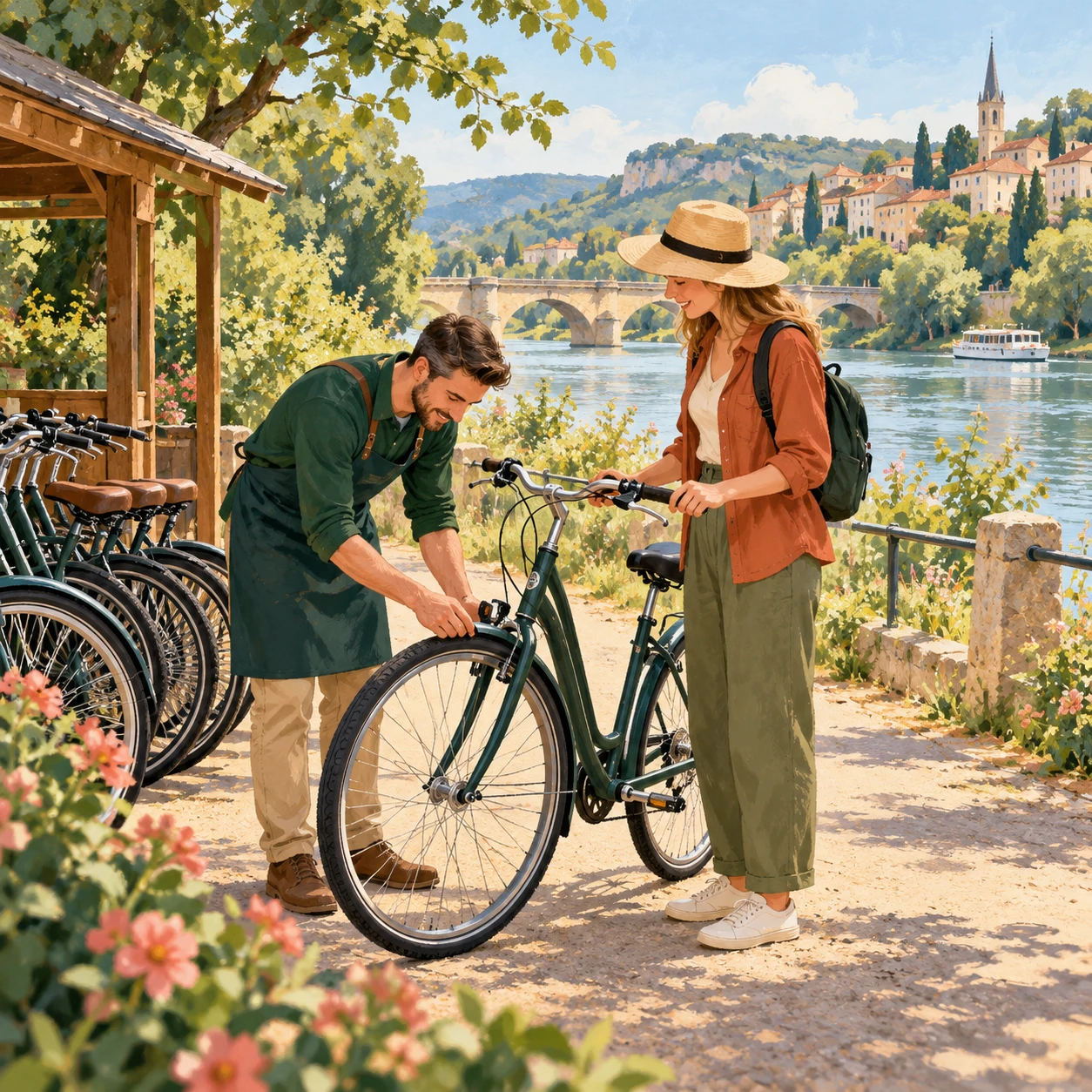
Hiring a bicycle — context illustration
ListeningA2

Before you leave the cycle shop

Listen to the original English recording, answer the questions, then open the transcript to check the evidence. These related questions use the same recording; the level is an editorial guide, not a certified result.

A little clarity first

Stated details · Conditions and permissions

Keep the requested person, time, place or amount attached to the correct event. Keep the stated condition or permission; a rule does not prove that an event happened.

The doors open at eight. The class starts at nine.

Stated details · Reasons

Keep the requested person, time, place or amount attached to the correct event. Use the reason actually given; a plausible reason from outside the text is not enough.

The doors open at eight. The class starts at nine.

Limits of the evidence · Purpose and intended outcome

Separate supported claims from what the evidence leaves unknown. No mention does not prove absence. Ask what the person or message is trying to achieve, and for whom.

The notice gives a price, but says nothing about delivery.

Learning material
Hiring a bicycle — context illustration
ListeningA2

Before you leave the cycle shop

Listen to the original English recording, answer the questions, then open the transcript to check the evidence. These related questions use the same recording; the level is an editorial guide, not a certified result.

0/10
Questions
01 / 10D01Save it to find it in My collection.

Before you leave the cycle shop

Will the customer pay for the additional hour?

Your answer
1 / 10

Your learning route

01
Step 1 · Warm-up

Warm-up

0/3
02
Step 2 · Build the skill

Stated details · Conditions and permissions

0/1

Keep the requested person, time, place or amount attached to the correct event. Keep the stated condition or permission; a rule does not prove that an event happened.

The doors open at eight. The class starts at nine.
03
Step 3 · Build the skill

Stated details · Reasons

0/1

Keep the requested person, time, place or amount attached to the correct event. Use the reason actually given; a plausible reason from outside the text is not enough.

The doors open at eight. The class starts at nine.
04
Step 4 · Build the skill

Limits of the evidence · Purpose and intended outcome

0/1

Separate supported claims from what the evidence leaves unknown. No mention does not prove absence. Ask what the person or message is trying to achieve, and for whom.

The notice gives a price, but says nothing about delivery.
05
Step 5 · Related practice

Related practice

0/2
06
Step 6 · Text challenge

Text challenge

0/2
Practice notes in this unit

Make mistakes useful.

Keep your first attempt, check the evidence and try another question. A follow-up on the same material does not prove transfer to a new text.

0

No practice notes yet. Try a short warm-up.

Lesson map

Hiring a bicycle

A2
Hiring a bicycle

Lesson points

01

Stated details · Conditions and permissions

Keep the requested person, time, place or amount attached to the correct event. Keep the stated condition or permission; a rule does not prove that an event happened.

The doors open at eight. The class starts at nine.
02

Stated details · Reasons

Keep the requested person, time, place or amount attached to the correct event. Use the reason actually given; a plausible reason from outside the text is not enough.

The doors open at eight. The class starts at nine.
03

Limits of the evidence · Purpose and intended outcome

Separate supported claims from what the evidence leaves unknown. No mention does not prove absence. Ask what the person or message is trying to achieve, and for whom.

The notice gives a price, but says nothing about delivery.

Questions & answers

Opening an answer records help for that question.

D01 · Warm-up

Before you leave the cycle shop

Will the customer pay for the additional hour?

  1. Only if the river path opens again.
  2. No, the additional hour is free.
  3. Yes, but only when returning the bicycle.
  4. Yes, at the normal hourly price.
Answer & explanation
No, the additional hour is free.

Answer: “No, the additional hour is free.”. Evidence: “we have added an extra hour at no charge.”. Check “Yes, at the normal hourly price.”: This says the opposite of the relevant detail. Check “Yes, but only when returning the bicycle.”: This says the opposite of the relevant detail.

D02 · Warm-up

Before you leave the cycle shop

By what time should the bicycle now be returned?

  1. Five in the afternoon.
  2. Four in the afternoon.
  3. Three in the afternoon.
  4. Six in the evening.
Answer & explanation
Five in the afternoon.

Answer: “Five in the afternoon.”. Evidence: “Please return it by five.”. Check “Three in the afternoon.”: The text does not give this detail. Do not add it. Check “Six in the evening.”: Check the calculation using the stated times or amounts.

D03 · Warm-up

Before you leave the cycle shop

What can the shop promise if the customer calls about a problem?

  1. A visit before any advice is given.
  2. An immediate visit to every possible location.
  3. Advice only after the customer returns to the shop.
  4. Advice by phone, but not an immediate visit everywhere.
Answer & explanation
Advice by phone, but not an immediate visit everywhere.

Answer: “Advice by phone, but not an immediate visit everywhere.”. Evidence: “We can advise you by phone, but we cannot promise to reach every place immediately.”. Check “Advice only after the customer returns to the shop.”: This says the opposite of the relevant detail. Check “An immediate visit to every possible location.”: This makes the statement wider or stronger than the text allows.

P01 · Build the skill

Before you leave the cycle shop

What should the customer check by riding around the yard?

  1. Whether the seat is at the right height.
  2. Whether the map shows the quickest route.
  3. Whether the electric motor works.
  4. Whether the brakes have already been checked.
Answer & explanation
Whether the seat is at the right height.

Answer: “Whether the seat is at the right height.”. Evidence: “please ride slowly around the yard so you can see whether the seat is at the right height.”. Check “Whether the brakes have already been checked.”: This gives a different detail from the one asked for. Evidence: “We have already checked the brakes”. Check “Whether the map shows the quickest route.”: The text does not give this detail. Do not add it. Evidence: “I have marked a quieter route on the paper map in the front basket.”.

P02 · Build the skill

Before you leave the cycle shop

Why has the shop added an extra hour?

  1. The staff have not checked the brakes.
  2. Part of the river path is closed.
  3. The customer arrived an hour late.
  4. The bicycle lock is missing.
Answer & explanation
Part of the river path is closed.

Answer: “Part of the river path is closed.”. Evidence: “Because the river path is closed near the old bridge, we have added an extra hour at no charge.”. Check “The customer arrived an hour late.”: The text does not give this detail. Do not add it. Check “The bicycle lock is missing.”: This says the opposite of the relevant detail. Evidence: “A helmet and a bicycle lock are included in the hire price.”.

P03 · Build the skill

Before you leave the cycle shop

What is the main purpose of the speaker’s instructions?

  1. To arrange a new bicycle booking for tomorrow.
  2. To explain how to use and return the hired bicycle.
  3. To persuade the customer to buy an electric bicycle.
  4. To explain how to repair the closed river path.
Answer & explanation
To explain how to use and return the hired bicycle.

Answer: “To explain how to use and return the hired bicycle.”. Evidence: “Before you leave the shop, let me explain how our bicycle hire works.”. Check “To explain how to repair the closed river path.”: This is not what the message or text is mainly trying to do. Check “To arrange a new bicycle booking for tomorrow.”: This is not what the message or text is mainly trying to do.

R01 · Related practice

Before you leave the cycle shop

Where is the paper map?

  1. Under the seat.
  2. Inside the customer’s helmet.
  3. In the front basket.
  4. At the side entrance.
Answer & explanation
In the front basket.

Answer: “In the front basket.”. Evidence: “the paper map in the front basket.”. Check “Inside the customer’s helmet.”: This is not the place given for this action. Check “Under the seat.”: This is not the place given for this action.

R02 · Related practice

Before you leave the cycle shop

What is included in the hire price?

  1. An electric bicycle and a lock.
  2. A lunch and a helmet.
  3. A repair visit anywhere on the route.
  4. A helmet and a bicycle lock.
Answer & explanation
A helmet and a bicycle lock.

Answer: “A helmet and a bicycle lock.”. Evidence: “A helmet and a bicycle lock are included in the hire price.”. Check “A lunch and a helmet.”: The text does not give this detail. Do not add it. Check “An electric bicycle and a lock.”: This says the opposite of the relevant detail. Evidence: “Your booking is for a city bicycle, not an electric one.”.

X01 · Text challenge

Before you leave the cycle shop

Where should the bicycle be locked during lunch?

  1. To its own basket without using a stand.
  2. To a fixed bicycle stand.
  3. Nowhere; leave it unlocked while eating nearby.
  4. To another hired bicycle.
Answer & explanation
To a fixed bicycle stand.

Answer: “To a fixed bicycle stand.”. Evidence: “lock the bicycle to a fixed bicycle stand, not to another hired bicycle.”. Check “To another hired bicycle.”: This says the opposite of the relevant detail. Check “To its own basket without using a stand.”: This gives a different detail from the one asked for.

X02 · Text challenge

Before you leave the cycle shop

Where should the bicycle be returned?

  1. To the old bridge.
  2. To the bicycle stand by the river.
  3. To the front door.
  4. To the side entrance.
Answer & explanation
To the side entrance.

Answer: “To the side entrance.”. Evidence: “Please return the bicycle to the side entrance, where a member of staff will check it.”. Check “To the front door.”: This is not the place given for this action. Evidence: “The front door may be busy with customers buying bicycles.”. Check “To the bicycle stand by the river.”: The text does not give this detail. Do not add it.