B1

Money and decisions Exercises

About this lesson

Money and decisions · B1. Distinguish “budget” (plan limiting income and spending) from “debt” (money owed to another person or organisation). Read the situation before choosing; these words are not interchangeable. Additional contrast: “savings” means money kept rather than spent; “loan” means money borrowed with an agreement to repay. Compare their uses in the learning cards.

Complete 24 original tasks. Use the situation to choose the intended meaning, practise the form, then apply it in a fresh context.

24 items
Save it to find it in My collection.
Vocabulary

Learning cards

1/12
budget
budget
B1
01 / 12
Save it to find it in My collection.

budget

plan limiting income and spending
In a sentence

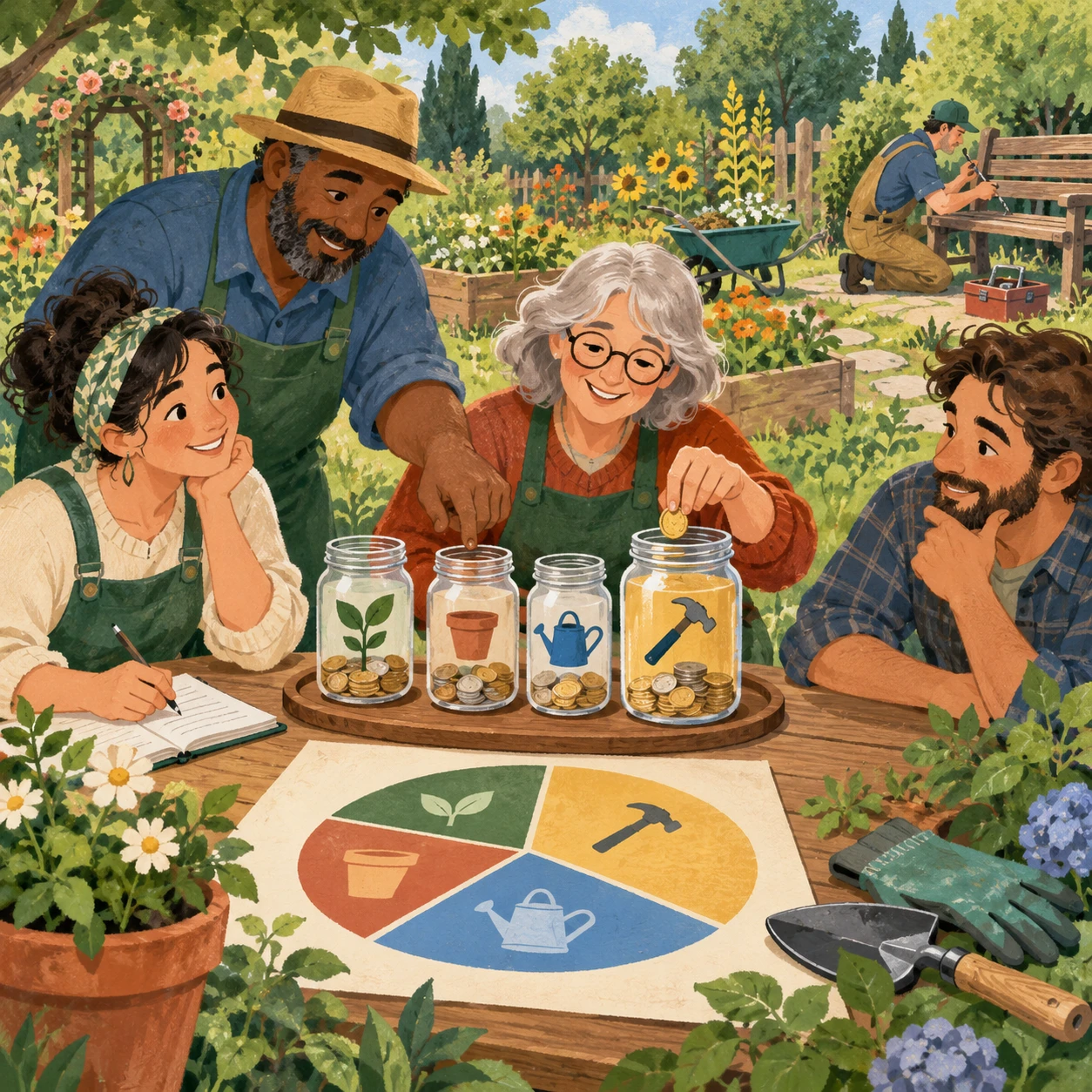
The garden committee reserved part of its budget for repairs.

The garden committee reserved part of its budget for repairs.

Useful combinations
set a budgetwithin budget

Word forms & family

budgets (n.)budgeting (n.)budgetary (adj.)

Similar meanings & paraphrases

spending plan

These match this sense. Word families can change meaning; near meanings are not always interchangeable.

Practise “set a budget” as a whole phrase. Here “budget” has the sense plan limiting income and spending.

0 Saved words

A little clarity first

plan limiting income and spending / money owed to another person or organisation

Distinguish “budget” (plan limiting income and spending) from “debt” (money owed to another person or organisation). Read the situation before choosing; these words are not interchangeable. Additional contrast: “savings” means money kept rather than spent; “loan” means money borrowed with an agreement to repay. Compare their uses in the learning cards.

We agreed on a monthly budget.

money returned after payment / initial payment securing an agreement

Distinguish “refund” (money returned after payment) from “deposit” (initial payment securing an agreement). Read the situation before choosing; these words are not interchangeable. Additional contrast: “interest” means charge for borrowing money; “instalment” means one of several scheduled payments. Compare their uses in the learning cards.

The shop offered a full refund.

purchase offering unusually good value / within the amount someone can pay

Distinguish “bargain” (purchase offering unusually good value) from “affordable” (within the amount someone can pay). Read the situation before choosing; these words are not interchangeable. Additional contrast: “fee” means payment for a service; “donation” means money or goods given to support a cause. Compare their uses in the learning cards.

This used desk was a real bargain.

0/24
Questions
01 / 24D01Save it to find it in My collection.

We made a plan setting the maximum amount we can spend each month.

We agreed on a monthly ___.

Your answer
1 / 24

Your learning route

01
Step 1 · Warm-up

Warm-up

0/3
02
Step 2 · Build the skill

money returned after payment / initial payment securing an agreement

0/1

Distinguish “refund” (money returned after payment) from “deposit” (initial payment securing an agreement). Read the situation before choosing; these words are not interchangeable. Additional contrast: “interest” means charge for borrowing money; “instalment” means one of several scheduled payments. Compare their uses in the learning cards.

The shop offered a full refund.
03
Step 3 · Build the skill

purchase offering unusually good value / within the amount someone can pay

0/2

Distinguish “bargain” (purchase offering unusually good value) from “affordable” (within the amount someone can pay). Read the situation before choosing; these words are not interchangeable. Additional contrast: “fee” means payment for a service; “donation” means money or goods given to support a cause. Compare their uses in the learning cards.

This used desk was a real bargain.
04
Step 4 · Build the skill

plan limiting income and spending / money owed to another person or organisation

0/1

Distinguish “budget” (plan limiting income and spending) from “debt” (money owed to another person or organisation). Read the situation before choosing; these words are not interchangeable. Additional contrast: “savings” means money kept rather than spent; “loan” means money borrowed with an agreement to repay. Compare their uses in the learning cards.

We agreed on a monthly budget.

05
Step 5 · New contexts

New contexts

0/9
06
Step 6 · A fresh challenge

A fresh challenge

0/8
Practice notes in this unit

Make mistakes useful.

Keep the first try. Understand the change. Check it in a fresh situation.

0

No practice notes yet. Try a short warm-up.

Questions & answers

Opening an answer records help for that question.

D01 · Warm-up

We made a plan setting the maximum amount we can spend each month.

We agreed on a monthly ___.

  1. budget
  2. debt
  3. refund
  4. deposit
Answer & explanation
budget

Look at “maximum amount we can spend”. Here we need “plan limiting income and spending”: “budget”. Check the money role: spending limit, money owed, money returned, advance payment, unusually good value or a price you can manage. Completed sentence: “We agreed on a monthly budget.”.

D02 · Warm-up

They owed the bank money and gradually paid back the outstanding amount.

They repaid the ___ gradually.

  1. bargain
  2. refund
  3. deposit
  4. debt
Answer & explanation
debt

Look at “owed the bank money”. Here we need “money owed to another person or organisation”: “debt”. Check the money role: spending limit, money owed, money returned, advance payment, unusually good value or a price you can manage. Completed sentence: “They repaid the debt gradually.”.

D03 · Warm-up

The shop offered to return all the money paid for a faulty item.

The shop offered a full ___.

  1. bargain
  2. affordable
  3. refund
  4. deposit
Answer & explanation
refund

Look at “return all the money”. Here we need “money returned after payment”: “refund”. Check the money role: spending limit, money owed, money returned, advance payment, unusually good value or a price you can manage. Completed sentence: “The shop offered a full refund.”.

P01 · Build the skill

Complete the sentence with the expression that matches the stated situation.

We paid a ___ to reserve the flat.

  1. bargain
  2. budget
  3. deposit
  4. affordable
Answer & explanation
deposit

Look at “reserve the flat”. Here we need “initial payment securing an agreement”: “deposit”. Check the money role: spending limit, money owed, money returned, advance payment, unusually good value or a price you can manage. Completed sentence: “We paid a deposit to reserve the flat.”.

P02 · Build the skill

The used desk was excellent quality and much cheaper than similar desks.

This used desk was a real ___.

  1. bargain
  2. affordable
  3. budget
  4. debt
Answer & explanation
bargain

Look at “much cheaper”. Here we need “purchase offering unusually good value”: “bargain”. Check the money role: spending limit, money owed, money returned, advance payment, unusually good value or a price you can manage. Completed sentence: “This used desk was a real bargain.”.

P03 · Build the skill

The rooms cost an amount our limited income can cover. The gap needs an adjective meaning within our means.

The hostel offers ___ rooms.

  1. unaffordable
  2. overcrowded
  3. affordable
  4. unavailable
Answer & explanation
affordable

Look at “limited income can cover”. Here we need “within the amount someone can pay”: “affordable”. The question names ability to pay the price. Availability and crowding concern access or space, not whether the price fits an income. Completed sentence: “The hostel offers affordable rooms.”.

P04 · Build the skill

Complete the sentence with the expression that matches the stated situation.

Our spending plan allows only fifty pounds for travel; that is our travel ___.

  1. refund
  2. debt
  3. deposit
  4. budget
Answer & explanation
budget

Look at “spending plan”. Here we need “plan limiting income and spending”: “budget”. Check the money role: spending limit, money owed, money returned, advance payment, unusually good value or a price you can manage. Completed sentence: “Our spending plan allows only fifty pounds for travel; that is our travel budget.”.

R01 · New contexts

Complete the sentence with the expression that matches the stated situation.

The loan has not been repaid, so it remains a ___.

  1. bargain
  2. debt
  3. deposit
  4. refund
Answer & explanation
debt

Look at “not been repaid”. Here we need “money owed to another person or organisation”: “debt”. Check the money role: spending limit, money owed, money returned, advance payment, unusually good value or a price you can manage. Completed sentence: “The loan has not been repaid, so it remains a debt.”.

R02 · New contexts

Complete the sentence with the expression that matches the stated situation.

The item was faulty, so I asked for my money back: a ___.

  1. refund
  2. bargain
  3. deposit
  4. affordable
Answer & explanation
refund

Look at “money back”. Here we need “money returned after payment”: “refund”. Check the money role: spending limit, money owed, money returned, advance payment, unusually good value or a price you can manage. Completed sentence: “The item was faulty, so I asked for my money back: a refund.”.

R03 · New contexts

Complete the sentence with the expression that matches the stated situation.

To secure the booking, pay a ten-percent ___ now and the rest later.

  1. deposit
  2. affordable
  3. bargain
  4. budget
Answer & explanation
deposit

Look at “now and the rest later”. Here we need “initial payment securing an agreement”: “deposit”. Check the money role: spending limit, money owed, money returned, advance payment, unusually good value or a price you can manage. Completed sentence: “To secure the booking, pay a ten-percent deposit now and the rest later.”.

X01 · A fresh challenge

Complete the sentence with the expression that matches the stated situation.

The coat was excellent quality and cost very little; it was a ___.

  1. affordable
  2. debt
  3. budget
  4. bargain
Answer & explanation
bargain

Look at “excellent quality and cost very little”. Here we need “purchase offering unusually good value”: “bargain”. Check the money role: spending limit, money owed, money returned, advance payment, unusually good value or a price you can manage. Completed sentence: “The coat was excellent quality and cost very little; it was a bargain.”.

X02 · A fresh challenge

Complete the sentence with the expression that matches the stated situation.

The fee fits our limited income, so the course is ___.

  1. affordable
  2. overcrowded
  3. unaffordable
  4. unavailable
Answer & explanation
affordable

Look at “fits our limited income”. Here we need “within the amount someone can pay”: “affordable”. The question names ability to pay the price. Availability and crowding concern access or space, not whether the price fits an income. Completed sentence: “The fee fits our limited income, so the course is affordable.”.

R04 · New contexts

Choose the expression that matches the situation.

The money I had gradually put aside over several years was my ___.

  1. savings
  2. interest
  3. instalment
  4. loan
Answer & explanation
savings

Look at “put aside”. Here we need “money kept rather than spent”: “savings”. Separate saved money, repayable borrowing, a time-based borrowing charge, one part-payment, a service charge and a voluntary gift. Completed sentence: “The money I had gradually put aside over several years was my savings.”.

R05 · New contexts

Choose the expression that matches the situation.

The bank gave her a ___ of 5,000 pounds, which she must repay over two years.

  1. fee
  2. interest
  3. loan
  4. instalment
Answer & explanation
loan

Look at “must repay”. Here we need “money borrowed with an agreement to repay”: “loan”. Separate saved money, repayable borrowing, a time-based borrowing charge, one part-payment, a service charge and a voluntary gift. Completed sentence: “The bank gave her a loan of 5,000 pounds, which she must repay over two years.”.

R06 · New contexts

The sentence names the borrowing charge calculated as an annual percentage of the outstanding amount, not a fixed service payment.

The lender charges ___ at five per cent a year on the amount borrowed.

  1. fee
  2. donation
  3. interest
  4. instalment
Answer & explanation
interest

Look at “annual percentage”. Here we need “charge for borrowing money”: “interest”. Separate saved money, repayable borrowing, a time-based borrowing charge, one part-payment, a service charge and a voluntary gift. Completed sentence: “The lender charges interest at five per cent a year on the amount borrowed.”.

R07 · New contexts

Choose the expression that matches the situation.

The sofa costs 600 pounds; I will pay one monthly ___ of 100 pounds for six months.

  1. fee
  2. donation
  3. savings
  4. instalment
Answer & explanation
instalment

Look at “100 pounds for six months”. Here we need “one of several scheduled payments”: “instalment”. Separate saved money, repayable borrowing, a time-based borrowing charge, one part-payment, a service charge and a voluntary gift. Completed sentence: “The sofa costs 600 pounds; I will pay one monthly instalment of 100 pounds for six months.”.

R08 · New contexts

Choose the expression that matches the situation.

The solicitor charges a fixed ___ for preparing this legal document.

  1. donation
  2. fee
  3. savings
  4. loan
Answer & explanation
fee

Look at “preparing this legal document”. Here we need “payment for a service”: “fee”. Separate saved money, repayable borrowing, a time-based borrowing charge, one part-payment, a service charge and a voluntary gift. Completed sentence: “The solicitor charges a fixed fee for preparing this legal document.”.

R09 · New contexts

Choose the expression that matches the situation.

She gave a voluntary ___ to the charity and expected nothing in return.

  1. loan
  2. interest
  3. donation
  4. savings
Answer & explanation
donation

Look at “expected nothing in return”. Here we need “money or goods given to support a cause”: “donation”. Separate saved money, repayable borrowing, a time-based borrowing charge, one part-payment, a service charge and a voluntary gift. Completed sentence: “She gave a voluntary donation to the charity and expected nothing in return.”.

X03 · A fresh challenge

Choose the expression that matches the situation.

She used her ___, money kept in the bank from previous earnings, to pay for the trip.

  1. instalment
  2. fee
  3. savings
  4. interest
Answer & explanation
savings

Look at “previous earnings”. Here we need “money kept rather than spent”: “savings”. Separate saved money, repayable borrowing, a time-based borrowing charge, one part-payment, a service charge and a voluntary gift. Completed sentence: “She used her savings, money kept in the bank from previous earnings, to pay for the trip.”.

X04 · A fresh challenge

Choose the expression that matches the situation.

He applied for a ___ because he needed to borrow money to buy the equipment.

  1. loan
  2. instalment
  3. donation
  4. fee
Answer & explanation
loan

Look at “borrow money”. Here we need “money borrowed with an agreement to repay”: “loan”. Separate saved money, repayable borrowing, a time-based borrowing charge, one part-payment, a service charge and a voluntary gift. Completed sentence: “He applied for a loan because he needed to borrow money to buy the equipment.”.

X05 · A fresh challenge

Choose the expression that matches the situation.

Borrowers pay back the original sum plus ___, an extra amount calculated as a percentage of the outstanding loan over time.

  1. interest
  2. savings
  3. donation
  4. fee
Answer & explanation
interest

Look at “percentage of the outstanding loan over time”. Here we need “charge for borrowing money”: “interest”. Separate saved money, repayable borrowing, a time-based borrowing charge, one part-payment, a service charge and a voluntary gift. Completed sentence: “Borrowers pay back the original sum plus interest, an extra amount calculated as a percentage of the outstanding loan over time.”.

X06 · A fresh challenge

Choose the expression that matches the situation.

The payment plan divides the cost into twelve parts, and the first ___ is due today.

  1. loan
  2. instalment
  3. savings
  4. donation
Answer & explanation
instalment

Look at “twelve parts”. Here we need “one of several scheduled payments”: “instalment”. Separate saved money, repayable borrowing, a time-based borrowing charge, one part-payment, a service charge and a voluntary gift. Completed sentence: “The payment plan divides the cost into twelve parts, and the first instalment is due today.”.

X07 · A fresh challenge

Choose the expression that matches the situation.

There is a small delivery ___ for bringing your order to your home.

  1. interest
  2. loan
  3. savings
  4. fee
Answer & explanation
fee

Look at “delivery”. Here we need “payment for a service”: “fee”. Separate saved money, repayable borrowing, a time-based borrowing charge, one part-payment, a service charge and a voluntary gift. Completed sentence: “There is a small delivery fee for bringing your order to your home.”.

X08 · A fresh challenge

Choose the expression that matches the situation.

The museum received a generous ___ from a supporter who gave the money freely and required no repayment or service in return.

  1. donation
  2. instalment
  3. interest
  4. loan
Answer & explanation
donation

Look at “required no repayment or service”. Here we need “money or goods given to support a cause”: “donation”. Separate saved money, repayable borrowing, a time-based borrowing charge, one part-payment, a service charge and a voluntary gift. Completed sentence: “The museum received a generous donation from a supporter who gave the money freely and required no repayment or service in return.”.