B1

Two transport proposals

About this lesson

Two transport proposals · B1. Keep the requested person, time, place or amount attached to the correct event. Keep the stated condition or permission; a rule does not prove that an event happened.

Read the original English material and answer with evidence. The level is an editorial guide, not a certified result.

12 items
Save it to find it in My collection.
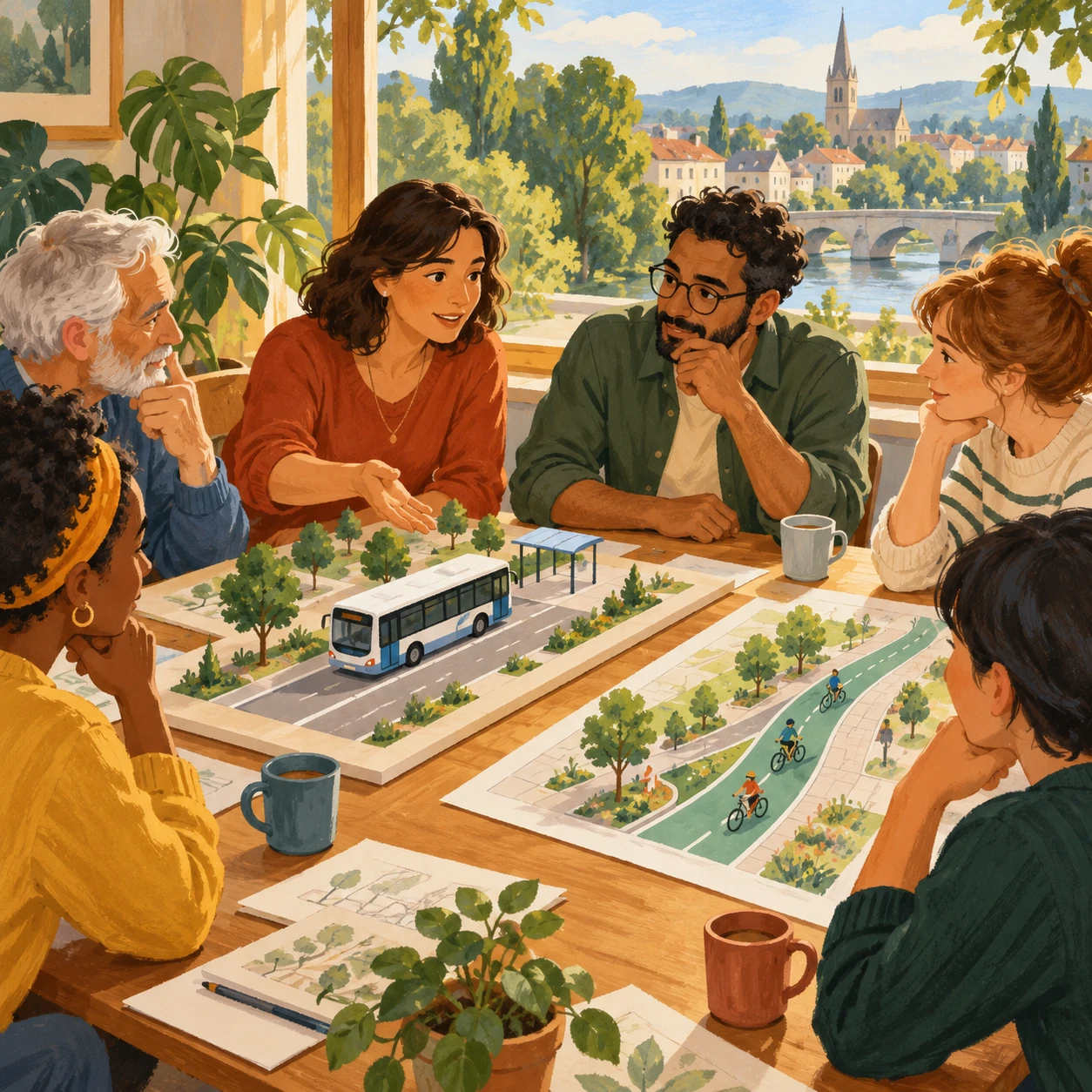
Two transport proposals — context illustration
ReadingB1

Two transport proposals

Read the original English material and answer with evidence. The level is an editorial guide, not a certified result.

A local newsletter asked two residents to respond to plans for reducing traffic near West Square. Both agreed that the present arrangement was a problem, but they supported different solutions. The council has not yet chosen either plan.

Proposal A would remove parking from one side of Market Road and create a protected cycle lane. Nadia, who runs a small design business, supports this option. She cycles to the square and says that the narrow road makes new riders nervous. A continuous lane, rather than short separate sections, would help them feel safer. She accepts that some customers need to drive, so she wants clear signs to the car park behind the square. Her support depends on the lane being connected to the existing route beside the river.

Proposal B would keep the parking spaces but use part of the road for a bus lane during the morning and evening rush hours. Peter, a hospital receptionist, prefers this plan. His early shift starts before the nearest cycle-hire service opens. He already takes a bus, but delays sometimes mean he arrives at work late. In his view, a reliable service would help more people immediately than a route that is useful mainly to those already willing to cycle.

Nadia worries that the bus lane would simply push traffic into neighbouring streets. Peter replies that the council should measure traffic on those streets during a short trial. He does not claim that a bus lane will solve every transport problem. However, he thinks a trial could show whether the idea is worth developing.

The newsletter editor points out that neither proposal includes a plan for delivery vehicles. Shops need goods even if fewer customers arrive by car. Before deciding, the council must explain where delivery drivers would stop. The editor therefore asks readers to comment on practical details, not just vote for their favourite kind of transport.

A little clarity first

Stated details · Conditions and permissions

Keep the requested person, time, place or amount attached to the correct event. Keep the stated condition or permission; a rule does not prove that an event happened.

The doors open at eight. The class starts at nine.

Reasons

Use the reason actually given; a plausible reason from outside the text is not enough.

We meet inside because it is raining.

Purpose and intended outcome

Ask what the person or message is trying to achieve, and for whom.

This note tells visitors where to wait.

Learning material
Two transport proposals — context illustration
ReadingB1

Two transport proposals

Read the original English material and answer with evidence. The level is an editorial guide, not a certified result.

A local newsletter asked two residents to respond to plans for reducing traffic near West Square. Both agreed that the present arrangement was a problem, but they supported different solutions. The council has not yet chosen either plan.

Proposal A would remove parking from one side of Market Road and create a protected cycle lane. Nadia, who runs a small design business, supports this option. She cycles to the square and says that the narrow road makes new riders nervous. A continuous lane, rather than short separate sections, would help them feel safer. She accepts that some customers need to drive, so she wants clear signs to the car park behind the square. Her support depends on the lane being connected to the existing route beside the river.

Proposal B would keep the parking spaces but use part of the road for a bus lane during the morning and evening rush hours. Peter, a hospital receptionist, prefers this plan. His early shift starts before the nearest cycle-hire service opens. He already takes a bus, but delays sometimes mean he arrives at work late. In his view, a reliable service would help more people immediately than a route that is useful mainly to those already willing to cycle.

Nadia worries that the bus lane would simply push traffic into neighbouring streets. Peter replies that the council should measure traffic on those streets during a short trial. He does not claim that a bus lane will solve every transport problem. However, he thinks a trial could show whether the idea is worth developing.

The newsletter editor points out that neither proposal includes a plan for delivery vehicles. Shops need goods even if fewer customers arrive by car. Before deciding, the council must explain where delivery drivers would stop. The editor therefore asks readers to comment on practical details, not just vote for their favourite kind of transport.

0/12
Questions
01 / 12D01Save it to find it in My collection.

Two transport proposals

What has the council decided so far?

Your answer
1 / 12

Your learning route

01
Step 1 · Warm-up

Warm-up

0/3
02
Step 2 · Build the skill

Stated details · Conditions and permissions

0/2

Keep the requested person, time, place or amount attached to the correct event. Keep the stated condition or permission; a rule does not prove that an event happened.

The doors open at eight. The class starts at nine.
03
Step 3 · Build the skill

Purpose and intended outcome

0/1

Ask what the person or message is trying to achieve, and for whom.

This note tells visitors where to wait.
04
Step 4 · Build the skill

Reasons

0/1

Use the reason actually given; a plausible reason from outside the text is not enough.

We meet inside because it is raining.
05
Step 5 · Related practice

Related practice

0/3
06
Step 6 · Text challenge

Text challenge

0/2
Practice notes in this unit

Make mistakes useful.

Keep your first attempt, check the evidence and try another question. A follow-up on the same material does not prove transfer to a new text.

0

No practice notes yet. Try a short warm-up.

Lesson map

Two transport proposals

B1
Two transport proposals

Lesson points

01

Stated details · Conditions and permissions

Keep the requested person, time, place or amount attached to the correct event. Keep the stated condition or permission; a rule does not prove that an event happened.

The doors open at eight. The class starts at nine.
02

Reasons

Use the reason actually given; a plausible reason from outside the text is not enough.

We meet inside because it is raining.
03

Purpose and intended outcome

Ask what the person or message is trying to achieve, and for whom.

This note tells visitors where to wait.

Questions & answers

Opening an answer records help for that question.

D01 · Warm-up

Two transport proposals

What has the council decided so far?

  1. It has not selected either proposal.
  2. It has started measuring traffic after permanently choosing the bus lane.
  3. It has opened a permanent bus lane.
  4. It has approved the cycle lane.
Answer & explanation
It has not selected either proposal.

Answer: “It has not selected either proposal.”. Evidence: “The council has not yet chosen either plan.”. Check “It has approved the cycle lane.”: This treats a plan as something already done. Check “It has started measuring traffic after permanently choosing the bus lane.”: This treats a plan as something already done.

D02 · Warm-up

Two transport proposals

What would Proposal A remove?

  1. The car park behind the square.
  2. Parking on one side of Market Road.
  3. The route beside the river.
  4. Parking on both sides of Market Road.
Answer & explanation
Parking on one side of Market Road.

Answer: “Parking on one side of Market Road.”. Evidence: “Proposal A would remove parking from one side of Market Road”. Check “The car park behind the square.”: This makes the statement wider or stronger than the text allows. Evidence: “she wants clear signs to the car park behind the square.”. Check “Parking on both sides of Market Road.”: This makes the statement wider or stronger than the text allows.

D03 · Warm-up

Two transport proposals

Why does Nadia want a continuous cycle lane?

  1. She expects the protected lane to provide space for delivery stops.
  2. Separated short sections may not give new riders enough confidence.
  3. She thinks all customers could give up driving immediately.
  4. She thinks the river route should be replaced rather than connected.
Answer & explanation
Separated short sections may not give new riders enough confidence.

Answer: “Separated short sections may not give new riders enough confidence.”. Evidence: “A continuous lane, rather than short separate sections, would help them feel safer.”. Check “She thinks all customers could give up driving immediately.”: This makes the statement wider or stronger than the text allows. Evidence: “She accepts that some customers need to drive”. Check “She expects the protected lane to provide space for delivery stops.”: The text does not give this detail. Do not add it. Evidence: “neither proposal includes a plan for delivery vehicles.”.

P01 · Build the skill

Two transport proposals

What does Nadia suggest for customers who drive?

  1. Clear signs to the car park behind the square.
  2. Keep all existing parking on Market Road.
  3. Ask them to park in the protected cycle lane.
  4. Connect their parking spaces to the river route.
Answer & explanation
Clear signs to the car park behind the square.

Answer: “Clear signs to the car park behind the square.”. Evidence: “she wants clear signs to the car park behind the square.”. Check “Keep all existing parking on Market Road.”: This gives the action or role to the wrong person or group. Evidence: “Proposal B would keep the parking spaces”. Check “Ask them to park in the protected cycle lane.”: The text does not give this detail. Do not add it.

P02 · Build the skill

Two transport proposals

What condition is attached to Nadia’s support?

  1. A connection with the existing river route.
  2. An immediate fall in traffic on neighbouring streets.
  3. A bus lane during both rush-hour periods.
  4. Earlier opening of the cycle-hire service.
Answer & explanation
A connection with the existing river route.

Answer: “A connection with the existing river route.”. Evidence: “Her support depends on the lane being connected to the existing route beside the river.”. Check “A bus lane during both rush-hour periods.”: This gives the action or role to the wrong person or group. Evidence: “Proposal B would keep the parking spaces but use part of the road for a bus lane”. Check “Earlier opening of the cycle-hire service.”: This gives the action or role to the wrong person or group. Evidence: “His early shift starts before the nearest cycle-hire service opens.”.

P03 · Build the skill

Two transport proposals

What does the editor want readers to focus on?

  1. How the plans would work in practice.
  2. Which transport type they like without considering details.
  3. Which proposal can be guaranteed to remove all traffic problems.
  4. Whether shops should receive goods only from cyclists.
Answer & explanation
How the plans would work in practice.

Answer: “How the plans would work in practice.”. Evidence: “comment on practical details, not just vote for their favourite kind of transport.”. Check “Which transport type they like without considering details.”: This says the opposite of the relevant detail. Check “Which proposal can be guaranteed to remove all traffic problems.”: This makes the statement wider or stronger than the text allows. Evidence: “He does not claim that a bus lane will solve every transport problem.”.

P04 · Build the skill

Two transport proposals

Why is Peter’s early shift relevant to his choice?

  1. His bus starts running only after his shift begins.
  2. The cycle-hire service is not open before he starts work.
  3. He can hire a bicycle but dislikes cycling at all times.
  4. His job includes making early deliveries to the square.
Answer & explanation
The cycle-hire service is not open before he starts work.

Answer: “The cycle-hire service is not open before he starts work.”. Evidence: “His early shift starts before the nearest cycle-hire service opens.”. Check “His bus starts running only after his shift begins.”: The text does not give this detail. Do not add it. Check “He can hire a bicycle but dislikes cycling at all times.”: The text does not give this detail. Do not add it.

R01 · Related practice

Two transport proposals

What transport problem has Peter personally experienced?

  1. Bus delays making him late for work.
  2. Difficulty parking near his own design business.
  3. Nervousness when cycling along narrow Market Road.
  4. Delays caused by making deliveries to the square.
Answer & explanation
Bus delays making him late for work.

Answer: “Bus delays making him late for work.”. Evidence: “delays sometimes mean he arrives at work late.”. Check “Delays caused by making deliveries to the square.”: This gives the action or role to the wrong person or group. Check “Difficulty parking near his own design business.”: This gives the action or role to the wrong person or group. Evidence: “Nadia, who runs a small design business”.

R02 · Related practice

Two transport proposals

What is Nadia concerned the bus lane might do?

  1. The cycle lane becoming disconnected from the river route.
  2. Buses being unable to reach the hospital outside rush hours.
  3. The council removing the car park behind the square.
  4. Move traffic into nearby streets.
Answer & explanation
Move traffic into nearby streets.

Answer: “Move traffic into nearby streets.”. Evidence: “Nadia worries that the bus lane would simply push traffic into neighbouring streets.”. Check “The cycle lane becoming disconnected from the river route.”: The text does not identify this as the issue asked about. Use the issue it explicitly names. Evidence: “Her support depends on the lane being connected to the existing route beside the river.”. Check “The council removing the car park behind the square.”: The text does not give this detail. Do not add it.

R03 · Related practice

Two transport proposals

How does Peter propose checking that concern?

  1. Measure nearby traffic during a short trial.
  2. Ask only bus passengers which plan they prefer.
  3. Assume a reliable bus service will remove traffic from nearby streets.
  4. Measure traffic only after committing to a permanent lane.
Answer & explanation
Measure nearby traffic during a short trial.

Answer: “Measure nearby traffic during a short trial.”. Evidence: “the council should measure traffic on those streets during a short trial.”. Check “Assume a reliable bus service will remove traffic from nearby streets.”: This makes the statement wider or stronger than the text allows. Check “Ask only bus passengers which plan they prefer.”: This uses a different test of success from the one in the text.

X01 · Text challenge

Two transport proposals

What shared omission does the editor identify?

  1. The model of hire bicycles to be used.
  2. The exact price of a hospital bus ticket.
  3. Arrangements for delivery vehicles.
  4. The price of every parking space.
Answer & explanation
Arrangements for delivery vehicles.

Answer: “Arrangements for delivery vehicles.”. Evidence: “neither proposal includes a plan for delivery vehicles.”. Check “The exact price of a hospital bus ticket.”: The text does not identify this as the issue asked about. Use the issue it explicitly names. Check “The price of every parking space.”: The text does not identify this as the issue asked about. Use the issue it explicitly names.

X02 · Text challenge

Two transport proposals

When would the bus lane in Proposal B operate?

  1. During the morning and evening rush hours.
  2. Throughout the working day, but never in the evening.
  3. Every hour of every day.
  4. Only before Peter’s early hospital shift.
Answer & explanation
During the morning and evening rush hours.

Answer: “During the morning and evening rush hours.”. Evidence: “a bus lane during the morning and evening rush hours.”. Check “Throughout the working day, but never in the evening.”: This is not the time asked for. Check “Only before Peter’s early hospital shift.”: This is not the time asked for.