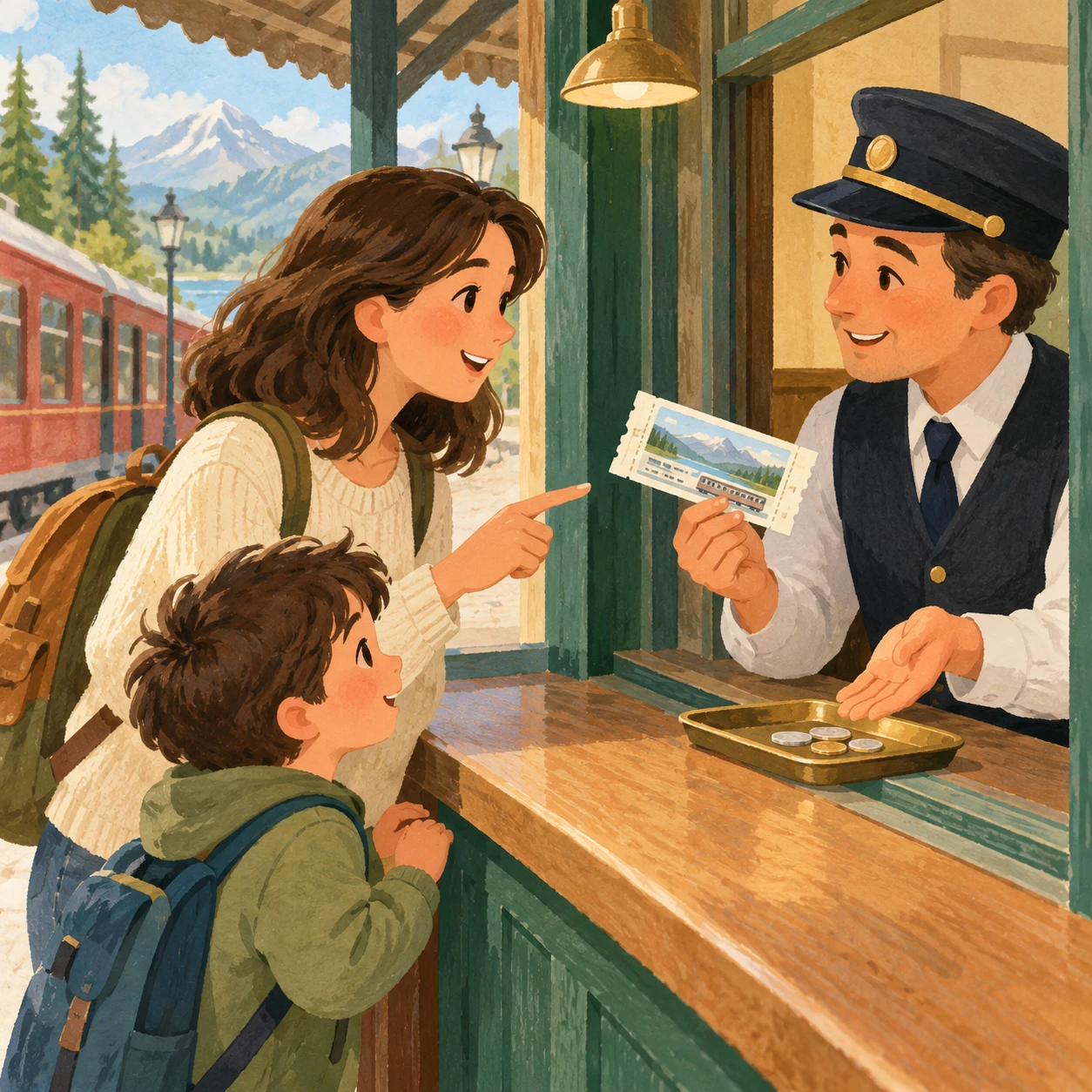
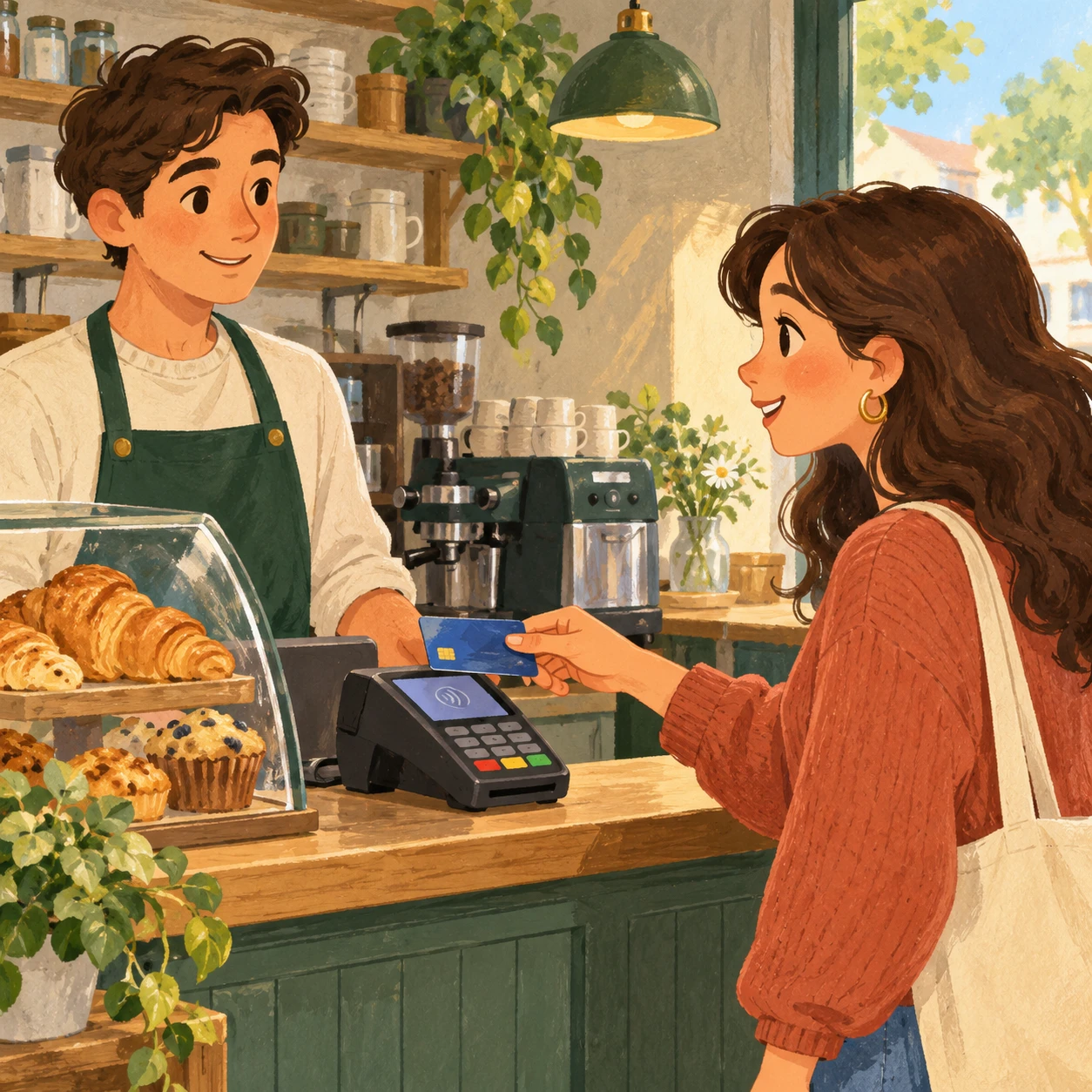
barato · pagar · servir no tamanho
cheap = barato; pay = pagar; fit = servir no tamanho
The bus is a cheap way to get there.

Preços, pagamentos e tamanhos · A2. cheap = barato; pay = pagar; fit = servir no tamanho
Aprenda os sentidos em contexto e reconheça e lembre cada expressão. A2 é uma orientação editorial.
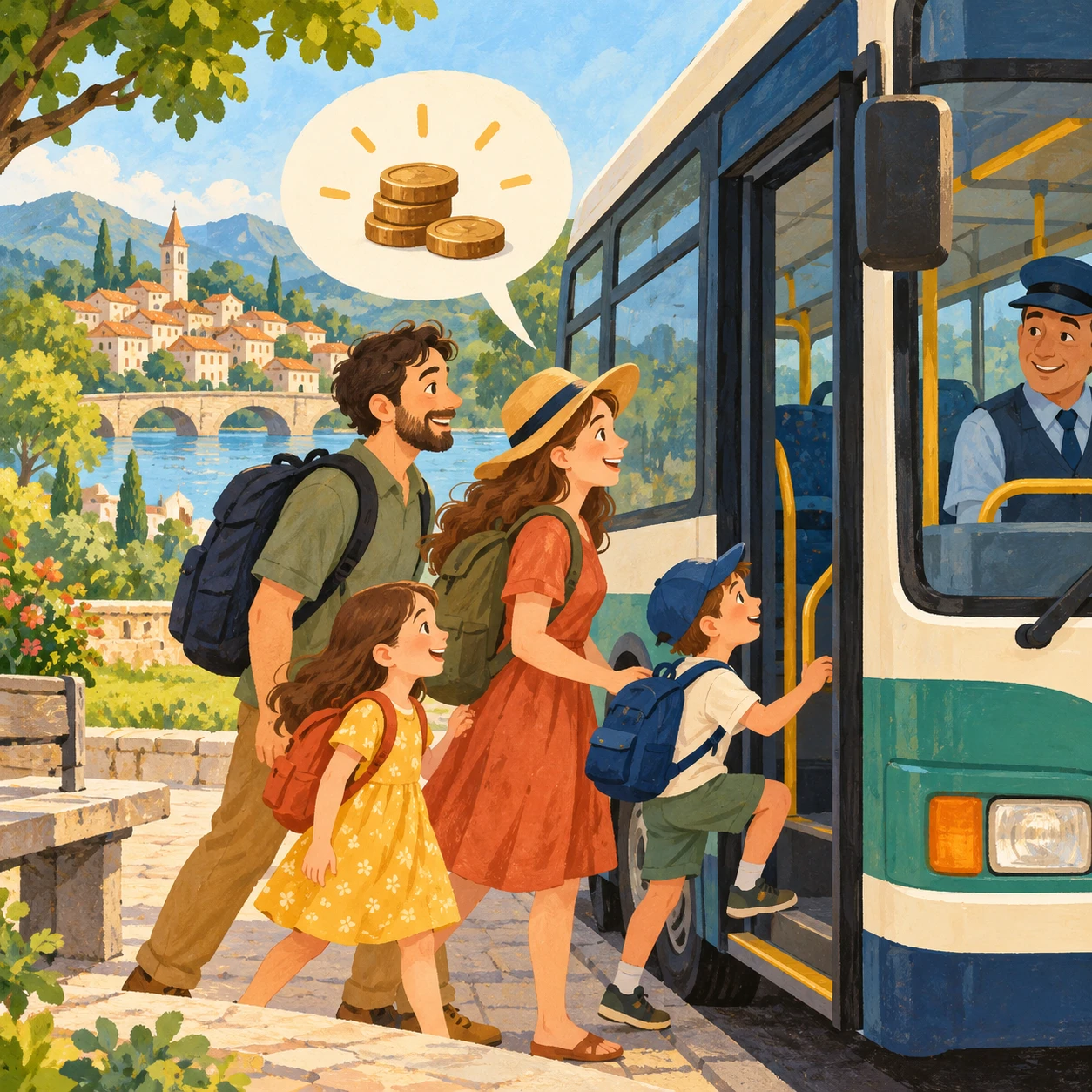
costing little money
The bus is a cheap way to get there.
O ônibus é uma maneira barata de chegar lá.
Estas indicações se referem a este sentido. Palavras da mesma família podem mudar de sentido; expressões próximas nem sempre são intercambiáveis.
Nesta lição: “cheap” = barato. Observe “a cheap ticket” e “cheap to buy”.
cheap = barato; pay = pagar; fit = servir no tamanho
The bus is a cheap way to get there.
expensive = caro; spend = gastar dinheiro; try on = experimentar uma roupa
That hotel is too expensive for us.
cost = custar; save = economizar dinheiro
How much does this ticket cost?
Which adjective means costing little money, without necessarily saying the quality is poor?
cost = custar; save = economizar dinheiro
How much does this ticket cost?cheap = barato; pay = pagar; fit = servir no tamanho
The bus is a cheap way to get there.expensive = caro; spend = gastar dinheiro; try on = experimentar uma roupa
That hotel is too expensive for us.Revise o significado e a explicação, depois tente outra questão sobre o mesmo uso.
Ainda não há revisões. Faça um aquecimento curto.
Abrir uma resposta registra ajuda para essa questão.
Which adjective means costing little money, without necessarily saying the quality is poor?
Aqui, “cheap” significa barato. Observe a pista: “Which adjective means costing little money, without necessarily saying the quality is poor?”.
Aqui, “cheap” significa barato. Observe a pista: “Write the word or phrase from this lesson that means: costing little money. It starts with c.”.
Which adjective means costing a lot of money?
Aqui, “expensive” significa caro. Observe a pista: “Which adjective means costing a lot of money?”.
Aqui, “expensive” significa caro. Observe a pista: “Write the word or phrase from this lesson that means: costing a lot of money. It starts with e.”.
Choose the verb whose subject is the thing with a price: These shoes ___ fifty pounds.
Aqui, “cost” significa custar. Observe a pista: “Choose the verb whose subject is the thing with a price: These shoes ___ fifty pounds.”. Use coisa + cost + valor; pessoa + pay for + coisa; pessoa + spend + valor + on + coisa. Aqui o sujeito e a preposição determinam a escolha.
Aqui, “cost” significa custar. Observe a pista: “Write the word or phrase from this lesson that means: have a particular price. It starts with c.”.
Complete the payment expression: I will ___ for the meal by card.
Aqui, “pay” significa pagar. Observe a pista: “Complete the payment expression: I will ___ for the meal by card.”. Use coisa + cost + valor; pessoa + pay for + coisa; pessoa + spend + valor + on + coisa. Aqui o sujeito e a preposição determinam a escolha.
Aqui, “pay” significa pagar. Observe a pista: “Write the word or phrase from this lesson that means: give money for something. It starts with p.”.
Complete the usual structure with on: I ___ ten pounds on lunch every day.
Aqui, “spend” significa gastar dinheiro. Observe a pista: “Complete the usual structure with on: I ___ ten pounds on lunch every day.”. Use coisa + cost + valor; pessoa + pay for + coisa; pessoa + spend + valor + on + coisa. Aqui o sujeito e a preposição determinam a escolha.
Aqui, “spend” significa gastar dinheiro. Observe a pista: “Write the word or phrase from this lesson that means: use money to buy something. It starts with s.”.
I keep part of my income for a future holiday instead of spending it now. I ___ money for the holiday.
Aqui, “save” significa economizar dinheiro. Observe a pista: “I keep part of my income for a future holiday instead of spending it now. I ___ money for the holiday.”.
Aqui, “save” significa economizar dinheiro. Observe a pista: “Write the word or phrase from this lesson that means: keep money instead of spending it now. It starts with s.”.
The jacket is exactly the right size for me: it will ___ me.
Aqui, “fit” significa servir no tamanho. Observe a pista: “The jacket is exactly the right size for me: it will ___ me.”.
Aqui, “fit” significa servir no tamanho. Observe a pista: “Write the word or phrase from this lesson that means: be the right size or shape. It starts with f.”.
Before buying the trousers, I put them on briefly to check the size. I ___ the trousers.
Aqui, “try on” significa experimentar uma roupa. Observe a pista: “Before buying the trousers, I put them on briefly to check the size. I ___ the trousers.”.
Aqui, “try on” significa experimentar uma roupa. Observe a pista: “Write the word or phrase from this lesson that means: put on clothing briefly to check it before buying. It starts with t.”.