A1

Cuidar de um animal de estimação

Sobre esta lição

Cuidar de um animal de estimação · A1. Relacione a pessoa, horário, lugar ou quantidade ao acontecimento correto. Mantenha a condição ou permissão apresentada; uma regra não prova que um fato ocorreu.

Leia o material original em inglês e responda com evidências. O nível é uma referência editorial, não um resultado certificado.

12 questões
Salve para encontrar em Minha coleção.
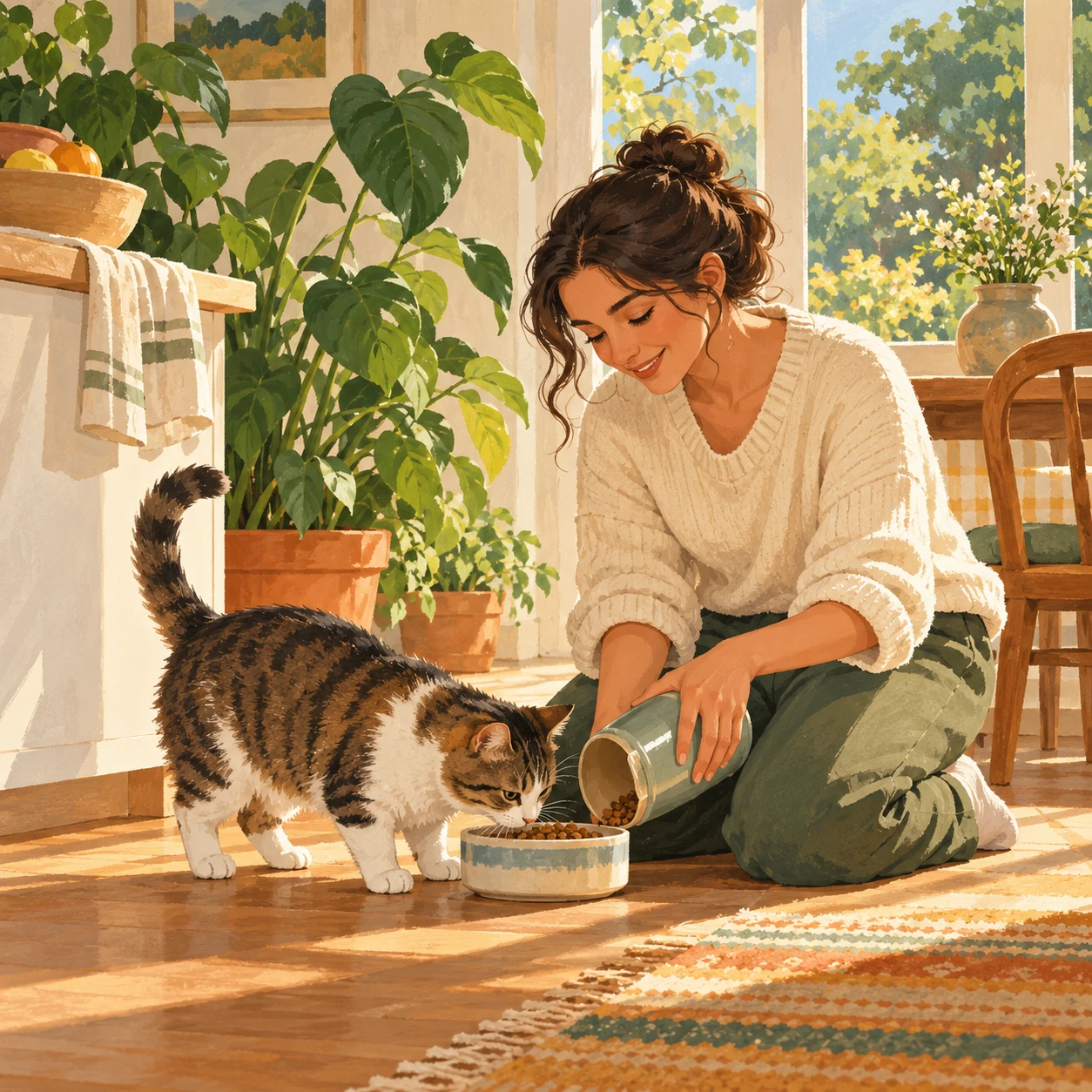
Looking after a pet — context illustration
LeituraA1

Looking after a pet

Leia o material original em inglês e responda com evidências. O nível é uma referência editorial, não um resultado certificado.

Dear Jo,

Thank you for looking after our cat, Pip, while we are away. We leave on Friday evening and return on Monday afternoon. The key is with our neighbour, Mrs Bell, at number twelve. Please collect it before Friday because she is away at the weekend too.

Pip eats twice a day, at eight in the morning and six in the evening. His food is in the kitchen cupboard beside the fridge. Give him one small cup of dry food each time. Please wash his water bowl every morning and fill it with clean water.

Keep the kitchen window closed. Pip likes sitting there, but he must not go outside. His toys are in the green box under the table. He likes the soft mouse best. Please play with him for ten minutes after his evening meal. If you cannot find him, look behind the sofa first. He often sleeps there.

Our mobile number is on the fridge. Call us if you are worried.

Nora

Um pouco de clareza

Detalhes explícitos · Condições e permissões

Relacione a pessoa, horário, lugar ou quantidade ao acontecimento correto. Mantenha a condição ou permissão apresentada; uma regra não prova que um fato ocorreu.

The doors open at eight. The class starts at nine.

Razões · Condições e permissões · Detalhes explícitos

Use a razão apresentada; uma razão externa apenas plausível não basta. Mantenha a condição ou permissão apresentada; uma regra não prova que um fato ocorreu. Relacione a pessoa, horário, lugar ou quantidade ao acontecimento correto.

We meet inside because it is raining.

Propósito e resultado pretendido

Pergunte o que a pessoa ou mensagem pretende alcançar e para quem.

This note tells visitors where to wait.

Material de estudo
Looking after a pet — context illustration
LeituraA1

Looking after a pet

Leia o material original em inglês e responda com evidências. O nível é uma referência editorial, não um resultado certificado.

Dear Jo,

Thank you for looking after our cat, Pip, while we are away. We leave on Friday evening and return on Monday afternoon. The key is with our neighbour, Mrs Bell, at number twelve. Please collect it before Friday because she is away at the weekend too.

Pip eats twice a day, at eight in the morning and six in the evening. His food is in the kitchen cupboard beside the fridge. Give him one small cup of dry food each time. Please wash his water bowl every morning and fill it with clean water.

Keep the kitchen window closed. Pip likes sitting there, but he must not go outside. His toys are in the green box under the table. He likes the soft mouse best. Please play with him for ten minutes after his evening meal. If you cannot find him, look behind the sofa first. He often sleeps there.

Our mobile number is on the fridge. Call us if you are worried.

Nora
0/12
Questões
01 / 12D01Salve para encontrar em Minha coleção.

Looking after a pet

When do Pip’s owners return?

Sua resposta
1 / 12

Seu caminho de aprendizagem

01
Etapa 1 · Aquecimento

Aquecimento

0/3
02
Etapa 2 · Praticar a habilidade

Detalhes explícitos · Condições e permissões

0/2

Relacione a pessoa, horário, lugar ou quantidade ao acontecimento correto. Mantenha a condição ou permissão apresentada; uma regra não prova que um fato ocorreu.

The doors open at eight. The class starts at nine.
03
Etapa 3 · Praticar a habilidade

Propósito e resultado pretendido

0/1

Pergunte o que a pessoa ou mensagem pretende alcançar e para quem.

This note tells visitors where to wait.
04
Etapa 4 · Praticar a habilidade

Razões · Condições e permissões · Detalhes explícitos

0/1

Use a razão apresentada; uma razão externa apenas plausível não basta. Mantenha a condição ou permissão apresentada; uma regra não prova que um fato ocorreu. Relacione a pessoa, horário, lugar ou quantidade ao acontecimento correto.

We meet inside because it is raining.
05
Etapa 5 · Prática relacionada

Prática relacionada

0/3
06
Etapa 6 · Desafio do texto

Desafio do texto

0/2
Revisões desta unidade

Transforme erros em aprendizado.

Mantenha a primeira resposta, confira a evidência e tente outra questão. Acertar no mesmo material não comprova transferência para outro texto.

0

Ainda não há revisões. Faça um aquecimento curto.

Mapa da aula

Cuidar de um animal de estimação

A1
Looking after a pet

Pontos da aula

01

Detalhes explícitos · Condições e permissões

Relacione a pessoa, horário, lugar ou quantidade ao acontecimento correto. Mantenha a condição ou permissão apresentada; uma regra não prova que um fato ocorreu.

The doors open at eight. The class starts at nine.
02

Razões · Condições e permissões · Detalhes explícitos

Use a razão apresentada; uma razão externa apenas plausível não basta. Mantenha a condição ou permissão apresentada; uma regra não prova que um fato ocorreu. Relacione a pessoa, horário, lugar ou quantidade ao acontecimento correto.

We meet inside because it is raining.
03

Propósito e resultado pretendido

Pergunte o que a pessoa ou mensagem pretende alcançar e para quem.

This note tells visitors where to wait.

Perguntas e respostas

Abrir uma resposta registra ajuda para essa questão.

D01 · Aquecimento

Looking after a pet

When do Pip’s owners return?

  1. Sunday evening.
  2. Friday evening.
  3. Monday afternoon.
  4. Saturday morning.
Resposta e explicação
Monday afternoon.

Resposta: “Monday afternoon.”. Evidência: “We leave on Friday evening and return on Monday afternoon.”. Confira “Friday evening.”: Isso confunde o horário deste evento com outro horário.

D02 · Aquecimento

Looking after a pet

Who has the house key?

  1. Jo.
  2. Mrs Bell.
  3. Nora’s sister.
  4. Nora’s parents.
Resposta e explicação
Mrs Bell.

Resposta: “Mrs Bell.”. Evidência: “The key is with our neighbour, Mrs Bell, at number twelve.”. Confira “Jo.”: Isso atribui a ação ou função à pessoa ou ao grupo errado.

D03 · Aquecimento

Looking after a pet

Why must Jo collect the key before Friday?

  1. Pip’s food must be collected from Mrs Bell.
  2. The owners return on Friday.
  3. Mrs Bell is also away at the weekend.
  4. Nora needs the key to lock the cupboard.
Resposta e explicação
Mrs Bell is also away at the weekend.

Resposta: “Mrs Bell is also away at the weekend.”. Evidência: “Please collect it before Friday because she is away at the weekend too.”. Confira “Nora needs the key to lock the cupboard.”: O texto não dá esse detalhe. Não o acrescente.

P01 · Praticar a habilidade

Looking after a pet

How often does Pip eat?

  1. Once a day.
  2. Twice a day.
  3. Only in the evening.
  4. Three times a day.
Resposta e explicação
Twice a day.

Resposta: “Twice a day.”. Evidência: “Pip eats twice a day, at eight in the morning and six in the evening.”. Confira “Only in the evening.”: Não é o número correspondente ao que foi perguntado.

P02 · Praticar a habilidade

Looking after a pet

Where is Pip’s food?

  1. Behind the sofa.
  2. In the kitchen cupboard beside the fridge.
  3. In the green box under the table.
  4. On the neighbour’s fridge.
Resposta e explicação
In the kitchen cupboard beside the fridge.

Resposta: “In the kitchen cupboard beside the fridge.”. Evidência: “His food is in the kitchen cupboard beside the fridge.”. Confira “In the green box under the table.”: Não é o lugar indicado para essa ação. Evidência: “His toys are in the green box under the table.”.

P03 · Praticar a habilidade

Looking after a pet

What is the main purpose of Nora’s note?

  1. To explain how Jo should care for Pip.
  2. To ask Jo to buy new cat toys.
  3. To explain how Mrs Bell should care for Pip.
  4. To invite Jo to stay away until Monday.
Resposta e explicação
To explain how Jo should care for Pip.

Resposta: “To explain how Jo should care for Pip.”. Evidência: “Thank you for looking after our cat, Pip, while we are away.”. Confira “To explain how Mrs Bell should care for Pip.”: Esse não é o objetivo principal da mensagem ou do texto.

P04 · Praticar a habilidade

Looking after a pet

What should Jo do with the water bowl each morning?

  1. Fill it with dry food.
  2. Wash it and add clean water.
  3. Put it outside the window.
  4. Move it behind the sofa.
Resposta e explicação
Wash it and add clean water.

Resposta: “Wash it and add clean water.”. Evidência: “Please wash his water bowl every morning and fill it with clean water.”. Confira “Fill it with dry food.”: Isso dá um detalhe diferente do que foi perguntado.

R01 · Prática relacionada

Looking after a pet

Why should the kitchen window stay closed?

  1. The toys are on the window.
  2. Mrs Bell cannot reach it.
  3. The fridge is beside it.
  4. Pip must not go outside.
Resposta e explicação
Pip must not go outside.

Resposta: “Pip must not go outside.”. Evidência: “Keep the kitchen window closed. Pip likes sitting there, but he must not go outside.”. Confira “The toys are on the window.”: O texto não dá esse detalhe. Não o acrescente.

R02 · Prática relacionada

Looking after a pet

Which toy does Pip like best?

  1. A toy under the sofa.
  2. The soft mouse.
  3. A toy outside the kitchen window.
  4. A toy from beside the fridge.
Resposta e explicação
The soft mouse.

Resposta: “The soft mouse.”. Evidência: “He likes the soft mouse best.”. Confira “A toy from beside the fridge.”: O texto não dá esse detalhe. Não o acrescente. Evidência: “His food is in the kitchen cupboard beside the fridge.”.

R03 · Prática relacionada

Looking after a pet

When should Jo play with Pip?

  1. Before collecting the key.
  2. Before every morning meal.
  3. After his evening meal.
  4. Only on Monday afternoon.
Resposta e explicação
After his evening meal.

Resposta: “After his evening meal.”. Evidência: “Please play with him for ten minutes after his evening meal.”. Confira “Before collecting the key.”: O texto não dá esse detalhe. Não o acrescente.

X01 · Desafio do texto

Looking after a pet

Where should Jo look first if Pip is missing?

  1. At Mrs Bell’s house.
  2. Outside the kitchen window.
  3. Behind the sofa.
  4. Under the kitchen table.
Resposta e explicação
Behind the sofa.

Resposta: “Behind the sofa.”. Evidência: “If you cannot find him, look behind the sofa first.”. Confira “At Mrs Bell’s house.”: O texto não dá esse detalhe. Não o acrescente.

X02 · Desafio do texto

Looking after a pet

How much dry food should Pip get at each meal?

  1. Two large cups.
  2. One large bowl.
  3. One small cup.
  4. Three small bowls.
Resposta e explicação
One small cup.

Resposta: “One small cup.”. Evidência: “Give him one small cup of dry food each time.”. Confira “Three small bowls.”: Não é o número correspondente ao que foi perguntado.