01다른 사람의 현재·미래 행동에 대한 선호
would rather + subject + past simple 구조를 사용합니다. 의미: 다른 사람의 현재·미래 행동에 대한 선호.
I would rather you called me before visiting tomorrow.
비현실적 과거형 · B2. would rather + subject + past simple 구조를 사용합니다. 의미: 다른 사람의 현재·미래 행동에 대한 선호.
새로 만든 12문제입니다. 상황에서 의도를 파악하고 형태를 연습한 뒤 새로운 맥락에 적용하세요.
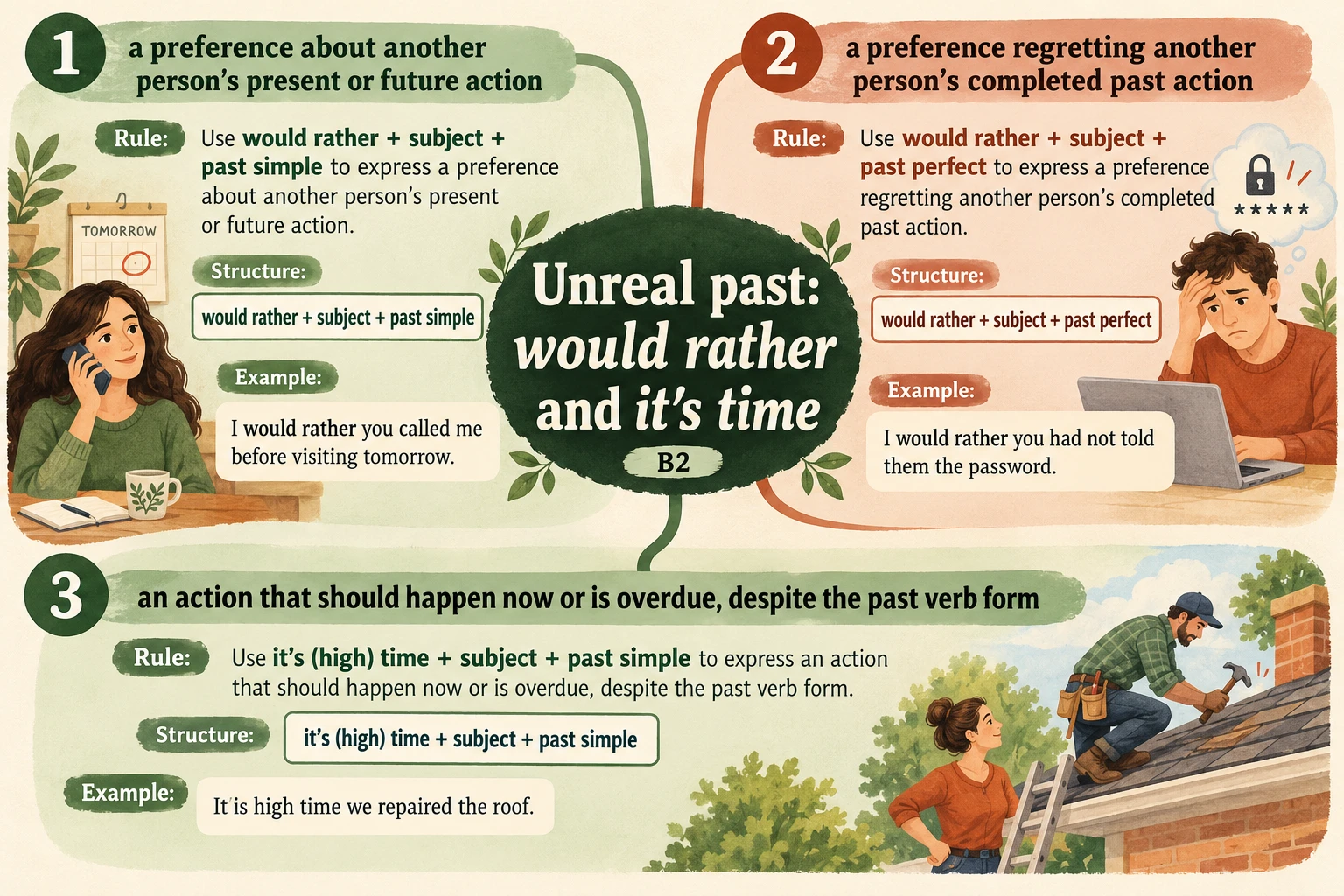
would rather + subject + past simple 구조를 사용합니다. 의미: 다른 사람의 현재·미래 행동에 대한 선호.
I would rather you called me before visiting tomorrow.would rather + subject + past perfect 구조를 사용합니다. 의미: 다른 사람의 완료된 과거 행동을 아쉬워하는 선호.
I would rather you had not told them the password.it's (high) time + subject + past simple 구조를 사용합니다. 의미: 과거형이지만 지금 해야 하거나 이미 늦은 행동.
It is high time we repaired the roof.
This is a preference about someone else’s future behaviour.
would rather + subject + past simple 구조를 사용합니다. 의미: 다른 사람의 현재·미래 행동에 대한 선호.
I would rather you called me before visiting tomorrow.would rather + subject + past perfect 구조를 사용합니다. 의미: 다른 사람의 완료된 과거 행동을 아쉬워하는 선호.
I would rather you had not told them the password.it's (high) time + subject + past simple 구조를 사용합니다. 의미: 과거형이지만 지금 해야 하거나 이미 늦은 행동.
It is high time we repaired the roof.첫 시도를 남기고 변화의 이유를 이해한 뒤 새로운 상황에서 확인해 보세요.
아직 복습 노트가 없어요. 짧은 워밍업부터 해보세요.
would rather + subject + past simple 구조를 사용합니다. 의미: 다른 사람의 현재·미래 행동에 대한 선호.
I would rather you called me before visiting tomorrow.would rather + subject + past perfect 구조를 사용합니다. 의미: 다른 사람의 완료된 과거 행동을 아쉬워하는 선호.
I would rather you had not told them the password.it's (high) time + subject + past simple 구조를 사용합니다. 의미: 과거형이지만 지금 해야 하거나 이미 늦은 행동.
It is high time we repaired the roof.정답을 열면 해당 문제에 도움 사용이 기록돼요.
This is a preference about someone else’s future behaviour.
판단 단서는 “This is a preference about someone else’s future behaviour.”입니다. would rather + subject + past simple 구조를 사용합니다. 의미: 다른 사람의 현재·미래 행동에 대한 선호. 이 과제의 완성 문장은 “I would rather you called me before visiting tomorrow.”입니다.
The disclosure happened yesterday and the speaker regrets it.
판단 단서는 “The disclosure happened yesterday and the speaker regrets it.”입니다. would rather + subject + past perfect 구조를 사용합니다. 의미: 다른 사람의 완료된 과거 행동을 아쉬워하는 선호. 이 과제의 완성 문장은 “I would rather you had not told them the password.”입니다.
The action is overdue now, although the verb has a past form.
판단 단서는 “The action is overdue now, although the verb has a past form.”입니다. it's (high) time + subject + past simple 구조를 사용합니다. 의미: 과거형이지만 지금 해야 하거나 이미 늦은 행동. 이 과제의 완성 문장은 “It is high time we repaired the roof.”입니다.
A preference about another person attending next week.
판단 단서는 “A preference about another person attending next week.”입니다. would rather + subject + past simple 구조를 사용합니다. 의미: 다른 사람의 현재·미래 행동에 대한 선호. 이 과제의 완성 문장은 “I would rather she attended the meeting next week.”입니다.
Use the past perfect of consult for a preference about a completed past decision.
완성 문장: “I would rather they had consulted us before signing last month.” would rather + subject + past perfect 구조를 사용합니다. 의미: 다른 사람의 완료된 과거 행동을 아쉬워하는 선호. 과제의 주어·시간·의미에 맞춘 형태입니다. 검토한 답만 자동으로 확인하며, 다른 표현을 자동으로 틀렸다고 하지 않습니다.
The action should begin now; it is already late.
판단 단서는 “The action should begin now; it is already late.”입니다. it's (high) time + subject + past simple 구조를 사용합니다. 의미: 과거형이지만 지금 해야 하거나 이미 늦은 행동. 이 과제의 완성 문장은 “It is time the council took responsibility.”입니다.
Use the past simple of stay for another person’s action tonight.
완성 문장: “I would rather you stayed here tonight.” would rather + subject + past simple 구조를 사용합니다. 의미: 다른 사람의 현재·미래 행동에 대한 선호. 과제의 주어·시간·의미에 맞춘 형태입니다. 검토한 답만 자동으로 확인하며, 다른 표현을 자동으로 틀렸다고 하지 않습니다.
The speaker wants someone else to refrain from an action tomorrow.
판단 단서는 “The speaker wants someone else to refrain from an action tomorrow.”입니다. would rather + subject + past simple 구조를 사용합니다. 의미: 다른 사람의 현재·미래 행동에 대한 선호. 이 과제의 완성 문장은 “I would rather you did not announce the results tomorrow.”입니다.
Use the past perfect of check for regret about yesterday’s completed process.
완성 문장: “I would rather the editor had checked the names before publication yesterday.” would rather + subject + past perfect 구조를 사용합니다. 의미: 다른 사람의 완료된 과거 행동을 아쉬워하는 선호. 과제의 주어·시간·의미에 맞춘 형태입니다. 검토한 답만 자동으로 확인하며, 다른 표현을 자동으로 틀렸다고 하지 않습니다.
An overdue present need is expressed with it is high time.
판단 단서는 “An overdue present need is expressed with it is high time.”입니다. it's (high) time + subject + past simple 구조를 사용합니다. 의미: 과거형이지만 지금 해야 하거나 이미 늦은 행동. 이 과제의 완성 문장은 “It is high time management took the complaints seriously.”입니다.
A missed past action is being regretted now.
판단 단서는 “A missed past action is being regretted now.”입니다. would rather + subject + past perfect 구조를 사용합니다. 의미: 다른 사람의 완료된 과거 행동을 아쉬워하는 선호. 이 과제의 완성 문장은 “I would rather you had warned me about the cancellation yesterday.”입니다.
Use the past simple of replace after it is time for an overdue present action.
완성 문장: “It is time we replaced this obsolete system.” it's (high) time + subject + past simple 구조를 사용합니다. 의미: 과거형이지만 지금 해야 하거나 이미 늦은 행동. 과제의 주어·시간·의미에 맞춘 형태입니다. 검토한 답만 자동으로 확인하며, 다른 표현을 자동으로 틀렸다고 하지 않습니다.