01긍정문의 some
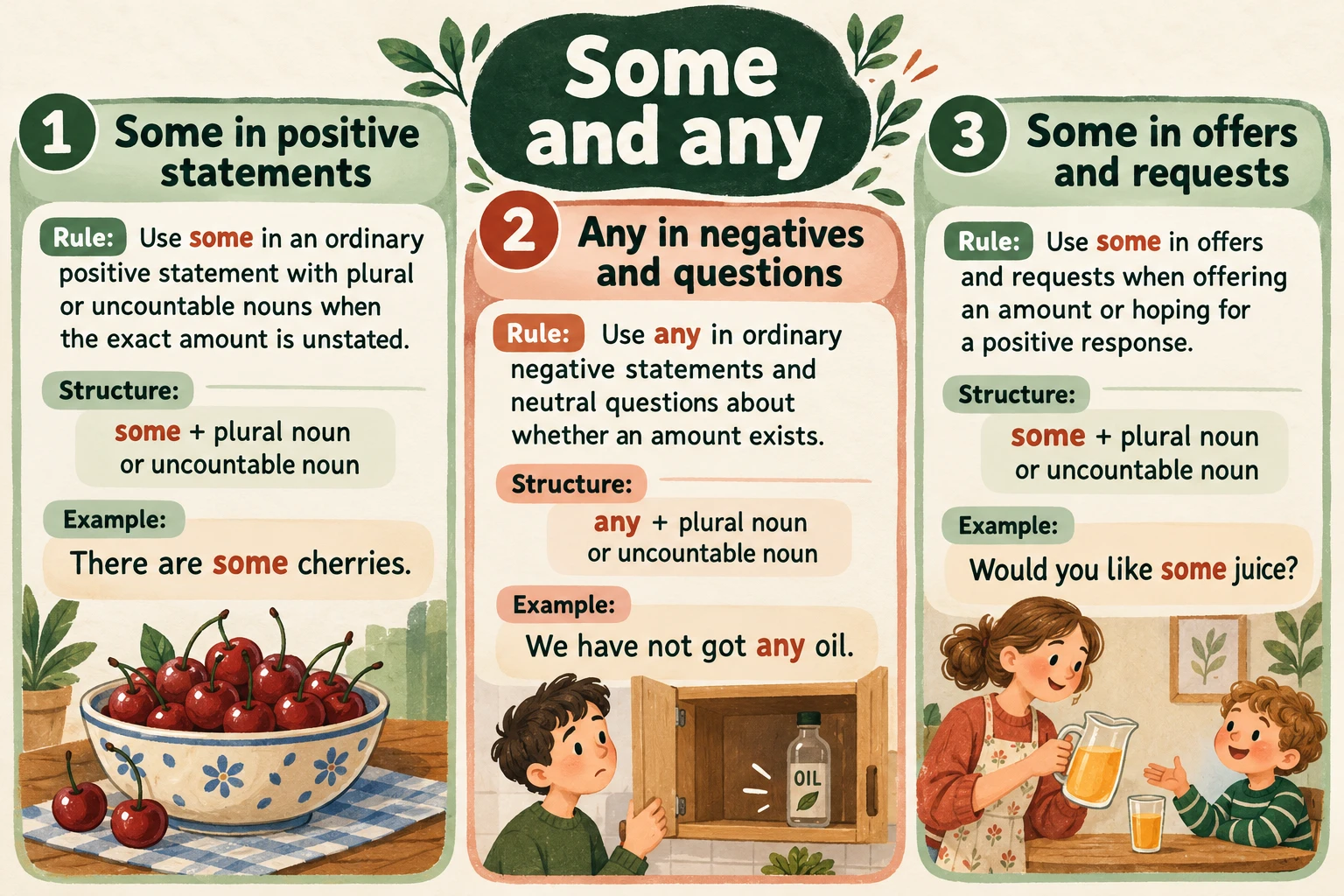
보통 긍정문에서 정확한 수나 양을 말하지 않는 복수·불가산명사에는 some을 씁니다.
There are some cherries.
some과 any · A1. 보통 긍정문에서 정확한 수나 양을 말하지 않는 복수·불가산명사에는 some을 씁니다.
짧은 상황에서 ‘some과 any’을 연습합니다. 단서를 읽고 형태를 고르거나 쓴 뒤 이유를 확인하세요. 수준은 편집상 안내입니다.
보통 긍정문에서 정확한 수나 양을 말하지 않는 복수·불가산명사에는 some을 씁니다.
There are some cherries.보통 부정문과 양의 존재를 중립적으로 묻는 질문에는 any를 씁니다.
We have not got any oil.양을 제안하거나 긍정 답변을 기대하는 요청에서는 의문문에도 some을 씁니다.
Would you like some juice?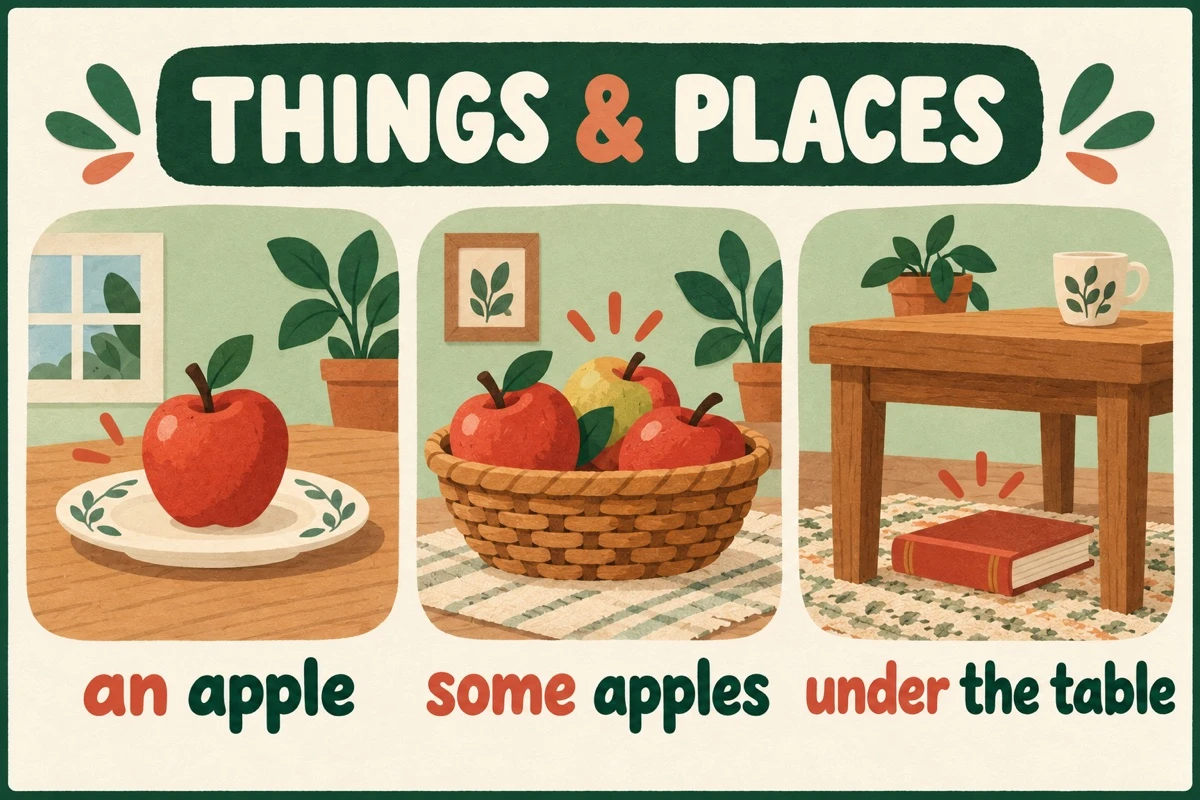
I bought ___ apples and put them in the bowl.
보통 긍정문에서 정확한 수나 양을 말하지 않는 복수·불가산명사에는 some을 씁니다.
There are some cherries.보통 부정문과 양의 존재를 중립적으로 묻는 질문에는 any를 씁니다.
We have not got any oil.양을 제안하거나 긍정 답변을 기대하는 요청에서는 의문문에도 some을 씁니다.
Would you like some juice?첫 시도를 남기고 변화의 이유를 이해한 뒤 새로운 상황에서 확인해 보세요.
아직 복습 노트가 없어요. 짧은 워밍업부터 해보세요.
보통 긍정문에서 정확한 수나 양을 말하지 않는 복수·불가산명사에는 some을 씁니다.
There are some cherries.보통 부정문과 양의 존재를 중립적으로 묻는 질문에는 any를 씁니다.
We have not got any oil.양을 제안하거나 긍정 답변을 기대하는 요청에서는 의문문에도 some을 씁니다.
Would you like some juice?정답을 열면 해당 문제에 도움 사용이 기록돼요.
I bought ___ apples and put them in the bowl.
“I bought ___ apples and put them in the bowl.”를 보세요. 보통 긍정문에서 정확한 수나 양을 말하지 않는 복수·불가산명사에는 some을 씁니다. 완성 문장: “I bought some apples and put them in the bowl.”.
I cannot make tea. There is not ___ water.
“I cannot make tea. There is not ___ water.”를 보세요. 보통 부정문과 양의 존재를 중립적으로 묻는 질문에는 any를 씁니다. 완성 문장: “I cannot make tea. There is not any water.”.
The host is offering a portion of one sliced cake: Would you like ___ cake?
“The host is offering a portion of one sliced cake: Would you like ___ cake?”를 보세요. 양을 제안하거나 긍정 답변을 기대하는 요청에서는 의문문에도 some을 씁니다. 완성 문장: “The host is offering a portion of one sliced cake: Would you like some cake?”.
We have ___ fresh bread for lunch.
완성 예문: “We have some fresh bread for lunch.”. 보통 긍정문에서 정확한 수나 양을 말하지 않는 복수·불가산명사에는 some을 씁니다. 이 문제에서는 다음 표현도 확인된 답으로 인정합니다: a small amount of / a lot of / plenty of / enough. 가능한 모든 영어 표현의 목록은 아닙니다.
Is there ___ sugar left in this bag? I have no idea whether any remains.
“Is there ___ sugar left in this bag? I have no idea whether any remains.”를 보세요. 보통 부정문과 양의 존재를 중립적으로 묻는 질문에는 any를 씁니다. 완성 문장: “Is there any sugar left in this bag? I have no idea whether any remains.”.
I am politely asking for an amount of water, not a serving in a café: Could I have ___ water, please?
“I am politely asking for an amount of water, not a serving in a café: Could I have ___ water, please?”를 보세요. 양을 제안하거나 긍정 답변을 기대하는 요청에서는 의문문에도 some을 씁니다. 완성 문장: “I am politely asking for an amount of water, not a serving in a café: Could I have some water, please?”.
There are ___ clean towels in the cupboard.
완성 예문: “There are some clean towels in the cupboard.”. 보통 긍정문에서 정확한 수나 양을 말하지 않는 복수·불가산명사에는 some을 씁니다. 이 문제에서는 다음 표현도 확인된 답으로 인정합니다: a few / several / many / a lot of / plenty of / enough. 가능한 모든 영어 표현의 목록은 아닙니다.
The gardener planted ___ flowers beside the gate.
“The gardener planted ___ flowers beside the gate.”를 보세요. 보통 긍정문에서 정확한 수나 양을 말하지 않는 복수·불가산명사에는 some을 씁니다. 완성 문장: “The gardener planted some flowers beside the gate.”.
We did not see ___ birds on the lake.
“We did not see ___ birds on the lake.”를 보세요. 보통 부정문과 양의 존재를 중립적으로 묻는 질문에는 any를 씁니다. 완성 문장: “We did not see any birds on the lake.”.
I am offering to share: Would you like ___ grapes?
완성 예문: “I am offering to share: Would you like some grapes?”. 양을 제안하거나 긍정 답변을 기대하는 요청에서는 의문문에도 some을 씁니다. 이 문제에서는 다음 표현도 확인된 답으로 인정합니다: a couple of. 가능한 모든 영어 표현의 목록은 아닙니다.
Do you have ___ spare batteries? I do not know if you do.
“Do you have ___ spare batteries? I do not know if you do.”를 보세요. 보통 부정문과 양의 존재를 중립적으로 묻는 질문에는 any를 씁니다. 완성 문장: “Do you have any spare batteries? I do not know if you do.”.
Complete with the some- word used in a polite request for an amount: May I have ___ soup, please?
완성 예문: “Complete with the some- word used in a polite request for an amount: May I have some soup, please?”. 양을 제안하거나 긍정 답변을 기대하는 요청에서는 의문문에도 some을 씁니다.