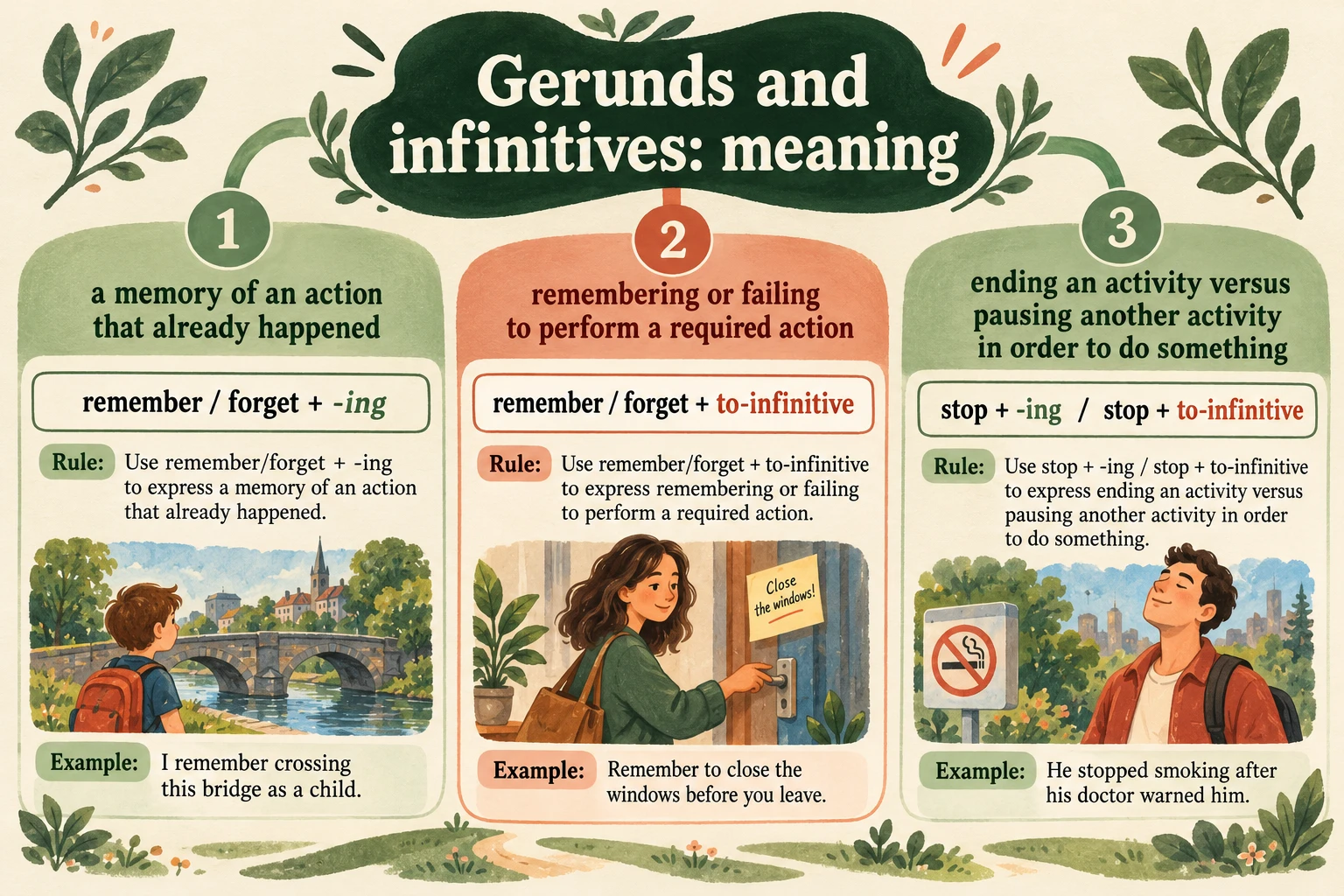
01すでに起きた動作の記憶
remember/forget + -ing を用います。表す内容:すでに起きた動作の記憶。
I remember crossing this bridge as a child.
動名詞と不定詞の意味の違い · B1. remember/forget + -ing を用います。表す内容:すでに起きた動作の記憶。
12問のオリジナル問題です。状況から意味を読み取り、形を練習して、新しい場面で応用します。
remember/forget + -ing を用います。表す内容:すでに起きた動作の記憶。
I remember crossing this bridge as a child.remember/forget + to-infinitive を用います。表す内容:必要な動作を忘れずに行うこと、または忘れること。
Remember to close the windows before you leave.stop + -ing / stop + to-infinitive を用います。表す内容:動作をやめることと、別の動作をするために中断することの違い。
He stopped smoking after his doctor warned him.
I have a clear memory of an event that happened.
remember/forget + -ing を用います。表す内容:すでに起きた動作の記憶。
I remember crossing this bridge as a child.remember/forget + to-infinitive を用います。表す内容:必要な動作を忘れずに行うこと、または忘れること。
Remember to close the windows before you leave.stop + -ing / stop + to-infinitive を用います。表す内容:動作をやめることと、別の動作をするために中断することの違い。
He stopped smoking after his doctor warned him.初回答を残し、変化の理由を理解して、別の場面で確かめます。
まだ復習ノートはありません。まずは短いウォームアップを。
remember/forget + -ing を用います。表す内容:すでに起きた動作の記憶。
I remember crossing this bridge as a child.remember/forget + to-infinitive を用います。表す内容:必要な動作を忘れずに行うこと、または忘れること。
Remember to close the windows before you leave.stop + -ing / stop + to-infinitive を用います。表す内容:動作をやめることと、別の動作をするために中断することの違い。
He stopped smoking after his doctor warned him.解答を開くと、その問題にヒント利用が記録されます。
I have a clear memory of an event that happened.
「I remember ___ this bridge as a child.」に注目しましょう。remember/forget + -ing を用います。表す内容:すでに起きた動作の記憶。 完成文:「I remember crossing this bridge as a child.」。
Do not fail to perform the duty before leaving.
「Remember ___ the windows before you leave.」に注目しましょう。remember/forget + to-infinitive を用います。表す内容:必要な動作を忘れずに行うこと、または忘れること。 完成文:「Remember to close the windows before you leave.」。
He ended the activity completely.
「He stopped ___ after his doctor warned him.」に注目しましょう。stop + -ing / stop + to-infinitive を用います。表す内容:動作をやめることと、別の動作をするために中断することの違い。 完成文:「He stopped smoking after his doctor warned him.」。
The concert is a remembered past experience.
「I will never forget ___ that singer live.」に注目しましょう。remember/forget + -ing を用います。表す内容:すでに起きた動作の記憶。 完成文:「I will never forget hearing that singer live.」。
Complete with the correct form of send: the reminder concerns a task still to be done.
完成文:「Please remember to send the confirmation tonight.」 remember/forget + to-infinitive を用います。表す内容:必要な動作を忘れずに行うこと、または忘れること。 問題の主語・時間・意味に合わせた形です。確認済みの解答だけを自動照合します。別の表現を自動的に誤りとはしません。
She paused her walk in order to consult the map.
「She stopped ___ the map.」に注目しましょう。stop + -ing / stop + to-infinitive を用います。表す内容:動作をやめることと、別の動作をするために中断することの違い。 完成文:「She stopped to check the map.」。
Complete with the correct form of meet to describe a memory of an earlier encounter.
完成文:「I remember meeting her at a conference in 2019.」 remember/forget + -ing を用います。表す内容:すでに起きた動作の記憶。 問題の主語・時間・意味に合わせた形です。確認済みの解答だけを自動照合します。別の表現を自動的に誤りとはしません。
The speaker recalls the actual experience of signing.
「I remember ___ the agreement; the pen leaked.」に注目しましょう。remember/forget + -ing を用います。表す内容:すでに起きた動作の記憶。 完成文:「I remember signing the agreement; the pen leaked.」。
Complete with the correct form of lock for the duty he failed to perform.
完成文:「He forgot to lock the cabinet, so it stayed open.」 remember/forget + to-infinitive を用います。表す内容:必要な動作を忘れずに行うこと、または忘れること。 問題の主語・時間・意味に合わせた形です。確認済みの解答だけを自動照合します。別の表現を自動的に誤りとはしません。
The machine ceased making the noise.
「The machine stopped ___ when we replaced the fan.」に注目しましょう。stop + -ing / stop + to-infinitive を用います。表す内容:動作をやめることと、別の動作をするために中断することの違い。 完成文:「The machine stopped rattling when we replaced the fan.」。
This is a reminder about a future action.
「Do not forget ___ your passport tomorrow.」に注目しましょう。remember/forget + to-infinitive を用います。表す内容:必要な動作を忘れずに行うこと、または忘れること。 完成文:「Do not forget to bring your passport tomorrow.」。
Complete with the correct form of answer: she paused her reading for the purpose of responding to the doorbell.
完成文:「She stopped reading to answer the doorbell.」 stop + -ing / stop + to-infinitive を用います。表す内容:動作をやめることと、別の動作をするために中断することの違い。 問題の主語・時間・意味に合わせた形です。確認済みの解答だけを自動照合します。別の表現を自動的に誤りとはしません。