Genannte Einzelheiten · Gründe
Ordne die gefragte Person, Zeit, den Ort oder Betrag dem richtigen Ereignis zu. Nutze den tatsächlich genannten Grund; ein nur plausibler Grund von außen reicht nicht.
The doors open at eight. The class starts at nine.

Hinweise für Ferienwohnungsgäste · A2. Ordne die gefragte Person, Zeit, den Ort oder Betrag dem richtigen Ereignis zu.
Lies das originale englische Material und antworte mit Belegen. Die Stufe ist eine redaktionelle Orientierung, kein zertifiziertes Ergebnis.
Lies das originale englische Material und antworte mit Belegen. Die Stufe ist eine redaktionelle Orientierung, kein zertifiziertes Ergebnis.
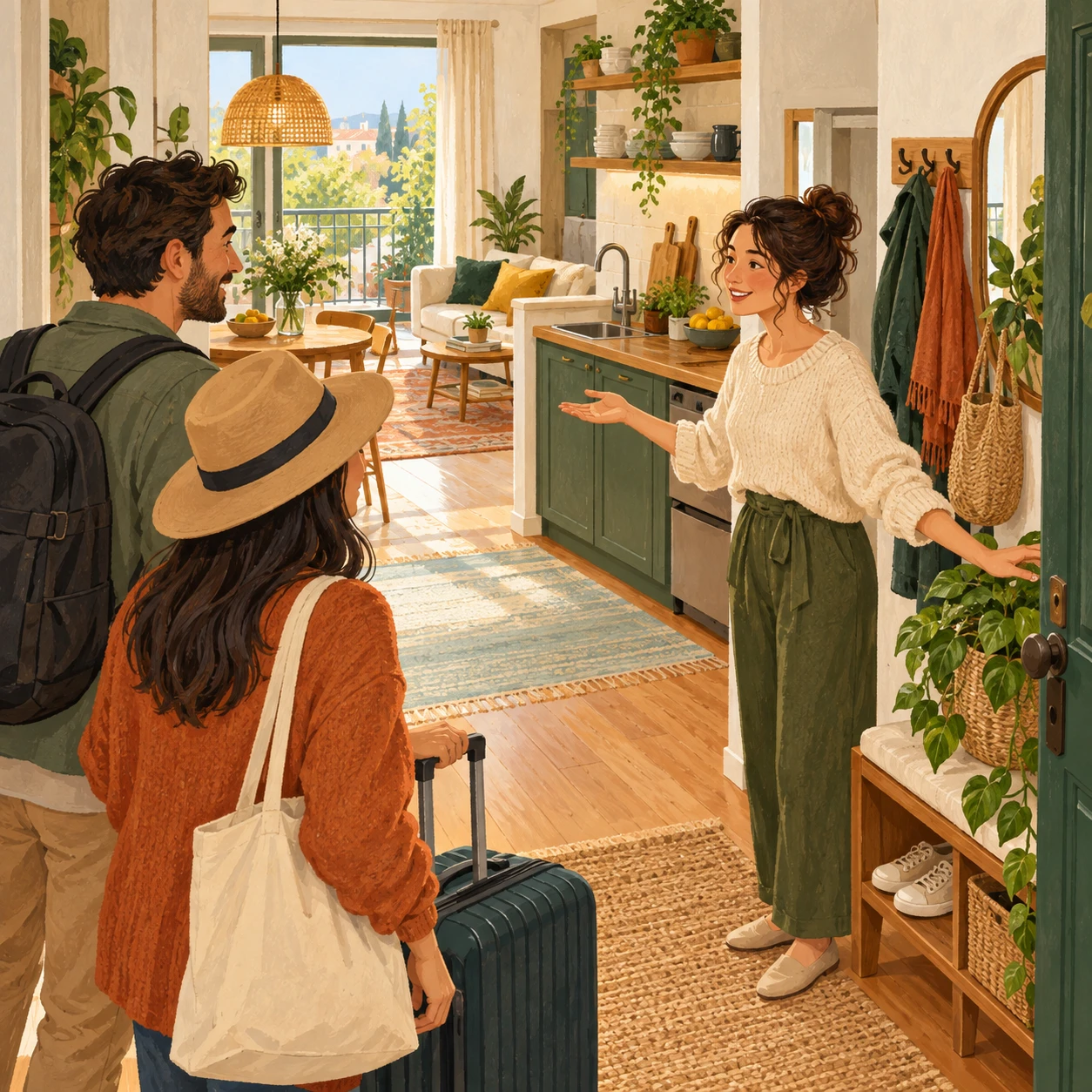
Welcome to our apartment. Your key is in the small metal box beside the side entrance. We sent the code in a private message. Please close the box after taking the key. The main entrance closes automatically after eight in the evening, but the side entrance can be opened with your key at any time.
The kitchen cupboard contains tea and coffee for guests. The food in the labelled blue container belongs to the owner, so please leave it there. You can use the washing machine, but do not start it after nine at night because it is noisy in the flat below. Washing powder is in the cupboard under the sink. The small basket on top of the machine is for wet cleaning cloths, not guest washing.
There are two bins outside the kitchen window. Put paper and clean plastic bottles in the green one. The grey bin is for other household rubbish. Glass bottles go to the collection point opposite the bakery; they must not go in either apartment bin.
On your last day, leave before eleven. You do not need to wash the towels. Put them on the bathroom floor and leave the key on the kitchen table. Please do not put it back in the outside box, because our cleaner will enter through the main door. If you need a later departure, contact us the day before. We can sometimes help, but it depends on the next booking.
Ordne die gefragte Person, Zeit, den Ort oder Betrag dem richtigen Ereignis zu. Nutze den tatsächlich genannten Grund; ein nur plausibler Grund von außen reicht nicht.
The doors open at eight. The class starts at nine.
Behalte die genannte Bedingung oder Erlaubnis bei; eine Regel beweist nicht, dass etwas geschehen ist.
If the front door is locked, use the side entrance.
Lies das originale englische Material und antworte mit Belegen. Die Stufe ist eine redaktionelle Orientierung, kein zertifiziertes Ergebnis.
Welcome to our apartment. Your key is in the small metal box beside the side entrance. We sent the code in a private message. Please close the box after taking the key. The main entrance closes automatically after eight in the evening, but the side entrance can be opened with your key at any time.
The kitchen cupboard contains tea and coffee for guests. The food in the labelled blue container belongs to the owner, so please leave it there. You can use the washing machine, but do not start it after nine at night because it is noisy in the flat below. Washing powder is in the cupboard under the sink. The small basket on top of the machine is for wet cleaning cloths, not guest washing.
There are two bins outside the kitchen window. Put paper and clean plastic bottles in the green one. The grey bin is for other household rubbish. Glass bottles go to the collection point opposite the bakery; they must not go in either apartment bin.
On your last day, leave before eleven. You do not need to wash the towels. Put them on the bathroom floor and leave the key on the kitchen table. Please do not put it back in the outside box, because our cleaner will enter through the main door. If you need a later departure, contact us the day before. We can sometimes help, but it depends on the next booking.
Instructions for apartment guests
Ordne die gefragte Person, Zeit, den Ort oder Betrag dem richtigen Ereignis zu.
The doors open at eight. The class starts at nine.Ordne die gefragte Person, Zeit, den Ort oder Betrag dem richtigen Ereignis zu. Nutze den tatsächlich genannten Grund; ein nur plausibler Grund von außen reicht nicht.
The doors open at eight. The class starts at nine.Behalte die genannte Bedingung oder Erlaubnis bei; eine Regel beweist nicht, dass etwas geschehen ist.
If the front door is locked, use the side entrance.Behalte den Erstversuch, prüfe den Beleg und versuche eine weitere Frage. Eine Folgefrage zum selben Material belegt keinen Transfer auf einen neuen Text.
Noch keine Lernnotizen. Starte mit einem kurzen Einstieg.
Ordne die gefragte Person, Zeit, den Ort oder Betrag dem richtigen Ereignis zu. Nutze den tatsächlich genannten Grund; ein nur plausibler Grund von außen reicht nicht.
The doors open at eight. The class starts at nine.Behalte die genannte Bedingung oder Erlaubnis bei; eine Regel beweist nicht, dass etwas geschehen ist.
If the front door is locked, use the side entrance.Das Öffnen einer Antwort wird für diese Aufgabe als Hilfe erfasst.
Instructions for apartment guests
Antwort: „From a metal box beside the side entrance.“. Beleg: „Your key is in the small metal box beside the side entrance.“. Prüfe „From the kitchen table.“: Dies verändert die Reihenfolge der Handlungen. Beleg: „leave the key on the kitchen table.“. Prüfe „From the cleaner’s apartment.“: Der Text nennt diese Einzelheit nicht. Ergänze sie nicht.
Instructions for apartment guests
Antwort: „In a private message.“. Beleg: „We sent the code in a private message.“. Prüfe „On the front door.“: Dies ist nicht der für diese Handlung genannte Ort. Prüfe „On a label in the kitchen.“: Dies ist nicht der für diese Handlung genannte Ort.
Instructions for apartment guests
Antwort: „The side entrance.“. Beleg: „the side entrance can be opened with your key at any time.“. Prüfe „The main entrance only before eight.“: Dies verändert eine Bedingung im Text oder lässt sie weg. Beleg: „The main entrance closes automatically after eight in the evening“. Prüfe „The cleaner’s private entrance.“: Der Text nennt diese Einzelheit nicht. Ergänze sie nicht.
Instructions for apartment guests
Antwort: „The food in the labelled blue container.“. Beleg: „The food in the labelled blue container belongs to the owner, so please leave it there.“. Prüfe „Any food kept in a kitchen cupboard.“: Dies fasst die Aussage weiter oder stärker, als es der Text erlaubt. Beleg: „The kitchen cupboard contains tea and coffee for guests.“. Prüfe „All the tea and coffee.“: Dies sagt das Gegenteil der betreffenden Angabe. Beleg: „The kitchen cupboard contains tea and coffee for guests.“.
Instructions for apartment guests
Antwort: „Its noise can disturb people below.“. Beleg: „do not start it after nine at night because it is noisy in the flat below.“. Prüfe „The water is turned off after nine.“: Der Text nennt diese Einzelheit nicht. Ergänze sie nicht. Prüfe „Guests are forbidden to wash clothes.“: Dies sagt das Gegenteil der betreffenden Angabe.
Instructions for apartment guests
Antwort: „It may be possible, depending on the next booking.“. Beleg: „We can sometimes help, but it depends on the next booking.“. Prüfe „It is guaranteed if guests ask on departure day.“: Dies verändert eine Bedingung im Text oder lässt sie weg. Prüfe „It is never allowed.“: Dies sagt das Gegenteil der betreffenden Angabe.
Instructions for apartment guests
Antwort: „In the green bin.“. Beleg: „Put paper and clean plastic bottles in the green one.“. Prüfe „On the kitchen table.“: Dies ist nicht der für diese Handlung genannte Ort. Prüfe „In the blue food container.“: Dies ist nicht der für diese Handlung genannte Gegenstand.
Instructions for apartment guests
Antwort: „To the collection point opposite the bakery.“. Beleg: „Glass bottles go to the collection point opposite the bakery; they must not go in either apartment bin.“. Prüfe „To the side entrance box.“: Dies ist nicht der für diese Handlung genannte Ort. Prüfe „To either apartment bin.“: Dies sagt das Gegenteil der betreffenden Angabe.
Instructions for apartment guests
Antwort: „Leave them on the bathroom floor.“. Beleg: „You do not need to wash the towels. Put them on the bathroom floor“. Prüfe „Wash and dry them.“: Dies ist nicht erforderlich; der Text verlangt etwas anderes. Prüfe „Return them to the metal box.“: Dies ist nicht der für diese Handlung genannte Ort.
Instructions for apartment guests
Antwort: „On the kitchen table.“. Beleg: „leave the key on the kitchen table.“. Prüfe „Back in the outside box.“: Dies sagt das Gegenteil der betreffenden Angabe. Beleg: „Please do not put it back in the outside box“. Prüfe „Under the sink.“: Dies ist nicht der für diese Handlung genannte Ort.
Instructions for apartment guests
Antwort: „The cleaner will use the main door.“. Beleg: „Please do not put it back in the outside box, because our cleaner will enter through the main door.“. Prüfe „The box is for glass bottles.“: Dies sagt das Gegenteil der betreffenden Angabe. Beleg: „Your key is in the small metal box beside the side entrance.“. Prüfe „The side entrance is closing permanently.“: Der Text nennt diese Einzelheit nicht. Ergänze sie nicht.
Instructions for apartment guests
Antwort: „Wet cleaning cloths.“. Beleg: „The small basket on top of the machine is for wet cleaning cloths, not guest washing.“. Prüfe „Empty glass bottles.“: Dies ist nicht der für diese Handlung genannte Gegenstand. Beleg: „Glass bottles go to the collection point opposite the bakery“. Prüfe „Guest clothes waiting to be washed.“: Dies sagt das Gegenteil der betreffenden Angabe.