01否定的な不足と肯定的な少量の違い。可算性を合わせる
few/little versus a few/a little を用います。表す内容:否定的な不足と肯定的な少量の違い。可算性を合わせる。
There is little evidence to support such a strong claim.
数量詞と限定詞の発展 · B2. few/little versus a few/a little を用います。表す内容:否定的な不足と肯定的な少量の違い。可算性を合わせる。
12問のオリジナル問題です。状況から意味を読み取り、形を練習して、新しい場面で応用します。
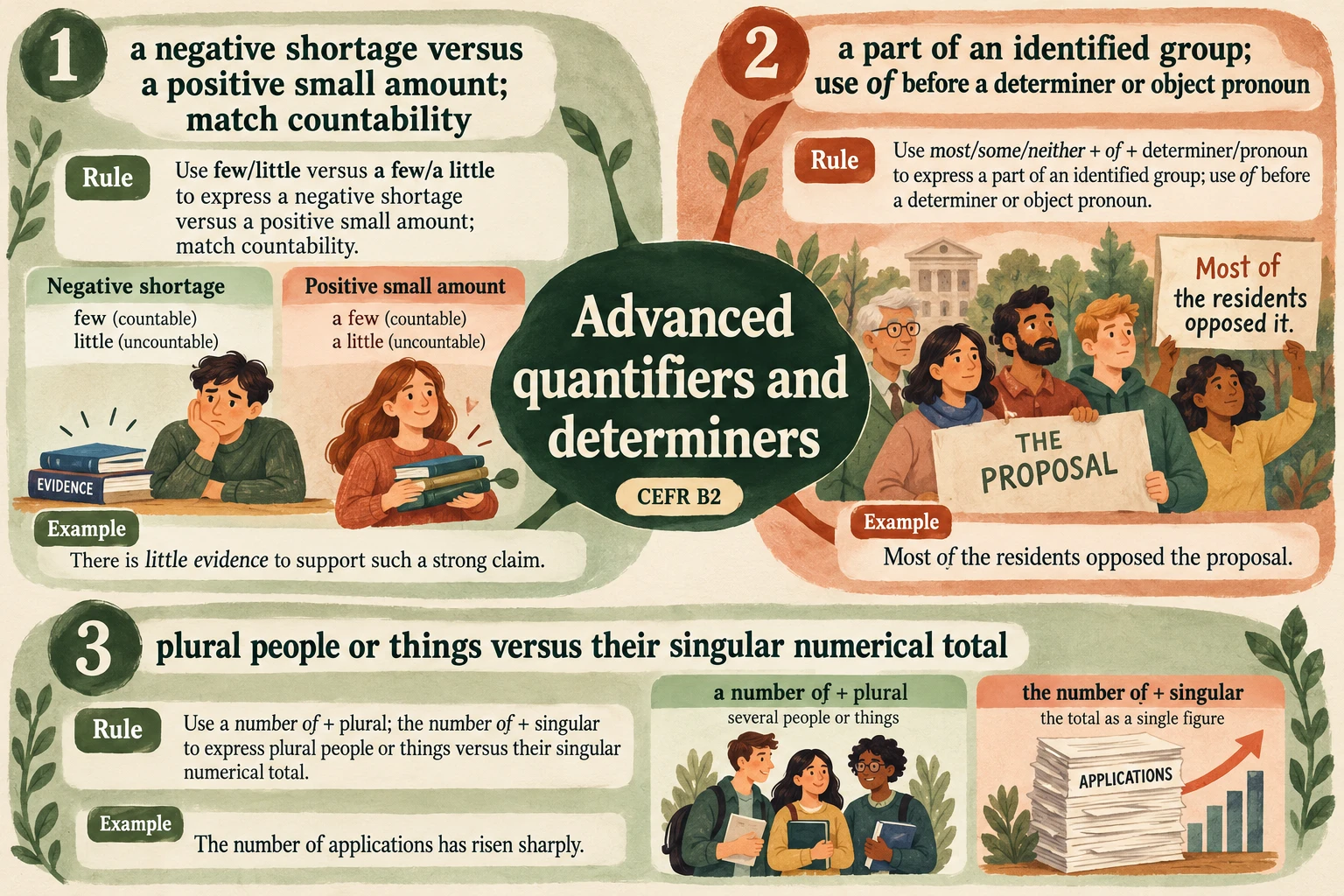
few/little versus a few/a little を用います。表す内容:否定的な不足と肯定的な少量の違い。可算性を合わせる。
There is little evidence to support such a strong claim.most/some/neither + of + determiner/pronoun を用います。表す内容:特定の集団の一部。限定詞・目的格代名詞の前に of。
Most of the residents opposed the proposal.a number of + plural; the number of + singular を用います。表す内容:複数の人・物と、単数扱いの総数との違い。
The number of applications has risen sharply.
The speaker stresses insufficient evidence; evidence is uncountable.
few/little versus a few/a little を用います。表す内容:否定的な不足と肯定的な少量の違い。可算性を合わせる。
There is little evidence to support such a strong claim.most/some/neither + of + determiner/pronoun を用います。表す内容:特定の集団の一部。限定詞・目的格代名詞の前に of。
Most of the residents opposed the proposal.a number of + plural; the number of + singular を用います。表す内容:複数の人・物と、単数扱いの総数との違い。
The number of applications has risen sharply.初回答を残し、変化の理由を理解して、別の場面で確かめます。
まだ復習ノートはありません。まずは短いウォームアップを。
few/little versus a few/a little を用います。表す内容:否定的な不足と肯定的な少量の違い。可算性を合わせる。
There is little evidence to support such a strong claim.most/some/neither + of + determiner/pronoun を用います。表す内容:特定の集団の一部。限定詞・目的格代名詞の前に of。
Most of the residents opposed the proposal.a number of + plural; the number of + singular を用います。表す内容:複数の人・物と、単数扱いの総数との違い。
The number of applications has risen sharply.解答を開くと、その問題にヒント利用が記録されます。
The speaker stresses insufficient evidence; evidence is uncountable.
判断の手掛かりは「The speaker stresses insufficient evidence; evidence is uncountable.」です。few/little versus a few/a little を用います。表す内容:否定的な不足と肯定的な少量の違い。可算性を合わせる。 この課題で完成する文は「There is little evidence to support such a strong claim.」です。
The following noun phrase is definite: the residents.
判断の手掛かりは「The following noun phrase is definite: the residents.」です。most/some/neither + of + determiner/pronoun を用います。表す内容:特定の集団の一部。限定詞・目的格代名詞の前に of。 この課題で完成する文は「Most of the residents opposed the proposal.」です。
The subject is the singular numerical total.
判断の手掛かりは「The subject is the singular numerical total.」です。a number of + plural; the number of + singular を用います。表す内容:複数の人・物と、単数扱いの総数との違い。 この課題で完成する文は「The number of applications has risen sharply.」です。
The speaker stresses that some time remains, enough for one question.
判断の手掛かりは「The speaker stresses that some time remains, enough for one question.」です。few/little versus a few/a little を用います。表す内容:否定的な不足と肯定的な少量の違い。可算性を合わせる。 この課題で完成する文は「We have a little time left, so we can take one more question.」です。
Complete the partitive construction before the object pronoun them.
完成文:「Neither of them had read the report.」 most/some/neither + of + determiner/pronoun を用います。表す内容:特定の集団の一部。限定詞・目的格代名詞の前に of。 問題の主語・時間・意味に合わせた形です。確認済みの解答だけを自動照合します。別の表現を自動的に誤りとはしません。
A number of means several individual people; plural agreement follows.
判断の手掛かりは「A number of means several individual people; plural agreement follows.」です。a number of + plural; the number of + singular を用います。表す内容:複数の人・物と、単数扱いの総数との違い。 この課題で完成する文は「A number of candidates have requested feedback.」です。
Express an insufficient number of countable researchers.
完成文:「Too few researchers had access, so the survey was underpowered.」 few/little versus a few/a little を用います。表す内容:否定的な不足と肯定的な少量の違い。可算性を合わせる。 問題の主語・時間・意味に合わせた形です。確認済みの解答だけを自動照合します。別の表現を自動的に誤りとはしません。
A positive small number remains; copies is countable.
判断の手掛かりは「A positive small number remains; copies is countable.」です。few/little versus a few/a little を用います。表す内容:否定的な不足と肯定的な少量の違い。可算性を合わせる。 この課題で完成する文は「There are a few copies left; you may take one.」です。
Complete the partitive construction between some and the definite noun phrase.
完成文:「Some of the original data could not be recovered.」 most/some/neither + of + determiner/pronoun を用います。表す内容:特定の集団の一部。限定詞・目的格代名詞の前に of。 問題の主語・時間・意味に合わせた形です。確認済みの解答だけを自動照合します。別の表現を自動的に誤りとはしません。
The subject is the singular numerical total, despite the plural noun after of.
判断の手掛かりは「The subject is the singular numerical total, despite the plural noun after of.」です。a number of + plural; the number of + singular を用います。表す内容:複数の人・物と、単数扱いの総数との違い。 この課題で完成する文は「The number of errors is lower this year.」です。
A definite group is introduced after most.
判断の手掛かりは「A definite group is introduced after most.」です。most/some/neither + of + determiner/pronoun を用います。表す内容:特定の集団の一部。限定詞・目的格代名詞の前に of。 この課題で完成する文は「Most of those proposals were rejected.」です。
Use the present-perfect auxiliary agreeing with the plural expression A number of technicians.
完成文:「A number of technicians have already volunteered.」 a number of + plural; the number of + singular を用います。表す内容:複数の人・物と、単数扱いの総数との違い。 問題の主語・時間・意味に合わせた形です。確認済みの解答だけを自動照合します。別の表現を自動的に誤りとはしません。