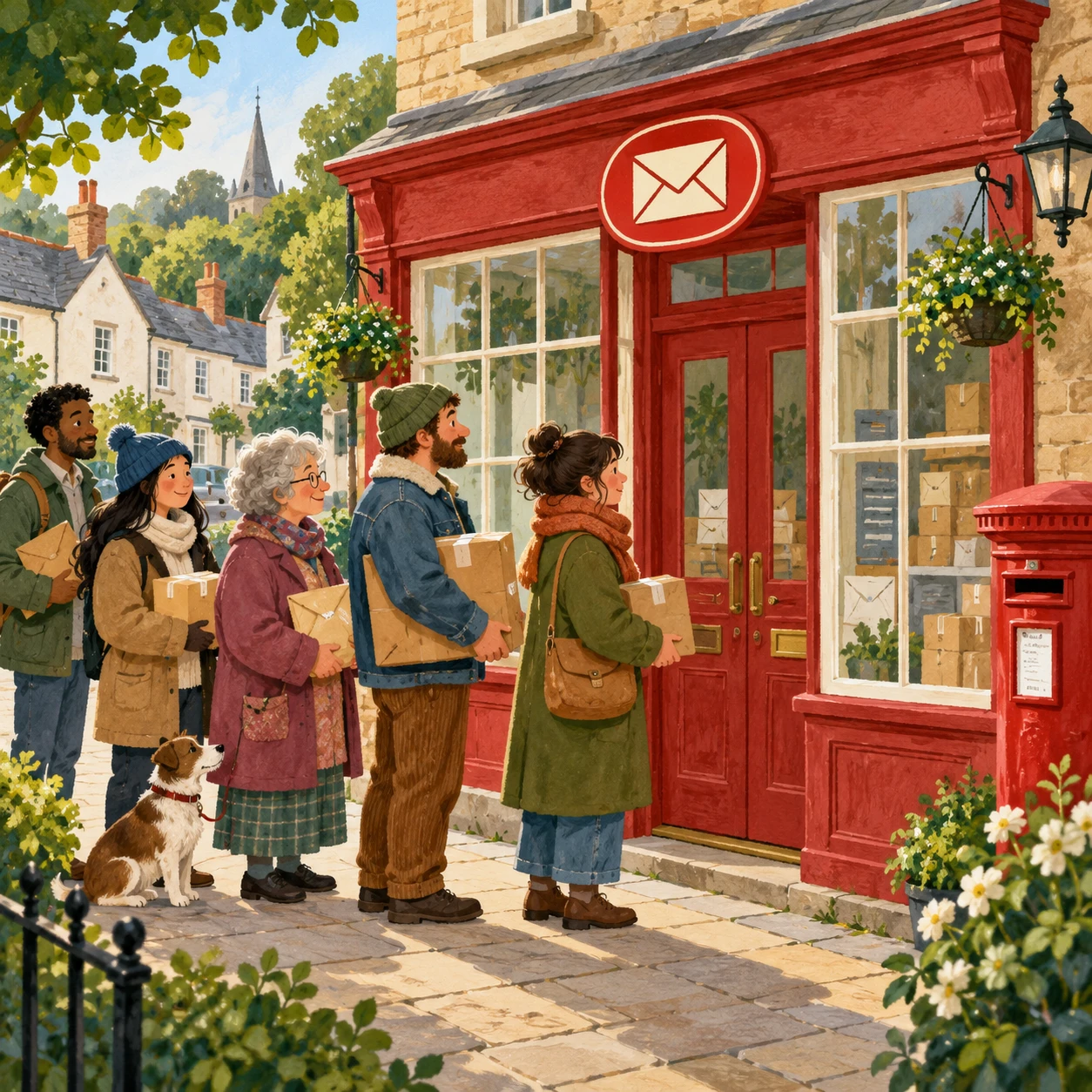
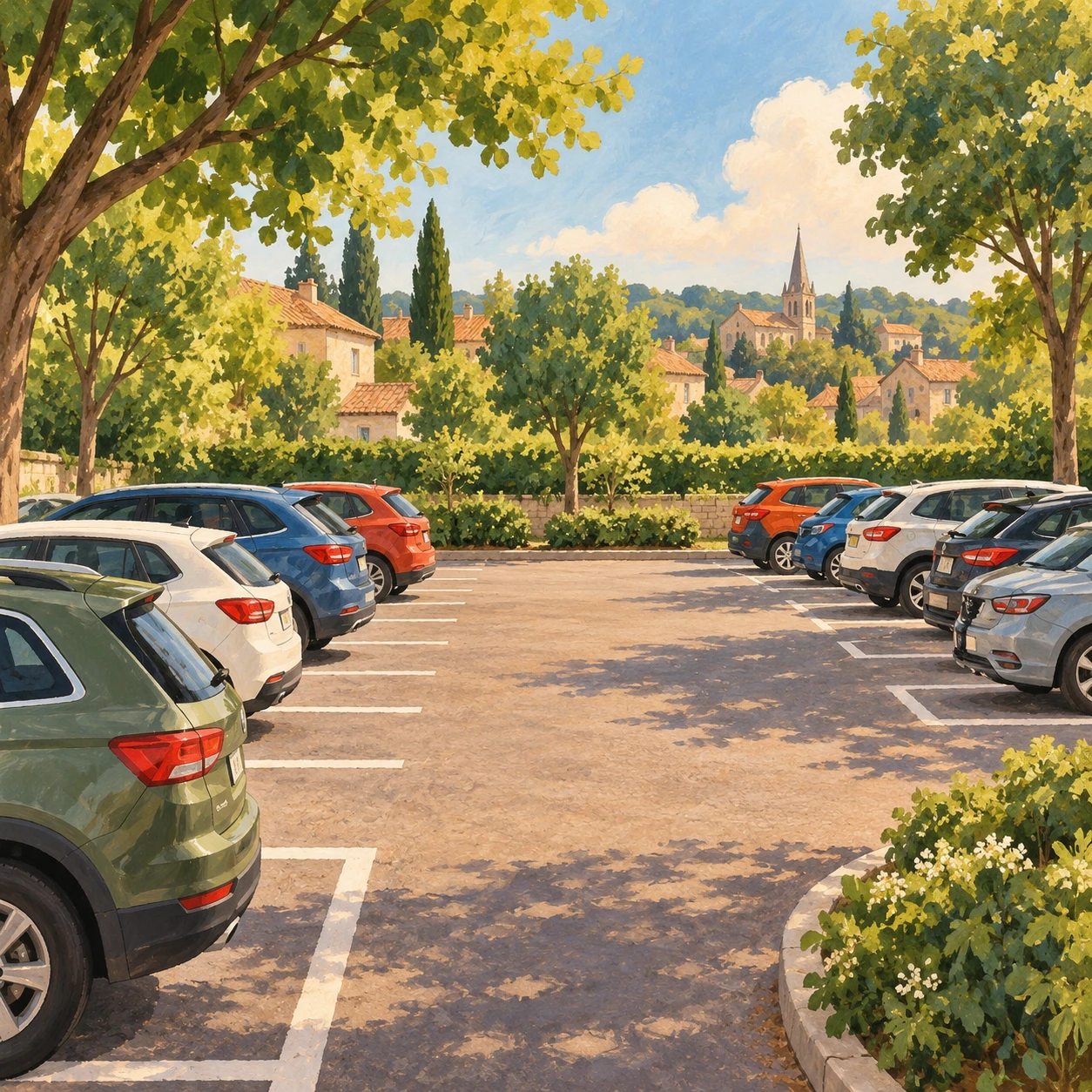
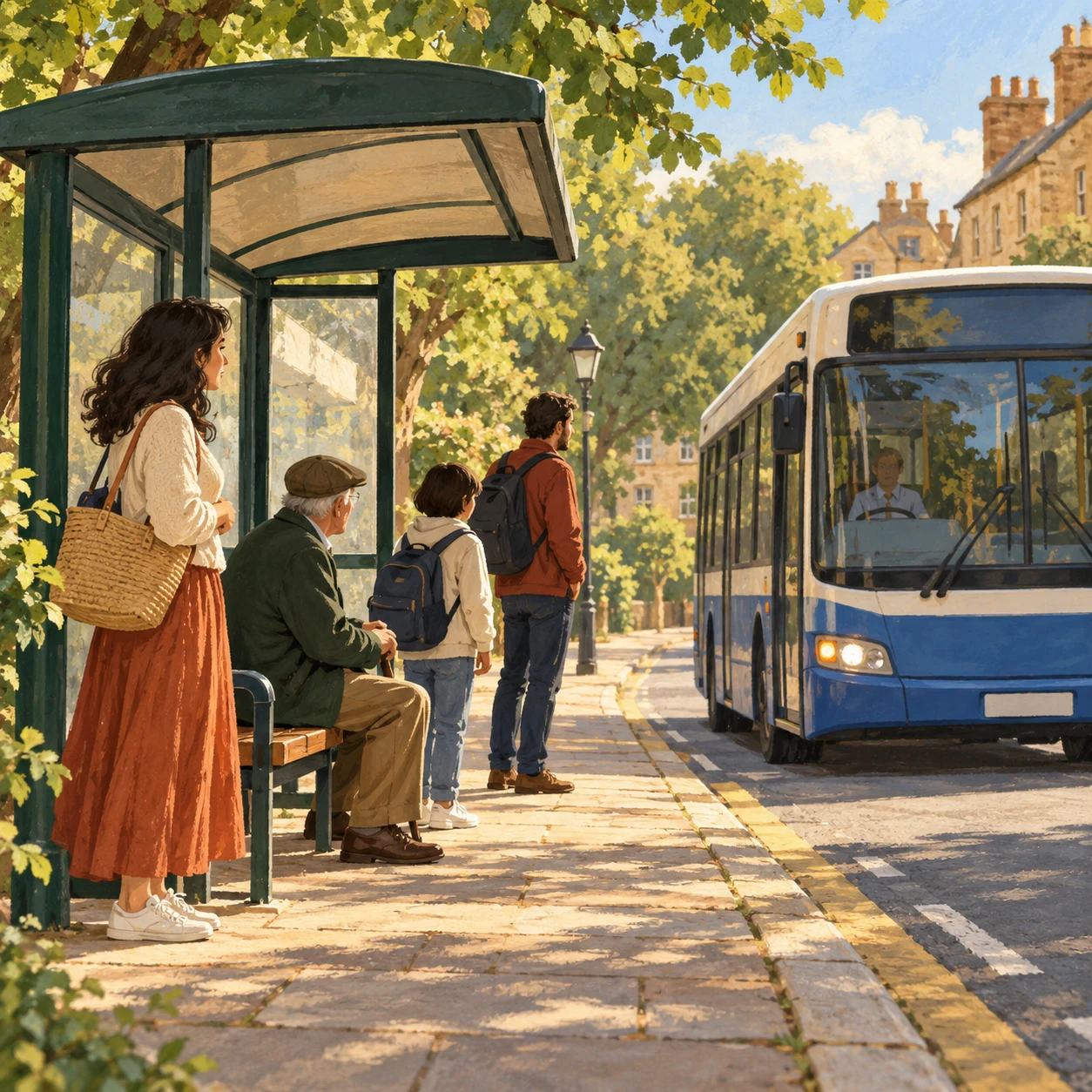
Bank · Postamt · Supermarkt · Apotheke
Unterscheide diese Bedeutungen anhand der Situation: bank = Bank; post office = Postamt; supermarket = Supermarkt; pharmacy = Apotheke.
I go here to open an account and keep my money: the bank.

Orte in der Stadt · A1. Unterscheide diese Bedeutungen anhand der Situation: bank = Bank; post office = Postamt; supermarket = Supermarkt; pharmacy = Apotheke.
Übe Orte in der Stadt in kurzen Situationen. Lies den Hinweis, wähle oder schreibe eine Form und prüfe die Begründung. Die Stufe dient der redaktionellen Orientierung. Erkunde 12 Lernkarten und 24 Kontextfragen, einschließlich neuer Wiederholungs- und Transferaufgaben.
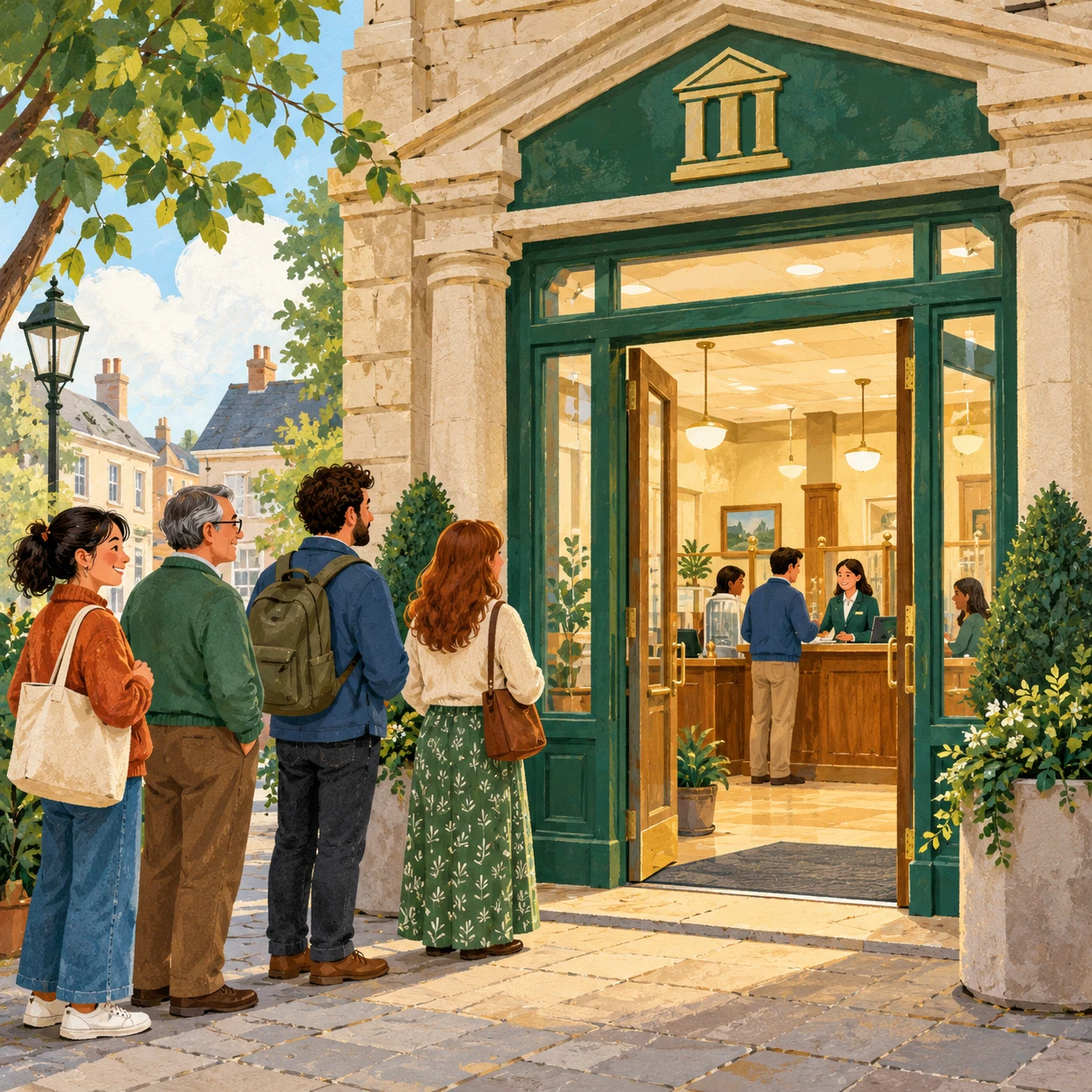
A business that looks after money and provides accounts.
The bank opens an hour later on Saturdays.
Die Bank öffnet samstags eine Stunde später.
Diese Angaben beziehen sich auf diese Bedeutung. Verwandte Wörter können andere Bedeutungen haben; ähnliche Ausdrücke sind nicht immer austauschbar.
Verwende „bank“ für Bank. Vergleiche „post office“ (Postamt); die Bedeutungen sind verschieden.
Unterscheide diese Bedeutungen anhand der Situation: bank = Bank; post office = Postamt; supermarket = Supermarkt; pharmacy = Apotheke.
I go here to open an account and keep my money: the bank.
Unterscheide diese Bedeutungen anhand der Situation: library = Bibliothek; museum = Museum; cinema = Kino; park = Park.
I borrow books without buying them at the library.
Unterscheide diese Bedeutungen anhand der Situation: station = Bahnhof; airport = Flughafen; car park = Parkplatz; bus stop = Bushaltestelle.
We board trains at the station.
Which business mainly keeps money in accounts and lends money, rather than selling groceries, medicine or postal services? The ___.
Unterscheide diese Bedeutungen anhand der Situation: bank = Bank; post office = Postamt; supermarket = Supermarkt; pharmacy = Apotheke.
I go here to open an account and keep my money: the bank.Unterscheide diese Bedeutungen anhand der Situation: library = Bibliothek; museum = Museum; cinema = Kino; park = Park.
I borrow books without buying them at the library.Unterscheide diese Bedeutungen anhand der Situation: station = Bahnhof; airport = Flughafen; car park = Parkplatz; bus stop = Bushaltestelle.
We board trains at the station.Bewahre den ersten Versuch. Verstehe die Änderung. Prüfe sie in einer neuen Situation.
Noch keine Lernnotizen. Starte mit einem kurzen Einstieg.
Das Öffnen einer Antwort wird für diese Aufgabe als Hilfe erfasst.
Which business mainly keeps money in accounts and lends money, rather than selling groceries, medicine or postal services? The ___.
Achte auf „mainly keeps money in accounts“. Hier ist „Bank“ gemeint: „bank“. Benenne den Hauptdienst des Ortes, nicht ein Gebäude, das ihn enthalten könnte. Vollständiger Satz: „Which business mainly keeps money in accounts and lends money, rather than selling groceries, medicine or postal services? The bank.” / “I go here to open an account and keep my money: the bank.“.
I borrow books without buying them at the ___.
Achte auf „borrow books“. Hier ist „Bibliothek“ gemeint: „library“. Benenne den Hauptdienst des Ortes, nicht ein Gebäude, das ihn enthalten könnte. Vollständiger Satz: „I borrow books without buying them at the library.“.
We board trains at the ___.
Achte auf „board trains“. Hier ist „Bahnhof“ gemeint: „station“. Benenne den Hauptdienst des Ortes, nicht ein Gebäude, das ihn enthalten könnte. Vollständiger Satz: „We board trains at the station.“.
Which place is specifically a postal-service business for buying stamps and sending parcels? The ___.
Achte auf „postal-service business“. Hier ist „Postamt“ gemeint: „post office“. Benenne den Hauptdienst des Ortes, nicht ein Gebäude, das ihn enthalten könnte. Vollständiger Satz: „Which place is specifically a postal-service business for buying stamps and sending parcels? The post office.” / “I buy stamps and send parcels at the post office.“.
Which place displays collections of ancient objects for visitors to learn about history, rather than lending books? The ___.
Achte auf „displays collections of ancient objects“. Hier ist „Museum“ gemeint: „museum“. Benenne den Hauptdienst des Ortes, nicht ein Gebäude, das ihn enthalten könnte. Vollständiger Satz: „Which place displays collections of ancient objects for visitors to learn about history, rather than lending books? The museum.” / “We look at ancient objects and learn about history in the museum.“.
We catch planes at the ___.
Achte auf „catch planes“. Hier ist „Flughafen“ gemeint: „airport“. Benenne den Hauptdienst des Ortes, nicht ein Gebäude, das ihn enthalten könnte. Vollständiger Satz: „We catch planes at the airport.“.
We push a trolley and buy food from many shelves at the ___.
Achte auf „buy food from many shelves“. Hier ist „Supermarkt“ gemeint: „supermarket“. Benenne den Hauptdienst des Ortes, nicht ein Gebäude, das ihn enthalten könnte. Vollständiger Satz: „We push a trolley and buy food from many shelves at the supermarket.“.
The pharmacist at the prescription-medicine counter hands me my medicine. That department is the ___.
Achte auf „prescription-medicine counter“. Hier ist „Apotheke“ gemeint: „pharmacy“. Benenne den Hauptdienst des Ortes, nicht ein Gebäude, das ihn enthalten könnte. Vollständiger Satz: „The pharmacist at the prescription-medicine counter hands me my medicine. That department is the pharmacy.” / “I collect medicine prescribed by my doctor at the pharmacy.“.
We buy tickets to watch a film on a large screen at the ___.
Achte auf „watch a film“. Hier ist „Kino“ gemeint: „cinema“. Benenne den Hauptdienst des Ortes, nicht ein Gebäude, das ihn enthalten könnte. Vollständiger Satz: „We buy tickets to watch a film on a large screen at the cinema.“.
What is the name for the marked area of parking spaces where we leave cars? The ___.
Achte auf „marked area of parking spaces“. Hier ist „Parkplatz“ gemeint: „car park“. Benenne den Hauptdienst des Ortes, nicht ein Gebäude, das ihn enthalten könnte. Vollständiger Satz: „What is the name for the marked area of parking spaces where we leave cars? The car park.” / “We leave our car in a marked space in the car park.“.
We walk outdoors among grass and trees in the public ___.
Achte auf „grass and trees“. Hier ist „Park“ gemeint: „park“. Benenne den Hauptdienst des Ortes, nicht ein Gebäude, das ihn enthalten könnte. Vollständiger Satz: „We walk outdoors among grass and trees in the public park.“.
We wait beside the road for the number 6 bus at the ___.
Achte auf „beside the road“. Hier ist „Bushaltestelle“ gemeint: „bus stop“. Benenne den Hauptdienst des Ortes, nicht ein Gebäude, das ihn enthalten könnte. Vollständiger Satz: „We wait beside the road for the number 6 bus at the bus stop.“.
Which word names a business whose main job is to keep people’s money in accounts and lend money? A ___.
Achte auf „keep people’s money in accounts“. Hier ist „Bank“ gemeint: „bank“. Benenne den Hauptdienst des Ortes, nicht ein Gebäude, das ihn enthalten könnte. Vollständiger Satz: „Which word names a business whose main job is to keep people’s money in accounts and lend money? A bank.“.
I borrow a book and return it next week at the ___.
Achte auf „borrow a book and return“. Hier ist „Bibliothek“ gemeint: „library“. Benenne den Hauptdienst des Ortes, nicht ein Gebäude, das ihn enthalten könnte. Vollständiger Satz: „I borrow a book and return it next week at the library.“.
Our train leaves from platform two at the ___.
Achte auf „train leaves from platform two“. Hier ist „Bahnhof“ gemeint: „station“. Benenne den Hauptdienst des Ortes, nicht ein Gebäude, das ihn enthalten könnte. Vollständiger Satz: „Our train leaves from platform two at the station.“.
The counter belongs to a postal-service business where I buy a stamp and send a parcel. That business is the ___.
Achte auf „postal-service business“. Hier ist „Postamt“ gemeint: „post office“. Benenne den Hauptdienst des Ortes, nicht ein Gebäude, das ihn enthalten könnte. Vollständiger Satz: „The counter belongs to a postal-service business where I buy a stamp and send a parcel. That business is the post office.” / “I buy a stamp and send a parcel at the post office.“.
We visit a building whose main purpose is displaying collections of old paintings and historical objects. It is a ___.
Achte auf „displaying collections“. Hier ist „Museum“ gemeint: „museum“. Benenne den Hauptdienst des Ortes, nicht ein Gebäude, das ihn enthalten könnte. Vollständiger Satz: „We visit a building whose main purpose is displaying collections of old paintings and historical objects. It is a museum.” / “We see old paintings and historical objects in the museum.“.
We arrive early to catch our plane at the ___.
Achte auf „catch our plane“. Hier ist „Flughafen“ gemeint: „airport“. Benenne den Hauptdienst des Ortes, nicht ein Gebäude, das ihn enthalten könnte. Vollständiger Satz: „We arrive early to catch our plane at the airport.“.
I push a trolley around a large shop to buy food. It is a ___.
Achte auf „large shop to buy food“. Hier ist „Supermarkt“ gemeint: „supermarket“. Benenne den Hauptdienst des Ortes, nicht ein Gebäude, das ihn enthalten könnte. Vollständiger Satz: „I push a trolley around a large shop to buy food. It is a supermarket.“.
The shop department where a pharmacist gives you the medicine on your prescription is called the ___.
Achte auf „pharmacist“. Hier ist „Apotheke“ gemeint: „pharmacy“. Benenne den Hauptdienst des Ortes, nicht ein Gebäude, das ihn enthalten könnte. Vollständiger Satz: „The shop department where a pharmacist gives you the medicine on your prescription is called the pharmacy.“.
We buy tickets to watch a film on a big screen at the ___.
Achte auf „watch a film“. Hier ist „Kino“ gemeint: „cinema“. Benenne den Hauptdienst des Ortes, nicht ein Gebäude, das ihn enthalten könnte. Vollständiger Satz: „We buy tickets to watch a film on a big screen at the cinema.“.
The marked area with rows of spaces specifically for leaving cars is called a ___.
Achte auf „spaces specifically for leaving cars“. Hier ist „Parkplatz“ gemeint: „car park“. Benenne den Hauptdienst des Ortes, nicht ein Gebäude, das ihn enthalten könnte. Vollständiger Satz: „The marked area with rows of spaces specifically for leaving cars is called a car park.“.
This public green place has trees, grass and a playground. It is a ___.
Achte auf „public green place“. Hier ist „Park“ gemeint: „park“. Benenne den Hauptdienst des Ortes, nicht ein Gebäude, das ihn enthalten könnte. Vollständiger Satz: „This public green place has trees, grass and a playground. It is a park.“.
The small roadside place marked by a bus sign, sometimes with a shelter rather than a station building, is called a ___.
Achte auf „roadside place marked by a bus sign“. Hier ist „Bushaltestelle“ gemeint: „bus stop“. Benenne den Hauptdienst des Ortes, nicht ein Gebäude, das ihn enthalten könnte. Vollständiger Satz: „The small roadside place marked by a bus sign, sometimes with a shelter rather than a station building, is called a bus stop.“.