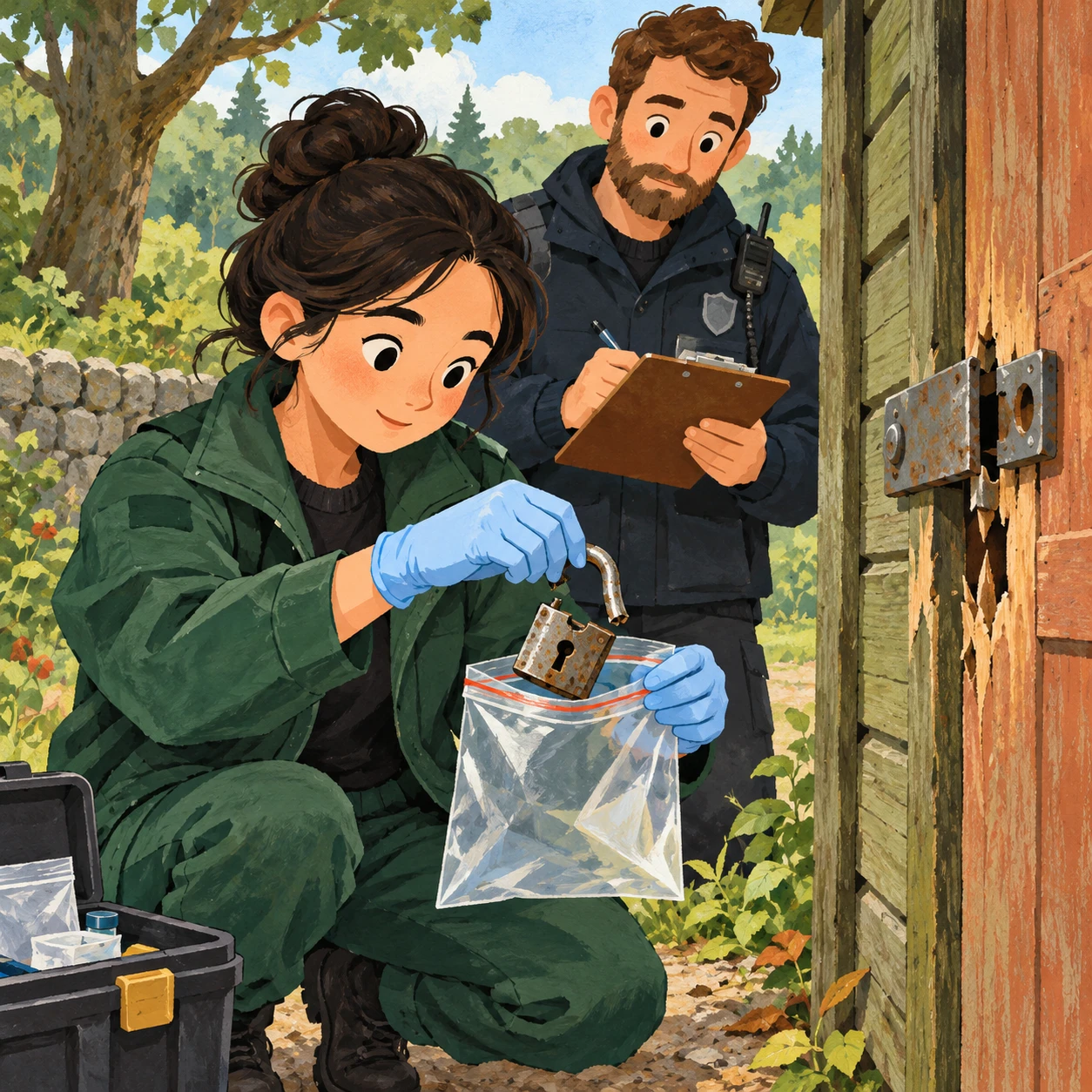
出来事を目撃した人 / 犯罪の疑いをかけられた人
「witness」(出来事を目撃した人)と「suspect」(犯罪の疑いをかけられた人)を区別します。状況を読み、置き換えられない意味の違いを確かめましょう。 追加の使い分け:「burglary」は「侵入窃盗」、「robbery」は「強盗」です。学習カードで用法を比べましょう。
A witness described the red van.

犯罪と安全 · B1. 「witness」(出来事を目撃した人)と「suspect」(犯罪の疑いをかけられた人)を区別します。状況を読み、置き換えられない意味の違いを確かめましょう。 追加の使い分け:「burglary」は「侵入窃盗」、「robbery」は「強盗」です。学習カードで用法を比べましょう。
24問のオリジナル問題です。状況から意味を読み取り、形を練習して、新しい場面で応用します。

person who sees an event happen
The witness asked for an interpreter before giving a statement.
証人は供述する前に通訳を求めました。
このカードの意味に合わせた表現です。関連語では意味が変わる場合があり、言い換えがいつも使えるとは限りません。
「eyewitness account」をまとまりで練習しましょう。ここで「witness」は「出来事を目撃した人」です。
「witness」(出来事を目撃した人)と「suspect」(犯罪の疑いをかけられた人)を区別します。状況を読み、置き換えられない意味の違いを確かめましょう。 追加の使い分け:「burglary」は「侵入窃盗」、「robbery」は「強盗」です。学習カードで用法を比べましょう。
A witness described the red van.
「evidence」(何が起きたかを示す事実や物)と「theft」(許可なく他人の物を盗む犯罪)を区別します。状況を読み、置き換えられない意味の違いを確かめましょう。 追加の使い分け:「fine」は「罰金」、「sentence」は「裁判所の判決による刑」です。学習カードで用法を比べましょう。
The camera footage provided useful evidence.
「precaution」(危険を減らすための事前措置)と「emergency」(すぐに対応が必要な深刻な事態)を区別します。状況を読み、置き換えられない意味の違いを確かめましょう。 追加の使い分け:「investigation」は「捜査」、「alibi」は「アリバイ」です。学習カードで用法を比べましょう。
Locking the gate is a sensible precaution.
The person saw the red van at the scene and is describing what they observed. Police do not suspect this person of the crime.
「evidence」(何が起きたかを示す事実や物)と「theft」(許可なく他人の物を盗む犯罪)を区別します。状況を読み、置き換えられない意味の違いを確かめましょう。 追加の使い分け:「fine」は「罰金」、「sentence」は「裁判所の判決による刑」です。学習カードで用法を比べましょう。
The camera footage provided useful evidence.「precaution」(危険を減らすための事前措置)と「emergency」(すぐに対応が必要な深刻な事態)を区別します。状況を読み、置き換えられない意味の違いを確かめましょう。 追加の使い分け:「investigation」は「捜査」、「alibi」は「アリバイ」です。学習カードで用法を比べましょう。
Locking the gate is a sensible precaution.「witness」(出来事を目撃した人)と「suspect」(犯罪の疑いをかけられた人)を区別します。状況を読み、置き換えられない意味の違いを確かめましょう。 追加の使い分け:「burglary」は「侵入窃盗」、「robbery」は「強盗」です。学習カードで用法を比べましょう。
A witness described the red van.初回答を残し、変化の理由を理解して、別の場面で確かめます。
まだ復習ノートはありません。まずは短いウォームアップを。
解答を開くと、その問題にヒント利用が記録されます。
The person saw the red van at the scene and is describing what they observed. Police do not suspect this person of the crime.
「saw the red van」に注目します。ここで必要なのは「出来事を目撃した人」を表す「witness」です。目撃者、疑われる者、裏づけの情報、不法な持去り、予防、差し迫る危険という役割で区別します。完成した文:「A witness described the red van.」。
Police think this person may have committed the crime, but guilt has not been proved.
「may have committed the crime」に注目します。ここで必要なのは「犯罪の疑いをかけられた人」を表す「suspect」です。目撃者、疑われる者、裏づけの情報、不法な持去り、予防、差し迫る危険という役割で区別します。完成した文:「The suspect answered the officer’s questions.」。
Investigators use the camera footage as information that may establish what happened.
「information that may establish」に注目します。ここで必要なのは「何が起きたかを示す事実や物」を表す「evidence」です。目撃者、疑われる者、裏づけの情報、不法な持去り、予防、差し迫る危険という役割で区別します。完成した文:「The camera footage provided useful evidence.」。
Complete the sentence with the expression that matches the stated situation.
「bicycle」に注目します。ここで必要なのは「許可なく他人の物を盗む犯罪」を表す「theft」です。目撃者、疑われる者、裏づけの情報、不法な持去り、予防、差し迫る危険という役割で区別します。完成した文:「She reported the theft of her bicycle.」。
Complete the sentence with the expression that matches the stated situation.
「Locking the gate」に注目します。ここで必要なのは「危険を減らすための事前措置」を表す「precaution」です。目撃者、疑われる者、裏づけの情報、不法な持去り、予防、差し迫る危険という役割で区別します。完成した文:「Locking the gate is a sensible precaution.」。
The crew rehearsed how to respond to a dangerous event needing immediate action.
「dangerous event needing immediate action」に注目します。ここで必要なのは「すぐに対応が必要な深刻な事態」を表す「emergency」です。目撃者、疑われる者、裏づけの情報、不法な持去り、予防、差し迫る危険という役割で区別します。完成した文:「The crew practised for an emergency.」。
Complete the sentence with the expression that matches the stated situation.
「Someone saw」に注目します。ここで必要なのは「出来事を目撃した人」を表す「witness」です。目撃者、疑われる者、裏づけの情報、不法な持去り、予防、差し迫る危険という役割で区別します。完成した文:「Someone saw the collision and can describe it; that person is a witness.」。
Complete the sentence with the expression that matches the stated situation.
「not proved guilt」に注目します。ここで必要なのは「犯罪の疑いをかけられた人」を表す「suspect」です。目撃者、疑われる者、裏づけの情報、不法な持去り、予防、差し迫る危険という役割で区別します。完成した文:「Police are investigating him but have not proved guilt; he is a suspect.」。
Complete the sentence with the expression that matches the stated situation.
「Fingerprints and recordings」に注目します。ここで必要なのは「何が起きたかを示す事実や物」を表す「evidence」です。目撃者、疑われる者、裏づけの情報、不法な持去り、予防、差し迫る危険という役割で区別します。完成した文:「Fingerprints and recordings may be used as evidence in an investigation.」。
Complete the sentence with the expression that matches the stated situation.
「without permission」に注目します。ここで必要なのは「許可なく他人の物を盗む犯罪」を表す「theft」です。目撃者、疑われる者、裏づけの情報、不法な持去り、予防、差し迫る危険という役割で区別します。完成した文:「Taking a stranger’s wallet without permission is theft.」。
Complete the sentence with the expression that matches the stated situation.
「against head injuries」に注目します。ここで必要なのは「危険を減らすための事前措置」を表す「precaution」です。目撃者、疑われる者、裏づけの情報、不法な持去り、予防、差し迫る危険という役割で区別します。完成した文:「Wearing a helmet is a precaution against head injuries.」。
Complete the sentence with the expression that matches the stated situation.
「fire in an occupied building」に注目します。ここで必要なのは「すぐに対応が必要な深刻な事態」を表す「emergency」です。目撃者、疑われる者、裏づけの情報、不法な持去り、予防、差し迫る危険という役割で区別します。完成した文:「A fire in an occupied building is an emergency, not a routine inconvenience.」。
Choose the expression that matches the situation.
「entered the empty house」に注目します。ここで必要なのは「侵入窃盗」を表す「burglary」です。建物への侵入窃盗と暴力・脅迫による強奪は別です。罰金、判決、捜査、他の場所にいた証明とも区別します。完成した文:「Someone entered the empty house through a window and stole a computer; police recorded it as a burglary.」。
Choose the expression that matches the situation.
「threatened the cashier」に注目します。ここで必要なのは「強盗」を表す「robbery」です。建物への侵入窃盗と暴力・脅迫による強奪は別です。罰金、判決、捜査、他の場所にいた証明とも区別します。完成した文:「The attacker threatened the cashier with a knife and took the money in an armed robbery.」。
Choose the expression that matches the situation.
「fifty pounds」に注目します。ここで必要なのは「罰金」を表す「fine」です。建物への侵入窃盗と暴力・脅迫による強奪は別です。罰金、判決、捜査、他の場所にいた証明とも区別します。完成した文:「I received a parking fine of fifty pounds and had to pay it within two weeks.」。
Choose the expression that matches the situation.
「six months in prison」に注目します。ここで必要なのは「裁判所の判決による刑」を表す「sentence」です。建物への侵入窃盗と暴力・脅迫による強奪は別です。罰金、判決、捜査、他の場所にいた証明とも区別します。完成した文:「The judge gave him a sentence of six months in prison.」。
Choose the expression that matches the situation.
「establish who」に注目します。ここで必要なのは「捜査」を表す「investigation」です。建物への侵入窃盗と暴力・脅迫による強奪は別です。罰金、判決、捜査、他の場所にいた証明とも区別します。完成した文:「Police opened an investigation to establish who had started the fire.」。
Choose the expression that matches the situation.
「another city」に注目します。ここで必要なのは「アリバイ」を表す「alibi」です。建物への侵入窃盗と暴力・脅迫による強奪は別です。罰金、判決、捜査、他の場所にいた証明とも区別します。完成した文:「He had an alibi: hotel records proved he was in another city when the theft occurred.」。
Choose the expression that matches the situation.
「broke in and took jewellery」に注目します。ここで必要なのは「侵入窃盗」を表す「burglary」です。建物への侵入窃盗と暴力・脅迫による強奪は別です。罰金、判決、捜査、他の場所にいた証明とも区別します。完成した文:「No one was home during the burglary, when thieves broke in and took jewellery.」。
Choose the expression that matches the situation.
「Using force」に注目します。ここで必要なのは「強盗」を表す「robbery」です。建物への侵入窃盗と暴力・脅迫による強奪は別です。罰金、判決、捜査、他の場所にいた証明とも区別します。完成した文:「Using force to take a pedestrian's wallet was treated as robbery rather than simple theft.」。
Choose the expression that matches the situation.
「pay a」に注目します。ここで必要なのは「罰金」を表す「fine」です。建物への侵入窃盗と暴力・脅迫による強奪は別です。罰金、判決、捜査、他の場所にいた証明とも区別します。完成した文:「The court ordered him to pay a fine of 300 euros for the offence.」。
Choose the expression that matches the situation.
「prison」に注目します。ここで必要なのは「裁判所の判決による刑」を表す「sentence」です。建物への侵入窃盗と暴力・脅迫による強奪は別です。罰金、判決、捜査、他の場所にいた証明とも区別します。完成した文:「After serving a two-year prison sentence, she was released.」。
Choose the expression that matches the situation.
「interviewing neighbours」に注目します。ここで必要なのは「捜査」を表す「investigation」です。建物への侵入窃盗と暴力・脅迫による強奪は別です。罰金、判決、捜査、他の場所にいた証明とも区別します。完成した文:「The detective's investigation involved interviewing neighbours and examining security footage.」。
Choose the expression that matches the situation.
「far from the crime scene」に注目します。ここで必要なのは「アリバイ」を表す「alibi」です。建物への侵入窃盗と暴力・脅迫による強奪は別です。罰金、判決、捜査、他の場所にいた証明とも区別します。完成した文:「The suspect's alibi placed her at work, far from the crime scene at the relevant time.」。